Key Points for Rearing and Managing Pullets
In commercial production, pullets are usually divided according to their nutritional requirements and physiological characteristics into the early rearing period (7w-12w) and the …

Results for “feed” · Farming knowledge · Newest first
In commercial production, pullets are usually divided according to their nutritional requirements and physiological characteristics into the early rearing period (7w-12w) and the …
Feed management and feeding techniques help ensure that poultry receive the right amount of nutrients at the right time. Although this article focuses mainly on feed management, d…
Lighting management during the brooding period directly affects chick survival, skeletal development, and the establishment of feeding habits. It is the foundation for high and st…
When market pressures mount, “cost reduction” is easily reduced to switching to cheaper feed, cutting health products, or squeezing labor costs. But feed costs account for around …
Piglet mortality from birth to weaning can reach 25%, and about 65% of piglets that die before weaning do so in the first 7 days after birth. This figure makes one thing clear: th…
The average sow gestation period is 114 days. What truly determines how many live piglets a litter will produce is often not how large the fetuses grow later, but whether the embr…
When farrowing rates after breeding fail to improve, many pig farms first respond by increasing the number of breedings or changing the semen. But in actual production, the more c…
A pig house is essentially an artificial environmental system. The dividing line between traditional and modern pig houses is not their appearance, but whether the temperature, hu…
The easiest mistake to make when building a pig farm is realizing the site was chosen incorrectly only after the bulldozers arrive. The site and layout are “built-in conditions”; …
Poultry Talks: From breeding to precision nutrition Dr Paul B. Siegel, professor emeritus at Virginia Tech, looks at how poultry production has changed dramatically, from early ge…
Trading food instead of feed could cut farm pollution, study finds New modelling suggests shifting US-China agricultural trade towards animal-derived foods could reduce nitrogen l…
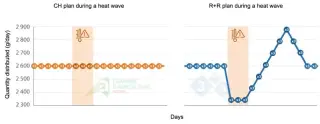
Given the increase in the frequency, intensity, and duration of heat waves due to global warming, feed management for pigs during the finishing phase has become a strategic factor…
Artificial intelligence from the design stage: Building pig farms today that are ready for the future For decades, pig farm design has focused on three pillars: biosecurity, produ…
The core challenge of managing pig houses in autumn and winter has never been whether to ventilate, but how to keep the temperature stable without letting ammonia and moisture wea…
In recent years, as layer farming has become more large-scale and the division of labor in society has become more specialized, dedicated pullet farms have sprung up like mushroom…
Management during the first 7 days of a chick’s life is a key factor in determining its survival rate. In addition, chicks’ body weight and flock uniformity at 1 weeks of age have…
Scientific lighting management is key to ensuring high and stable egg production in laying hens. However, in actual production, farmers often fall into certain misconceptions due …
[New Concept 1] While everyone is focused on the feed-to-meat ratio, attention must also be paid to the “manure-to-feed ratio.” Getting chickens to eat more, grow faster, defecate…
Uniformity refers to how consistent the body weights of individual chickens in a flock are. It is an important technical indicator during the rearing period of broiler breeders. U…
01 Prevent suffocation and properly sever the umbilical cord After piglets are born, remove as much mucus and amniotic fluid as possible from their mouths and airways. If there is…