
For High Egg Production, the Rearing Period Is Crucial
In the layer farming industry, every farmer hopes their flock will enjoy a long period of peak egg production. However, many focus too heavily on feed nutrition and disease preven…
Results for “feed” · Farming knowledge · Newest first
In the layer farming industry, every farmer hopes their flock will enjoy a long period of peak egg production. However, many focus too heavily on feed nutrition and disease preven…

Genetic selection has long relied on criteria directly linked to performance. Today, animals must also be able to maintain their performance in varied environments and cope with c…
The EuroTier innovation ‘Multi-Farm’ from WEDA Dammann & Westerkamp is a web- and app-based management platform which, via a universal API interface, brings together the process c…
The success or failure of pig farm operations depends on the average number of piglets each sow provides per year and the number of market pigs she contributes annually. This show…
During autumn and winter, farrowing room management at pig farms faces an extremely sharp conflict: newborn piglets are extremely sensitive to cold, while sows after giving birth …
Many pig farms face a puzzling problem: sows are fed according to the recommended amount, and they finish the feed in the trough, so they appear to be full. However, after farrowi…
South Korean lawmaker seeks ban on food-waste pig feed as swill use surges South KoreaSwill feedTaiwanAfrican Swine FeverFood waste EN eFeedLink Newsdesk |27 Oct 2026 A South Kore…
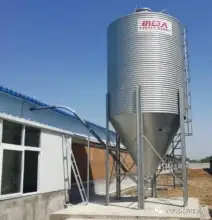
Finished-feed storage bins are commonly called feed towers. They generally serve only as a transfer point for short-term feed storage. The feed towers we commonly use come in two …
Cold Stress in Poultry Flocks and Management Adjustments Cold stress refers to the stress experienced by a poultry flock in a low-temperature environment when its ability to retai…
In modern intensive farming systems, the impact of environmental factors on feather growth and health is becoming increasingly prominent. Among these factors, lighting is a core e…
During the middle and later stages of broiler rearing, an abnormal situation may occur in which feed intake does not keep pace with the birds’ age. If feed intake does not keep pa…
Parent-stock broiler breeders must also be fed restricted quantities during the laying period. If they are fed ad libitum throughout the entire laying period, the hens will gain w…
In actual production, the same feed supplied to two different farms can receive different evaluations, sometimes with substantial differences. What one farm considers “good feed” …
1. Blood rings inside the egg; embryos die on days 1–4; eggs for incubation have been stored for too long, or the storage temperature or humidity is unsuitable; excessive shaking …
Sow body condition directly affects estrus and breeding, conception rate, reproductive performance, lactation ability, and service life. It is one of the most fundamental aspects …
Weaning is a key turning point in a piglet’s growth and one of the stages in the nursery period most prone to problems. Weaning means the piglet loses maternal protection while fa…
Glaesserella parasuis is a particularly challenging opportunistic pathogen during the nursery stage, commonly known as “Glässer’s disease.” It is widely present in the respiratory…
Weaning in commercial conditions includes social, environmental and nutritional stressors. Reducing the nutritional stressor may help to mitigate weaning-related problems by habit…
Problems in weaned piglets are rarely caused by a single factor. Nutrition shifts from sow’s milk to solid feed, the environment changes from the farrowing room to the nursery, an…
An old saying on pig farms goes: If you want to make money, rely on sows. Sows are the foundation of a pig farm’s production capacity; piglet survival rates and production efficie…