
Poultry farm biosecurity is crucial. It can effectively prevent and control the spread of diseases, protect the health of the flock, maintain stable production, and avoid economic losses.
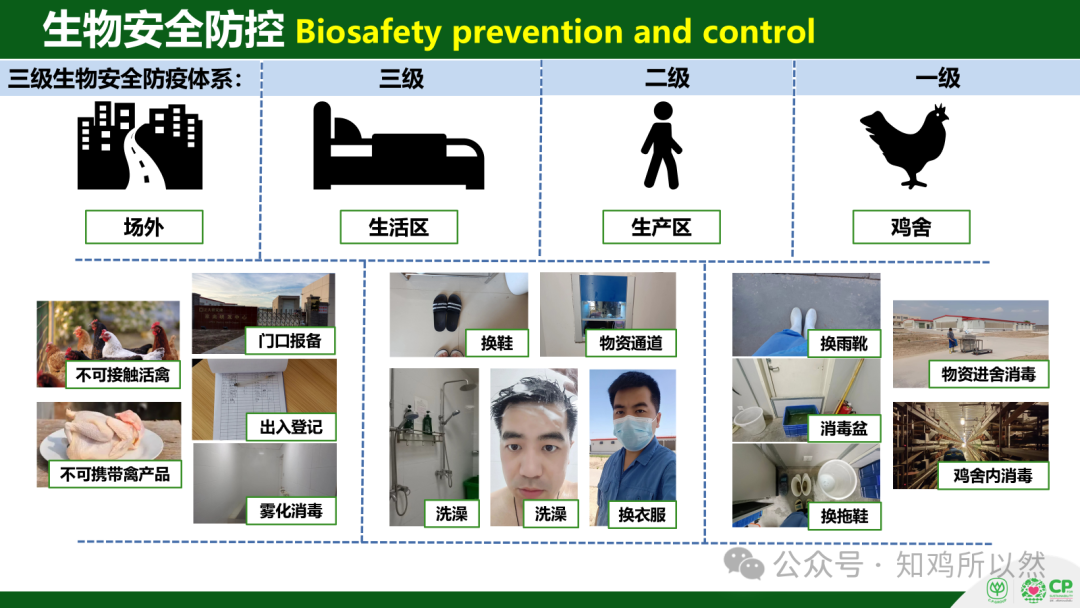
The poultry farm’s three-level biosecurity system is used for biosecurity and disease prevention:
Classification of biosecurity system levels:
Level one: Applies to the poultry house. Measures in this area include changing into rain boots, disinfecting supplies before they enter the poultry house, using disinfection trays, disinfecting inside the poultry house, and changing into slippers. These measures are intended to safeguard the poultry house environment and prevent diseases from spreading among the flock.
Level two: The production area. Personnel entering this area must shower and change clothes. There is also a supply passage. These procedures reduce the possibility of pathogens being brought into the production area from outside.
Level three: Covers the living area. Measures include changing shoes, reporting at the entrance, entry and exit registration, and mist disinfection. These provide further control over personnel and supplies entering the production area.
Off-site: Contact with live poultry and bringing poultry products onto the site are prohibited. This cuts off potential disease transmission routes at the source and prevents pathogens from outside the site from entering the biosecurity system.
Overall significance:
The three-tier biosecurity system for poultry farms implements biosecurity measures of varying levels in different areas, establishing successive layers of protection to form a relatively comprehensive disease prevention network. This effectively reduces the risk of disease introduction and spread, safeguarding the health of the flock and the smooth operation of production.