
Getting to Know Clostridium perfringens
Clostridium perfringens (CP), also known as Welch bacillus or Welch’s bacillus, belongs to the phylum Firmicutes and the genus Clostridium. It is a large, Gram-positive bacillus with a typical rod shape and bluntly rounded ends. It often has a capsule, lacks flagella, and has oval spores located in the center of the cell or near one end.
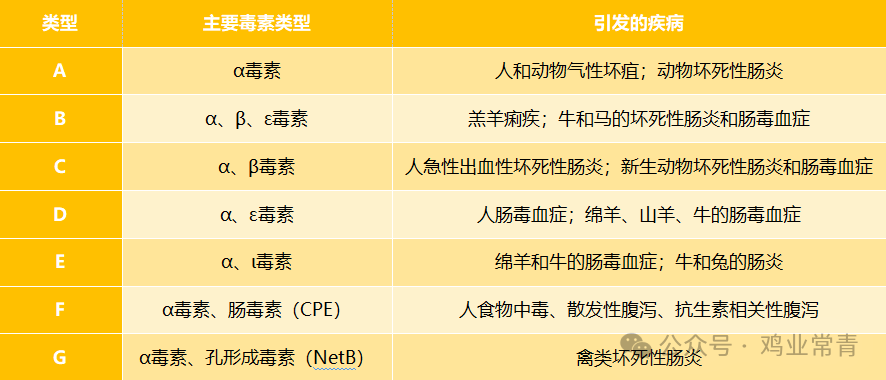
Clostridium perfringens is an opportunistic pathogen widely found in nature and in the gastrointestinal tracts of animals. When changes in the external environment, dietary changes, or improper antibiotic treatment disrupt intestinal homeostasis, Clostridium perfringens can cause intestinal mucosal damage, tissue necrosis, and aggravated inflammation by increasing its colony size and releasing toxins. As a result, it causes significant economic losses in livestock and poultry farming. Based on their ability to produce different toxins, Clostridium perfringens strains are divided into 7 serotypes, including A, B, C, D, E, F, and G. Different types can produce different toxins and cause different diseases.
Table 1: Different serotypes of Clostridium perfringens
Effects of Clostridium perfringens on poultry
Studies have shown that type G Clostridium perfringens is the main pathogen responsible for necrotic enteritis (NE) in poultry, and the pore-forming toxin Net B is an important toxin causing NE. Poultry NE caused by Clostridium perfringens is one of the most prominent intestinal diseases in modern intensive poultry farming. According to incomplete statistics, this disease causes annual losses of more than 60 billion US dollars to the global poultry industry.
Epidemiological characteristics
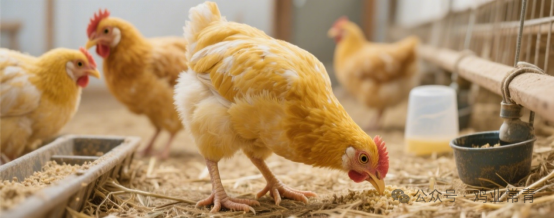
Among poultry species, only chickens can naturally contract necrotic enteritis, which most commonly occurs at 2~4 weeks of age. The disease is mainly transmitted horizontally through the digestive tract. Feed, bedding, dust, or spoiled animal and plant proteins contaminated by sick or carrier chickens are all important sources of infection. When the rearing environment is poor, the flock is under stress, intestinal function is weakened or even disrupted, or the intestinal mucosa is damaged after pathogen invasion, Clostridium perfringens proliferates rapidly and produces toxins, triggering necrotic enteritis. In addition, studies have shown that coccidial infection can damage the intestinal mucosa of livestock and poultry, creating favorable conditions for Clostridium perfringens to colonize and proliferate in the intestine. When the two infections occur simultaneously, the mortality rate is higher than with either infection alone. The disease can occur throughout the year and is more common during the months of 4—9, when temperature and humidity are higher.
Clinical symptoms
Based on differences in clinical symptoms, necrotic enteritis in poultry is commonly divided into clinical and subclinical forms. On examination of the intestinal mucosa of birds with the clinical form, numerous diffuse necrotic lesions can be seen; the subclinical form is difficult to identify.
Most birds with the clinical form develop the disease suddenly, with few obvious symptoms, and die rapidly within 1~2h. They pass red or dark brown, coal-tar-like feces, and the mortality rate can reach 50%. On examination of the intestinal mucosa, numerous diffuse necrotic lesions can be seen.
Birds with the subclinical form show no obvious symptoms. It causes chronic damage to the intestinal mucosa and an inflammatory response in the body, which in turn affect digestion and absorption. Signs include reduced feed intake, a lower feed conversion rate, and slower weight gain. It generally does not cause deaths, or the mortality rate is low; however, it can persist in the flock for a long time and is difficult to detect, making timely treatment difficult. As a result, it is more likely than the clinical form to cause serious economic losses.
Prevention and control approach
Prevention and control of Clostridium perfringens can be addressed in the following areas:
Biosecurity:
Disinfect regularly to reduce the survival of *Clostridium perfringens* in the environment;
Strengthen coccidiosis prevention and control;
Avoid stress factors such as sudden feed changes, abrupt temperature fluctuations, and high-density stocking;
Feed management:
Adjust the diet formulation scientifically and reduce high-protein feed;
Reduce mycotoxin contamination;
Nutritional regulation:
Choose appropriate functional additives, such as organic acids, probiotics, prebiotics, and enzyme preparations;
Monitoring and early diagnosis:
Regular monitoring;
Bacterial isolation; in conjunction with symptoms, promptly isolate and treat, and use sensitive antibiotics within the permitted scope.