
Differences between winter poultry colds and pericarditis and perihepatitis caused by E. coli!
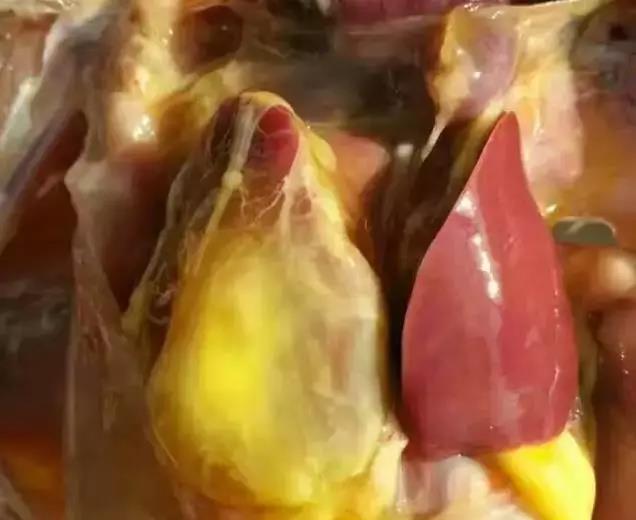
1, poultry colds generally produce white or milky-white, curd-like discharge. It is generally not elastic, breaks easily, and falls off at the slightest touch;
2, pericarditis, perihepatitis, airsacculitis, and peritonitis caused by poultry colds have no odor or only a slight fishy smell. The liver is usually paler in color, and some cases have pinpoint hemorrhages;
3, poultry colds generally affect the respiratory tract rapidly. Even before pericarditis and perihepatitis lesions appear, airsacculitis or peritonitis lesions may occur first;
4, poultry colds generally cause diffuse hemorrhaging in the trachea (Newcastle disease causes pinpoint hemorrhages). Whitish, curd-like or caseous material, or foam-like substances, may block the trachea.
5, poultry colds cause a jelly-like fluid beneath the skin of the head, which is yellow or purple; in severe cases, hemorrhaging may also occur in the skull;
6, poultry colds may be accompanied by swelling of the face in individual birds and watery eyes;
7, avian influenza causes rapid mortality. Chickens with poor uniformity are susceptible to the disease, which occurs most often after vaccination at 21 days of age and before 32 days of age. The dead birds generally appear to be in good condition and are medium-sized or large.
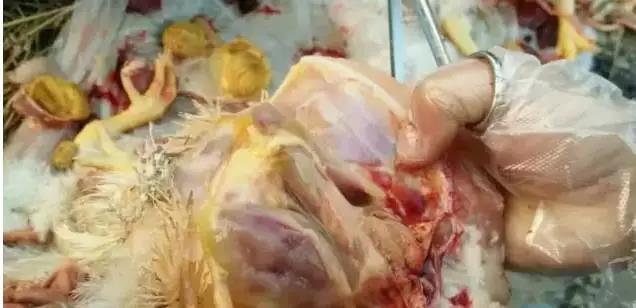
8, avian influenza is characterized by noticeable duodenal hemorrhage. In broilers, this may appear as round, mung-bean-sized hemorrhagic spots with depressions in the anterior section of the small intestine (jejunum);
9, avian influenza causes a noticeable decrease in feed intake; in severe cases, it may decrease by 30-50%;
1, Escherichia coli infection is usually associated with yellow or yellowish-white, elastic fibrinous secretions.
2, after opening the abdominal cavity in cases of Escherichia coli infection, there is a pungent, foul odor that may even be detectable without dissection. This is especially noticeable with pericarditis and perihepatitis accompanied by airsacculitis and peritonitis. Mesenteric adhesions may be present, sometimes with unabsorbed yolk. Gray tumors or swellings, which are firm, are often seen or may be visible in deeper tissues.
3, Escherichia coli infection generally causes noticeable airsacculitis and peritonitis only when mixed with Mycoplasma infection. The disease course is longer and is often a secondary infection;
4, mixed Escherichia coli and Mycoplasma infection causes ring-shaped hemorrhages and mucus in the trachea. Avian influenza can also cause unilateral blockage resembling bronchial lesions; the blockage consists of pale white or milky-white cylindrical material or fluid. In bronchitis, the blockage is yellow.
5, septicemic Escherichia coli infection rarely causes neurological or head symptoms, while the encephalitic form of Escherichia coli infection generally causes cerebellar edema and hemorrhage.
6, E. coli rarely causes this symptom. The ocular form of E. coli can also occur sporadically, but spreads more slowly.
7, if E. coli causes pericarditis and perihepatitis without a mixed infection, deaths are generally chronic and debilitating. The dead chickens have usually had a longer course of illness, dry feet, and are thinner and dehydrated.
8, E. coli causes catarrhal inflammation.
9, feed intake in E. coli cases generally does not decrease or decreases slightly.
Treatment:
Avian influenza treatment must combine antiviral and fever-reducing medicines with high-immune serum to improve the body's immunity, activate the chickens' immune system, and control the spread. Medicines should mainly be traditional Chinese medicines, supplemented with mildly alkaline anti-inflammatory medicines or ordinary anti-inflammatory medicines to prevent secondary infection. At the same time, supplement nutrition; adding kidney-supporting medicine is more ideal. Note that at this time, the more Western medicines are used, the higher the mortality rate may become;
For E. coli, especially stubborn E. coli infections, treatment is more effective when two or more medicines are used in combination. A single medicine may also be effective when given at a higher dose. If there is a mixed infection with Mycoplasma, both must be treated at the same time; treating either one first is unlikely to work well, or the infection may easily recur after being brought under control. Also disinfect, reduce stocking density, and strengthen husbandry management.