
Respiratory diseases are often persistent problems in poultry farming. Chemical medicines can leave residues, while traditional Chinese medicine may not produce satisfactory results. A prolonged disease course can also easily lead to infections from other diseases. Respiratory diseases are often closely related to production management. We can begin with careful control of production management processes to prevent respiratory diseases in flocks.
In terms of the types of respiratory diseases, five categories are closely related to production management:
I. Wind chill stress
【Causes】Incorrect fan staging can result in excessive ventilation; air inlets may be too close to the chickens; negative pressure may be insufficient; airflow may be irregular; there may be many air leaks; or the poultry house may not be properly sealed, allowing drafts to enter, among other causes.
【Clinical signs】The flock may suddenly become less alert, eat and drink less, appear lethargic with retracted necks, and have rough, disheveled feathers. They may seek warmth and avoid the cold. Clear nasal discharge may come from one or both nostrils, and sneezing and coughing may be heard at night.
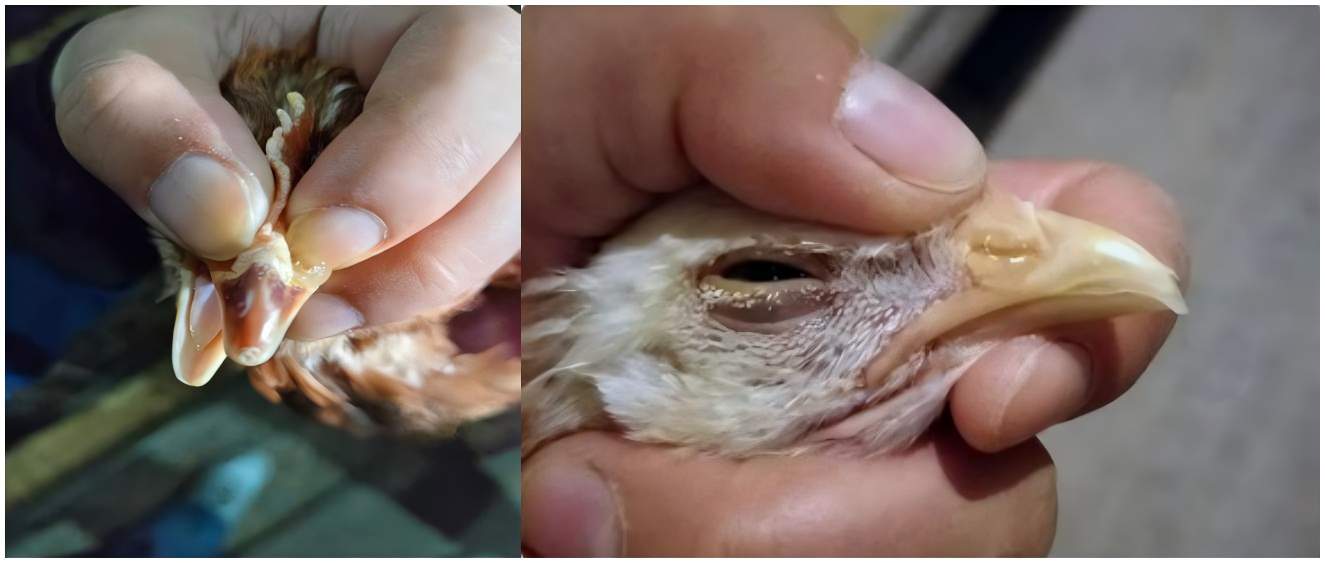
【Prevention and control measures】Check for temperature changes near affected chickens and locate and completely seal the source of cold drafts. If the problem is detected early and the proportion of affected chickens is low, the flock will recover naturally after air leaks are eliminated. If it is detected later and a large proportion of the flock is affected, medication is needed.
II. Insufficient air exchange, with harmful gases such as ammonia and carbon dioxide exceeding allowable levels
[Cause] To conserve heat, the ventilation rate is too low, and harmful gases are not promptly removed from the chicken house. In addition, delayed manure removal and leaking nipples cause chicken manure to ferment abnormally and produce gas.
[Clinical signs] The flock develops eye abnormalities, lethargy and tearing, and red, swollen eyelids. Symptoms are particularly severe in birds in the upper tiers or near the exhaust outlets. Some birds cough or make rattling sounds. When people leave, the flock tends to lie down; when people approach, the birds become more alert. Feed and water intake show no obvious changes.
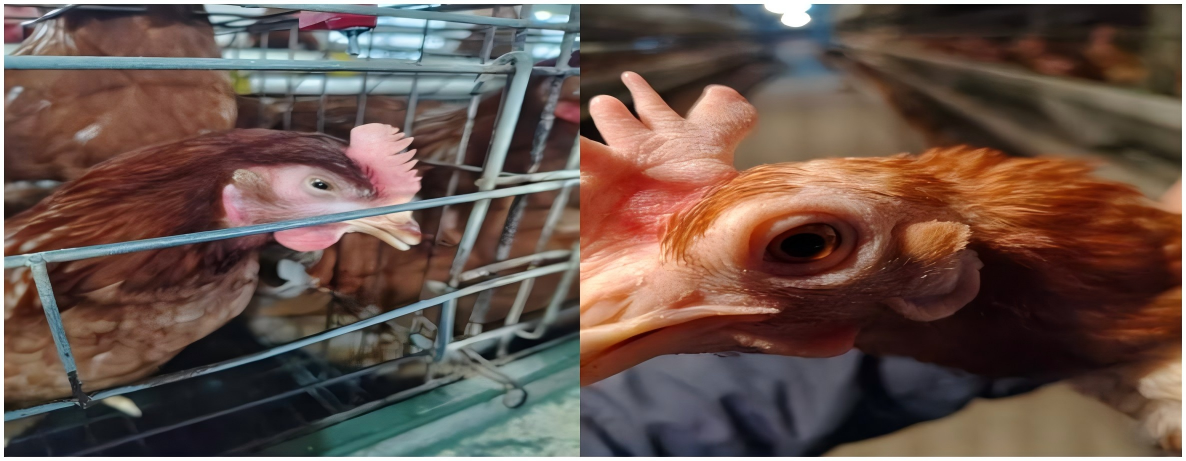
[Prevention and control measures] Set an appropriate ventilation rate through environmental control. When maintaining warmth conflicts with providing the flock's minimum ventilation rate, prioritize the minimum ventilation rate. Ensure the chicken house is airtight and well insulated. Replace leaking nipples promptly and adjust the height of the water lines in a timely manner to prevent nipple leaks. Remove manure promptly to prevent fermentation from producing harmful gases.
III. High negative pressure causes mild or moderate hypoxia but is not fatal
[Cause] The fan stages set in the environmental control system do not match the openings of the small windows. Exhaust airflow is high, while the air inlets are small, causing the negative pressure in the chicken house to remain above the limit for a prolonged period and the flock to experience prolonged hypoxia.
[Clinical signs] The flock shows no obvious abnormalities. At night, respiratory rales are frequently heard, and the condition does not respond to treatment for a long time. Deaths increase gradually over time. Necropsies of dead birds mainly show congestion and necrosis in one lung; occasionally, caseous plugs are found obstructing the trachea and bronchi.
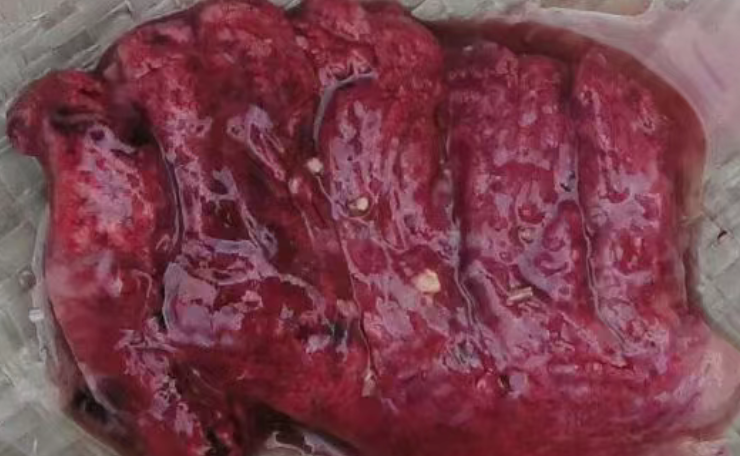
[Prevention and control measures] Adjust the environmental controls so the fan stages match the small-window openings, and bring the negative pressure within a reasonable range. Treat severely affected flocks with medication.
IV. High temperature and low humidity
[Causes] Due to the special characteristics of the chicken respiratory system, respiration in chickens serves not only for gas exchange but also as the primary means of heat dissipation. Therefore, in hot, low-humidity environments, the respiratory mucosa of chickens is easily damaged, causing this disease.
[Clinical signs] Chickens show difficulty breathing, with symptoms such as stretching out their necks, opening their beaks, and shaking their heads. At night, auscultation of the flock reveals abnormal respiratory sounds such as coughing, squealing, and rattling. Dead chickens have congested tracheas, and some show tracheal or bronchial obstruction.
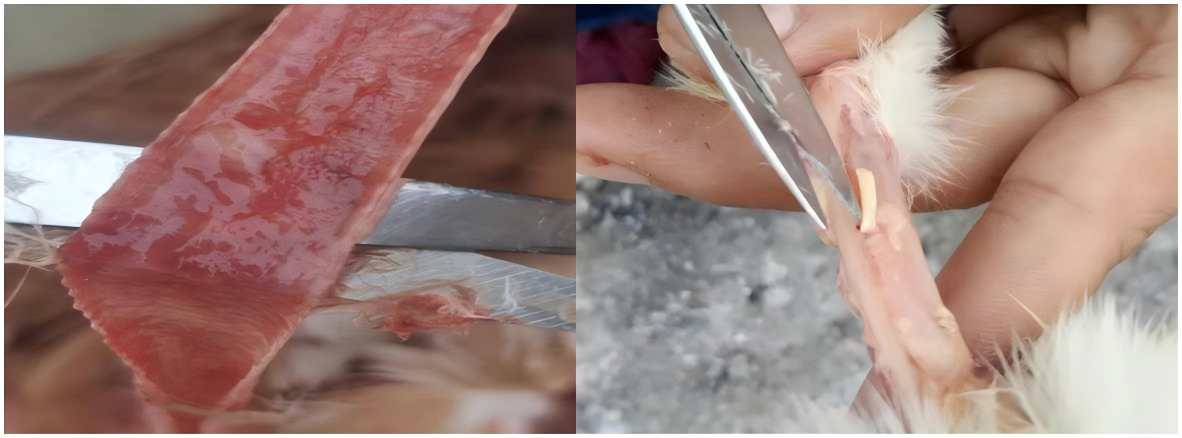
[Control measures] When the temperature is suitable, maintain appropriate humidity in the air inside the chicken house, particularly during the brooding period and in northern winters, when the humidity in dry chicken houses is below 40%. Sprinkle water on the floor.
Five. Poor chicken house sanitation and severely excessive dust
[Causes] This is caused by incorrect environmental control settings in the chicken house, or by deliberately reducing ventilation in winter to retain heat, resulting in poor sanitation, low humidity, and severely excessive airborne dust.
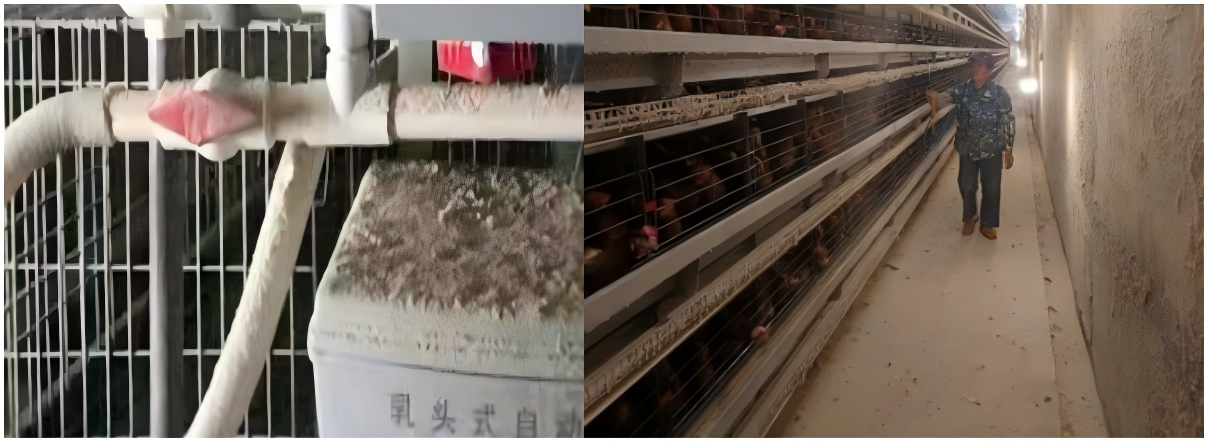
[Clinical signs] Chickens sneeze and cough, and in severe cases make rattling sounds. Airborne dust can be seen in the chicken house, and after inspecting the house, people find dust covering their clothes, hats, and hair. Respiratory diseases in the flock do not resolve despite prolonged treatment.
[Control measures] Increase exhaust airflow appropriately to remove dust. Also maintain chicken house sanitation and reduce dust by humidifying the air. Adding an appropriate amount of soybean oil to powdered feed can also reduce dust.