
Fowlpox is an acute, highly contagious infectious disease caused by the fowlpox virus. It mainly affects the skin and oral mucosa of chickens, and occasionally affects both at the same time.
It is characterized by pox lesions on areas of skin with no or few feathers and the formation of fibrinonecrotic pseudomembranes on the pharyngeal mucosa. The disease is transmitted through skin or mucosal wounds. Chickens of all ages can be affected, and the mortality rate can be as high as 50%.
Clinical signs
The clinical signs of fowlpox are mainly divided into three forms: cutaneous, mucosal, and mixed.
1. Cutaneous form: Small grayish-white nodules appear on areas of the chicken’s body with no or few feathers, such as the comb, wattles, eyelids, corners of the beak, skin under the wings, and legs. These nodules enlarge and turn yellow quickly, eventually forming large, dry, rough, brownish scabs that protrude above the skin. In severe cases, affected chickens may develop a fever, become lethargic, lose their appetite, and gradually lose weight; the disease may even lead to death. In laying hens, egg production decreases significantly.
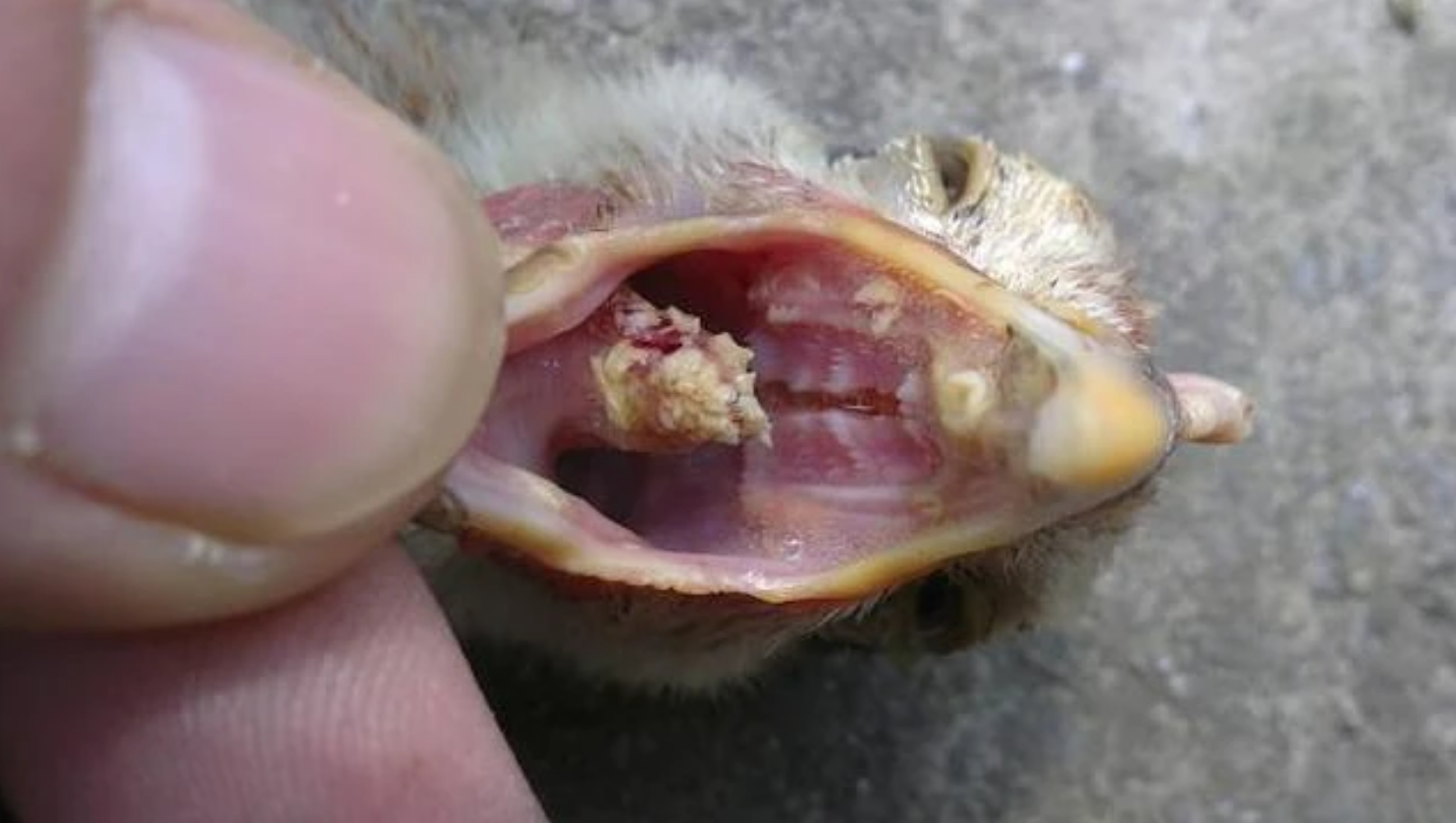
2. Mucosal form: Early in the disease, chickens may show signs of rhinitis, such as loss of appetite, nasal discharge (initially serous mucus, later becoming purulent), and swollen eyelids. Pox lesions then appear on the mucous membranes of the mouth, pharynx, trachea, and other areas. Initially, they are round yellow spots that gradually spread and form large deposits (pseudomembranes), which eventually thicken into brown crusts. These crusts are uneven and cracked and are difficult to remove. When the pseudomembrane extends into the larynx, it may cause difficulty breathing and swallowing, and can even lead to death by suffocation.
3. Mixed form: Pox lesions occur on both the skin and oral mucosa, and the disease is more severe.
Transmission routes
Fowlpox is mainly transmitted through wounds in the skin or mucous membranes, and mosquito bites are an important means of transmission. In addition, wild birds may also spread the disease.
Prevention and control measures
Preventing and controlling fowlpox requires comprehensive measures, including mosquito control, environmental disinfection, vaccination, and medication.
1. Mosquito control and environmental disinfection: Since mosquitoes are an important means of transmitting fowlpox, effective mosquito-control measures should be taken, such as removing standing water inside and around the chicken coop and using mosquito-control products. At the same time, the chicken coop and its surroundings should be thoroughly disinfected regularly to prevent the spread of the virus. Chickens that have died from the disease should be buried deeply or incinerated.
2. Vaccination: The most direct and effective way to prevent fowlpox is vaccination. Vaccination should be carried out before the mosquito breeding season begins, to ensure that the flock develops immunity during the period when it is susceptible. Vaccination is usually administered by the wing-web method, using a subcutaneous stab at a spot on the inside of the wing where there are no blood vessels. Chickens of different ages require vaccines at different dilutions, and vaccination should be carried out at the specified ages. After vaccination, regularly check the vaccination site for reactions such as swelling, redness, or scab formation to ensure that vaccination has been successful.
3. Medication: For flocks in which fowlpox has already occurred, medication may be used to relieve symptoms and prevent complications and secondary infections. For cutaneous fowlpox, the affected area can be washed with potassium permanganate solution and the scabs removed, then disinfected by applying gentian violet or iodine glycerin. For mucosal fowlpox, carefully remove the pseudomembrane and clear away the caseous material, then rinse with potassium permanganate solution and apply iodine glycerin or cod-liver oil as treatment. In addition, broad-spectrum antibiotics such as ciprofloxacin and enrofloxacin may be added to feed or drinking water to prevent secondary infections.