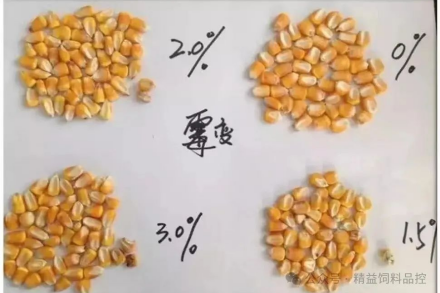
In intensive layer farming, mycotoxin contamination has become a critical biosecurity risk threatening production efficiency. These secondary metabolites cause not only direct economic losses but also systemic harm through chronic toxicity, including immunosuppression and reproductive disorders. Based on the latest monitoring data from 2024, this article analyzes contamination patterns and proposes targeted control measures.
I. Current Status of Mycotoxin Contamination
SUNTOGETHER
Monitoring data from 2024 show that the rates and average levels of mycotoxin exceedances in corn and its by-products were generally higher than in 2023, indicating worsening and increasingly persistent contamination:
1, co-contamination has become commonplace
91% of corn samples tested positive for at least 1 types of toxins; 46% had triple contamination with aflatoxin B? (AFB?) + deoxynivalenol (DON) + zearalenone (ZEN). The issue of synergistic contamination by multiple toxins is prominent.
2, pollution levels worsen
The rate of corn by-products exceeding the limit for aflatoxin B? (AFB?) reached 77% (year-on-year +15%), and the detection rates of vomitoxin (DON) and zearalenone (ZEA) in corn samples both exceeded 90%.
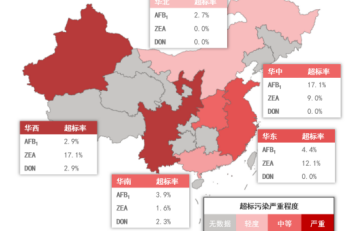
Data source: Jianming CLS 2024 toxin sample data
II. The hazards of mycotoxins
01
Aflatoxin
Hazards: severe hepatotoxicity, causing hepatocyte necrosis and cirrhosis, and leading to immunosuppression;
Typical symptoms: A sudden drop in laying rate, enlarged and hemorrhagic liver and kidneys, and the flock becoming prone to illness.
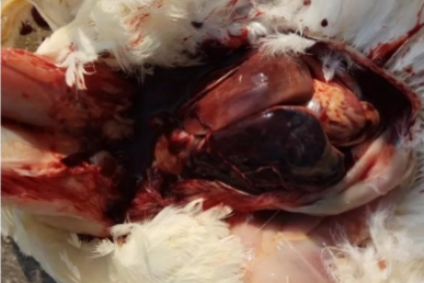
Liver enlargement caused by AFB1 leads to death
02
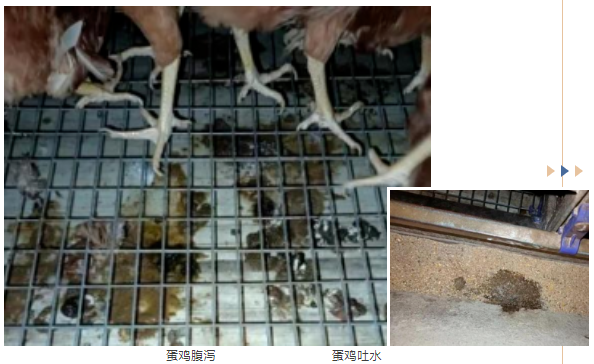
Deoxynivalenol (DON)
Hazards: causes vomiting and refusal to eat, damages the intestinal mucosal barrier, and increases the risk of bacterial infection;
Typical symptoms: decreased feed intake, vomiting, diarrhea, decreased feed utilization, and decreased production performance.
03
Zearalenone (ZEN)
Hazards: estrogenic activity, causing oviductal cysts in laying hens and reduced fertility in breeding chickens;
Typical symptoms: enlarged, pale combs, ovarian atrophy, and a decline in egg production; roosters may have testicular atrophy, and some may even develop ascites.

Layer hens’ ovaries are atrophied and their combs are pale
04
Fumonisin (Fumonisin)
Hazards: damages animals’ liver and kidney function and impairs the immune system;
Typical symptoms: reduced appetite, depression, and slow growth. In severe cases, it can cause laying hens to die.
Multiple mycotoxin contamination can also produce a synergistic effect of 1+1>2, leading to increased toxicity, multi-organ damage, and a significant decline in laying performance in laying hens. In addition, long-term, low-dose mycotoxin contamination can cause hidden harms such as immunosuppression, stunted growth, and reproductive disorders. These are easily overlooked during livestock production, resulting in economic losses.
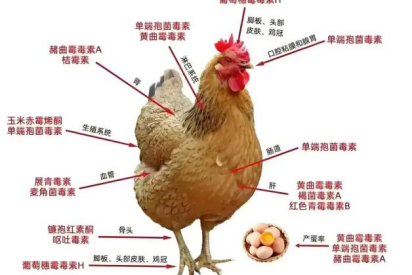
III. Preventive measures for mycotoxins
1, strict control of raw materials
① Keep the corn mold rate below 2%, and avoid using damp or moldy raw materials;
② Regularly clean feed silos, feed troughs, water lines, etc., to prevent mold from “hiding.”
2, scientific feed storage
① Keep the feed storage area dry and well ventilated, and avoid direct sunlight;
②Store feed away from walls and off the ground, and avoid storing it for more than 30 days whenever possible to reduce opportunities for mold growth.
3, dual protection against mold
① Adsorb toxins: Choose a mycotoxin binder that can comprehensively adsorb multiple toxins to prevent them from being absorbed by the body;
② Protects the intestines and liver: Maintains intestinal and liver health, reducing damage to the digestive and metabolic systems caused by toxins.
4, strengthen monitoring and testing
Establish and improve a mycotoxin monitoring and testing system, regularly test raw materials and feed, and promptly identify and address mycotoxin contamination.
Rapid on-site corn assessment method
To determine on-site whether mycotoxin levels in corn exceed the limit, randomly take a handful of corn from any few spots and inspect it for mold. If more than 5 kernels in a handful are moldy, this indicates that the corn's mycotoxin levels exceed the limit; promptly initiate laboratory screening.