
Chicken colibacillosis refers to localized or systemic infections caused in part or entirely by avian pathogenic Escherichia coli (APEC).
I. Disease characteristics
Escherichia coli is ubiquitous in the natural environment, including in feed, drinking water, on the surface of chickens, and in incubators. It is one of the pathogens that must be managed throughout layer production.
Chickens of any age can become infected. However, the incidence and mortality rates vary considerably depending on factors such as the level of husbandry and management, environmental hygiene, the effectiveness of prevention and control measures, and whether other diseases occur as secondary infections. Chicks often develop acute septicemia, while adult laying hens are prone to outbreaks around the onset of lay, resulting in increased culling and mortality and potentially affecting production indicators such as egg production rate.
II. Clinical signs
Chicken colibacillosis has no characteristic clinical signs. Common forms include the following:
1, septicemic form
Rapid death, skin bruising, and poor blood coagulation (dark black). Sick chickens have a poor appetite and severe diarrhea (passing yellow-green feces). In the late stage of the disease, they become severely dehydrated, with shriveled legs. The mortality rate is around 10%.
2, “three-inflammation” type
Common signs include coughing, passing loose yellow-green droppings, weight loss, ruffled feathers, purplish combs, and sporadic deaths.
3, omphalitis type
Commonly seen in chicks a few days after hatching. Signs include an enlarged abdomen, incomplete closure of the navel, brownish surrounding skin, and a foul odor.
4, yolk peritonitis type
Signs include depression, passing loose yellow-white droppings, prolapse, an enlarged abdomen, and laying almost no eggs. The disease has a prolonged course.
5, granuloma type
There are no obvious external symptoms. The main signs are depression and a slower growth rate.
6, ophthalmic form
In the early stage, the eyes itch, and the birds often scratch them with their claws. In the middle and late stages, the eyes may become swollen and watery. In severe cases, one or both eyes may become swollen and suppurative, eventually leading to blindness.
III. Pathological changes
1, septicemic form
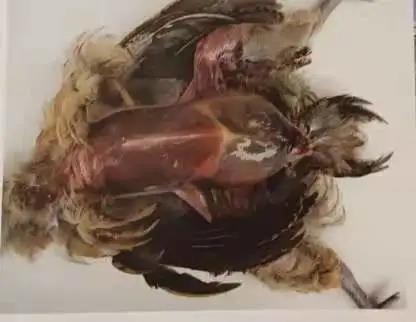
The skin is congested and hemorrhagic; the liver is enlarged, with small white necrotic foci on its surface; the intestinal mucosa is congested and hemorrhagic; the kidneys are enlarged; and the lungs show hemorrhage.
2, “three-inflammation” form
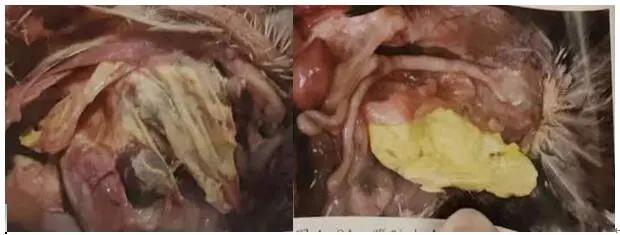
The animal becomes emaciated. The pericardium is thickened, and the pericardial fluid is cloudy. Fibrous material adheres to the epicardium. In severe cases, the pericardium and epicardium adhere to each other. The liver is enlarged, with a layer of white fibrous exudate adhering to its surface; sometimes white necrotic spots are visible on the liver surface. The spleen is slightly enlarged, and the air-sac walls are thickened and cloudy. In severe cases, yellow caseous material can be seen in the abdominal cavity.
3, omphalitis type
The chicks’ abdomens are swollen, and the navel openings have not dried. The soft yellow material in the abdominal cavity changes from its normal pale yellow to a brown or yellow-green watery substance.
4, yolk peritonitis type
The ovaries are degenerated, and the oviducts are severely edematous. The abdominal cavity is filled with pale yellow, foul-smelling fibrinous exudate. Inflammation also occurs in the mesentery and air sacs, sometimes even causing adhesions. Cloacal prolapse is pronounced, and the cloaca is severely inflamed.
5, granuloma type
Typical granulomas appear in organs such as the heart, liver, duodenum, cecum, and mesentery. Their appearance is similar to tuberculous nodules and the tumor nodules of Marek’s disease in chickens.
6, ophthalmia type
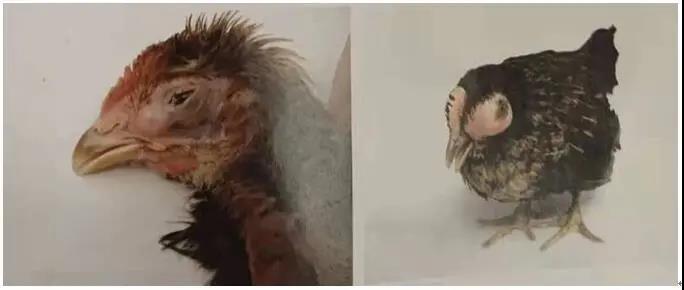
The eyes develop swelling and suppurative lesions; severe cases lead to blindness.
IV. Diagnosis
A preliminary diagnosis can be made based on clinical symptoms and pathological changes; confirmation requires sending samples to a laboratory for bacterial isolation and identification.
As this disease is often secondary to other infectious diseases, differential diagnosis should be performed clinically between uncomplicated Escherichia coli disease and secondary Escherichia coli disease.
V. Prevention and Control Measures
1, Prevention
First, strengthen husbandry management, maintain hygiene in the chicken house, ensure good ventilation and a moderate temperature, and carry out regular disinfection.
Second, prevent diseases that can lead to secondary Escherichia coli infection, such as mycoplasmosis and avian influenza.
Third, during key stages of rearing, such as immunization, flock transfer, and changes in weather, some nutritional supplements can be added to the drinking water or feed to increase the chickens’ resistance.
2, treatment
There are numerous serotypes of Escherichia coli, and it can readily develop drug resistance. Therefore, it is recommended to perform antimicrobial susceptibility testing before clinical treatment and select sensitive drugs for treatment.
During medication, alternate between different drugs to delay the development of drug resistance. If antibiotics are used for treatment, products must be sold in accordance with the withdrawal period for the drugs used.