
During the clinical diagnosis of poultry diseases, it is often found that the livers and intestines of affected birds have sustained varying degrees of damage. Birds with a shorter disease course may have lesions in only one of these organs. However, treatment targeting only a single lesion is often unsatisfactory. This is because we have not adopted an integrated liver-and-gut approach to poultry prevention and treatment.
The liver and intestines are closely connected. In terms of blood supply, approximately 70% of the liver’s blood supply comes from the portal vein, and most of the blood in the portal vein comes from the mesenteric veins. These veins often contain metabolites from the digestive tract and products of gut microorganisms. Once the intestinal barrier function is compromised, large amounts of gut-derived endotoxins can enter the liver, causing fatty degeneration of liver cells and even necrotizing inflammation of liver tissue. Liver damage can reduce the secretion of digestive fluids such as gastric acid and bile acids, and weaken intestinal peristalsis, which in turn can lead to excessive proliferation of intestinal bacteria and dysbiosis. In addition, the large amounts of inflammatory factors produced by the liver can disrupt the tight junctions between intestinal mucosal cells, further increasing intestinal mucosal permeability. The intestinal barrier is the body’s “first line of defense” against contact with external substances, while the clearance and detoxification functions of the liver’s innate immune system constitute the body’s “second line of defense.” Both are essential for maintaining homeostasis in the body’s internal environment.
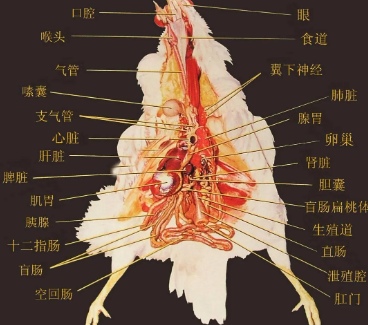
As organs responsible for nutrient absorption and conversion, the liver and intestines affect poultry health and production performance, and determine the economic returns of poultry farms. At the same time, as the body’s two lines of defense against external substances, they are exposed to harmful external substances every day. It is therefore essential to reduce or prevent damage to the liver and intestines from these substances.
1. Carry out effective mycotoxin prevention and control. Mycotoxins are a common threat to liver and gut health: they can damage the liver and cause a range of digestive tract diseases.
1.1 Characteristics and hazards of mycotoxins. During the harvesting and storage of feed ingredients, as well as feed production, processing, transportation, and storage, mycotoxins can contaminate feed to varying degrees. Even feed that appears to be of good quality may be contaminated with mycotoxins. Mycotoxins are invisible and cannot be detected by touch. They also have the characteristics of occurring at low levels, acting synergistically, accumulating, and being difficult to diagnose.
The effects of mycotoxins on laying hens depend on the degree of feed contamination, the types and concentrations of mycotoxins, and the age of the birds, among other factors. The types and levels of toxins in ingredients vary across regions and years. For example, in 2022, zearalenone and deoxynivalenol levels exceeded those of previous years. Unseasonably matured corn often has excessive levels of zearalenone and deoxynivalenol.
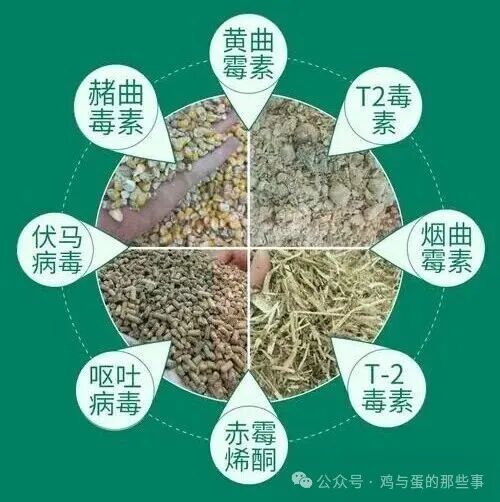
Mild mycotoxin contamination can lead to slower growth, reduced feed intake, poor uniformity, and reduced eggshell quality in poultry. Mycotoxins can also cause oral ulcers, gizzard ulcers, reduced immunity, and fungal hepatitis; severe cases can result in acute illness or even death.
1.2 Causes of mycotoxicosis in livestock and poultry
Mycotoxins exist in two forms: bound and free. When we test feed and raw materials, we can only detect free mycotoxins. Bound mycotoxins can be partially or fully released through breakdown by digestive enzymes or intestinal microorganisms. The detoxification products we use can only adsorb or degrade free mycotoxins; the remaining toxins are still absorbed by the intestine. This is why, after many feed mills and farms add mycotoxin binders, tests may show that mycotoxin levels are within limits or very low, yet livestock and poultry still exhibit signs of mycotoxicosis. In general, mycotoxin detoxification products can only act on mycotoxins in feed and cannot address mycotoxins that enter the bloodstream through the intestine.
1.3 Preventing and controlling mycotoxins
1.3.1 Reduce mycotoxin sources at the source. Manage the source and ensure the safety of raw materials and drinking water to reduce the risk of disease entering through the mouth. To reduce mycotoxin sources at the source, high-quality feed raw materials must be purchased, moldy materials must never be used, corn storage facilities must be properly managed, and a sound first-in, first-out plan for raw materials must be followed. Feed in small amounts, replenish frequently, and distribute feed evenly. Feed at least 3 times per day to prevent secondary mold growth in the troughs. Manage water quality and water lines, clean the water lines regularly, provide the flock with clean drinking water, and prevent mold and bacteria from growing in the water lines.
1.3.2 reduce mycotoxins entering the bloodstream
Add mycotoxin binders and degraders to treat the toxins in the feed as thoroughly as possible, thereby reducing the amount that enters the bloodstream. This is a remedial measure to make up for inadequate control earlier.
1.3.3 clear toxins accumulated in the blood and liver
The largest detoxification organ in the animal’s body is the liver. While reducing mycotoxin intake, liver function must also be enhanced to stimulate the liver to secrete detoxifying enzymes and help it detoxify and eliminate toxins. Most mycotoxin detoxifiers treat mycotoxins in feed through physical adsorption or biodegradation, reducing the amount that enters the animal’s body. However, no matter how perfect the mycotoxin detoxification plan is, it cannot guarantee that 100% of the mycotoxins in the feed will be removed; some will always remain and enter the bloodstream. Therefore, some feed additives with antioxidant, liver-protective, and bile-promoting properties need to be added to stimulate the liver to secrete large amounts of detoxifying enzymes, clear toxins accumulated in the blood and liver, reduce the harm caused by mycotoxins to the body, and improve liver function.
1.4 Misconceptions about most mycotoxin removal solutions
1.4.1 They can only address mycotoxins in feed, and are not used continuously. Adsorbent mycotoxin removers can reduce the absorption of mycotoxins in the intestines, but cannot detoxify them. Degrading mycotoxin removers cannot eliminate toxins by 100%; toxins that have not been degraded will continue to be ingested by poultry.
1.4.2 Using mycotoxin removers that have limited functions or are ineffective. Although high-quality montmorillonite products have a limited function, they are still very effective against aflatoxins. However, montmorillonite quality varies greatly. Low-quality products have no effect and also adsorb vitamins and other nutrients. Increasing the dosage indiscriminately may affect nutrient digestion and absorption and increase the burden on the liver and kidneys.
1.4.3 Mycotoxin poisoning symptoms have already appeared, yet products that only remove mycotoxins are still being used. Although toxin intake needs to be reduced in affected poultry, the more important and urgent task is detoxification and toxin elimination.