
Following the recent detection of an outbreak of Newcastle disease (ENC) on a commercial farm in Santa Catarina, Brazil, the National Service for Agrifood Health and Quality (SENASA) strengthened its control measures to prevent the entry of poultry goods from that origin that could pose a health risk.
The finding was reported by the Ministry of Agriculture and Livestock (MAPA) of the neighboring country, which confirmed the positive result at a commercial turkey farm in the municipality of Nova Itaberaba. Following the control, containment, and eradication measures for the virus taken by the Brazilian agency—as set out in its Contingency Plan—SENASA applied the zoning strategy to preserve the continuity of trade.
Since 2025, Argentina and Brazil have maintained an agreement recognizing their compartmentalization and zoning schemes for Newcastle disease and avian influenza, both of which are covered by the World Organisation for Animal Health (WOAH).
These tools include the exchange of technical and epidemiological information, necessary to demonstrate that both countries have equivalent systems that guarantee the traceability and segregation of poultry products originating exclusively from disease-free zones.
Thus, following confirmation of the outbreak, only imports of goods from the restricted zone delimited by the Brazilian authority were suspended. The rest of Brazil’s poultry products may continue to be marketed as usual, provided they have official MAPA certification confirming their origin in an ENC-free zone.
Additionally, under the compartmentalization agreement, MAPA may choose to certify a disease-free zone or compartment when the shipment of day-old birds comes from establishments authorized by SENASA.
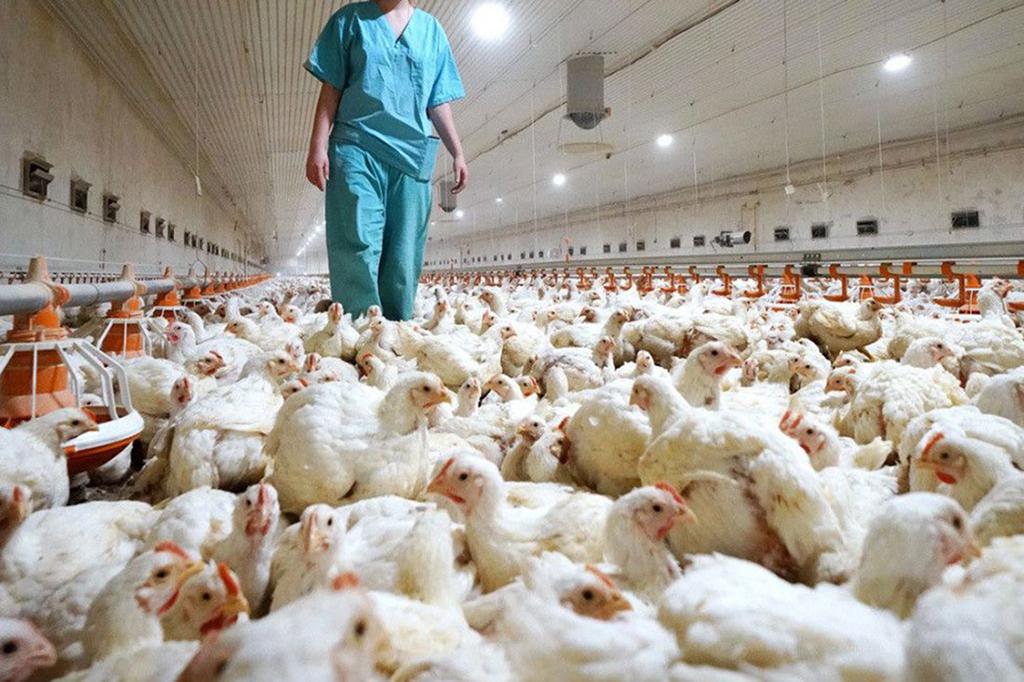
Disease prevention and notification
Argentina is free of Newcastle disease and has not recorded any outbreaks since 1987, so maintaining this health status is essential for the country’s poultry production.
Given the regional situation and with the aim of preventing the virus from entering, commercial establishments are reminded of the importance of strengthening all the management, hygiene and biosecurity measures set out in Resolution No. 1699/2019, such as:
-Inspect the integrity of bird-proof nets.
-Clean and disinfect facilities, vehicles and work supplies.
-Reduce or eliminate areas of standing water that may attract wild birds.
-Control the entry and movement of people, vehicles and equipment.
-Use personal protective equipment correctly, avoiding its movement between sectors.
On the other hand, poultry farms are advised to include vaccination against ENC in their health plans, according to the birds’ production category. To this end, it is essential that its implementation be guided by the judgment of the farm’s responsible veterinarian, as a complementary measure to strengthen disease prevention and control.
The circulation of Newcastle disease virus (NDV), driven by the migratory movements of wild birds, calls on all actors in the poultry chain to remain especially alert and maintain constant vigilance for flocks experiencing unusual mortality or signs consistent with the disease. If these are observed, it is essential to notify SENASA immediately to contain and prevent the spread of the virus.
Notifications can be made at the nearest Senasa offices; via WhatsApp at 11 5700 5704; through the mobile app “Senasa Notifications,” available on the Play Store; by sending an email to notificaciones@senasa.gob.ar, or through the section Notify Senasa on our website.