
In poultry practice, cases of laying hens and broilers having difficulty standing or becoming paralyzed for various reasons are extremely common. In addition to common conditions that directly cause joint infections, such as Mycoplasma synoviae, viral arthritis, Escherichia coli, Ornithobacterium, Streptococcus and Staphylococcus arthritis, there are many other causes of joint problems. The movement disorders they cause in poultry, directly or indirectly, result in major losses in broiler and layer production. For example, difficulty walking and eating affects flock growth; uneven vaccine intake during immunization can lead to immunization failure in the flock.
I. Vitamin E and trace element selenium deficiency
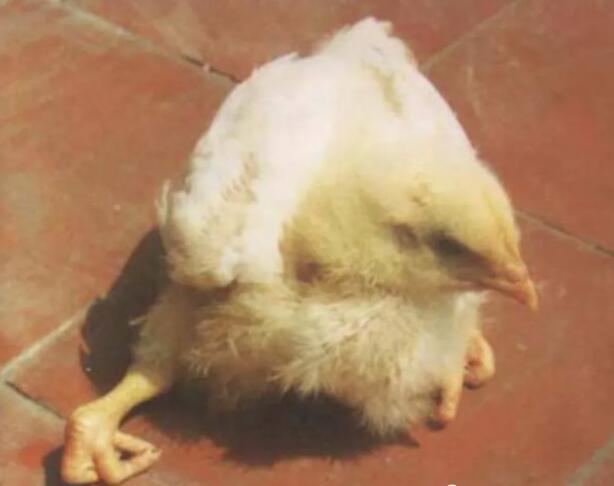
Encephalomalacia: This disease is mainly caused by vitamin E deficiency. Its main lesion is cerebellar softening in chicks, and its main symptom is ataxia. It mainly occurs in chicks aged 2 to 7 weeks, especially in broiler flocks; it has also occurred on layer farms in the past two years. When vitamin E is deficient, chicks show poor development, weakness and lethargy. Early characteristic symptoms include trembling of the head and neck. In severe cases, movement disorders develop: the head bends downward or backward and contracts, sometimes bending to one side or arching backward in opisthotonus. Both legs have intermittent spasms and convulsions, with incomplete paralysis; the bird walks unsteadily and eventually becomes paralyzed, with its head and neck extended and resting on the ground. The head and neck feel cool. Because eating becomes difficult, the bird eventually dies of exhaustion. Necropsy reveals softening and liquefaction of the occipital lobe of the cerebrum. Trace element selenium deficiency can exacerbate vitamin E deficiency symptoms. It can also cause a gelatinous exudate under the skin of the chest and abdomen and between the thighs; the exudate is pale yellow or light green. Newly hatched chicks may also have severe, transparent gelatinous exudate under the skin of the neck. In the past two years, the frequent occurrence of this condition has been related not only to problems with the amount of additives in the feed itself, but also to the destruction of these antioxidant nutrients during feed spoilage.
II. Movement disorders associated in some way with calcium and phosphorus
1, vitamin D deficiency or low calcium in the feed, or high calcium and low phosphorus. Vitamin D deficiency or an improper calcium-to-phosphorus ratio in feed most visibly causes rickets in poultry and paralysis, soft-shelled eggs and shell-less eggs in adult laying hens. Sudden death at night may also occur. The earliest symptoms are weakness in the legs, reluctance to move or an unsteady gait; birds often walk with their hocks touching the ground. The beak and toes are soft and bend easily, and the keel is deformed. Feed intake decreases, and growth slows or stops completely. Necropsy reveals long bones that are soft and bend easily; the ends of the long bones are prone to fracture near the epiphyseal cartilage. The junction between the soft and hard portions of the ribs in the chest is bent and deformed, causing narrowing of the thoracic cavity.
2, problems associated with vitamin D3 absorption and its activation in the body. Vitamin D absorption and activation depend on normal liver and kidney function. All diseases that adversely affect liver function, such as inclusion body hepatitis, Vibrio infection, histomoniasis and liver cirrhosis caused by mycotoxins, can reduce liver function and bile synthesis, thereby reducing intestinal absorption of fat-soluble vitamins. Their effects on liver and kidney function can also prevent vitamin D from being activated into its active form, 1,25-dihydroxyvitamin D3. Thus, even if the feed contains sufficient vitamin D, calcium absorption may still be impaired, resulting in abnormal skeletal development.
3, proventriculitis issues: Proventriculitis and gizzard inflammation are abnormal proventricular function disorders caused by multiple factors that have become widespread in broilers and broiler-cross chickens in recent years. Among these, abnormal proventricular function caused by immunosuppressive viruses or mycotoxins, often transmitted vertically, is extremely common. It mainly leads to reduced gastric juice secretion and impaired intestinal absorption of feed-derived minerals such as calcium, phosphorus, manganese, and iron, making the femoral neck prone to osteoporosis, fractures, or paralysis. Clinical signs mainly include low feed intake, indigestion, anemia, slow growth, and immunosuppression, which make birds susceptible to various infections and seriously affect production at broiler and pullet-rearing enterprises.
Three. Vitamin B1 deficiency
Vitamin B1 is involved in the synthesis of fatty acids, cholesterol, and the neurotransmitter acetylcholine; it inhibits cholinesterase activity and reduces acetylcholine hydrolysis. A deficiency causes dysfunction of cholinergic nerve fibers, thereby weakening gastrointestinal motility and reducing digestive fluid secretion, causing severe anorexia in the flock. At the same time, impaired transmission of excitation at neuromuscular junctions reduces skeletal muscle excitability and motor ability. Vitamin B1 deficiency reduces pyruvate decarboxylase activity in the body. Pyruvate produced by glycolysis in the central nervous system cannot be promptly decarboxylated into acetyl-CoA and enter the tricarboxylic acid cycle for aerobic oxidation, causing keto acids to accumulate in the nervous system and disrupting the transmission of nerve impulses, resulting in polyneuritis. The main signs are anorexia (particularly pronounced), slow growth, emaciation, anemia, lowered body temperature, and leg weakness. Affected birds may sometimes have diarrhea, followed by extensor muscle spasms in the legs, wings, and neck due to polyneuritis. The hocks and tail touch the ground, the head is tilted backward, and the bird shows opisthotonus in a characteristic “stargazing” posture.
Four. Vitamin B2 deficiency
As a coenzyme for various flavin enzymes, vitamin B2 deficiency not only affects the biological oxidation of the three major nutrients, but also impairs the synthesis of unsaturated fatty acids, reduced glutathione, and vitamin C in the body, affecting the antioxidant function of cells and tissues and the fluidity of cell membranes. A characteristic lesion of deficiency is swelling of the bilateral sciatic plexuses, brachial plexuses, and vagus nerves. A characteristic sign is “curled-toe” paralysis. This condition has been frequently observed in broilers and layer chickens in recent years.
Five. Folic acid deficiency
Folic acid deficiency can cause wry neck similar to that caused by botulinum toxin poisoning. This condition occurs from time to time in broiler and layer pullet flocks. Main signs include difficulty standing, a limp neck, and a drooping head touching the ground, while the eyes appear alert. Epidemiological investigations in such cases have found no use of animal protein ingredients in the feed, and necropsy has shown no “encephalomalacia” characteristic of vitamin E deficiency. Supplementing folic acid can quickly alleviate the condition. This vitamin deficiency was extremely rare in clinical practice in the past; its occurrence in clinical cases is related in part to the sharp rise in the prices of various vitamin ingredients last year and is likely due to insufficient supplementation in the feed.
Six. Manganese deficiency
Manganese deficiency impairs the synthesis of the bone matrix, causing chondrodystrophy in growing chickens and embryos. It affects bone growth, development, and normal calcification, and also causes abnormal cartilage development in the inner ear, leading to balance disorders. The characteristic clinical sign in pullets and adult laying hens is perosis. In breeder pullets, manganese deficiency can readily cause abnormal gonadal development, especially underdevelopment or failure of the testes to develop in roosters. This can result in little or no semen production once the flock reaches adulthood, causing irreparable losses to the breeder farm. In adult chickens, manganese deficiency may present as difficulty for chicks to break out of the shell in the late stages of hatching, with some dying inside the shell. Chicks may have short heads and parrot beaks. They are also prone to various leg problems, such as lateral splay leg; this is more common in broiler flocks.
Seven. Prolonged diarrhea reduces the absorption of various trace elements and vitamins in the gastrointestinal tract, leading to weakness and paralysis.
This diarrhea is often associated with a range of management problems, including heavy bacterial contamination of the water source, failure to clean water lines over an extended period, heavy bacterial contamination of feed ingredients, and damp feed or caked feed left in troughs for extended periods. These problems often lead to bacterial intestinal inflammation, intestinal damage from mycotoxins, and abnormal liver function at poultry farms, in turn affecting the digestion and absorption of nutrients in the gastrointestinal tract. If these management factors are not addressed, treatment with antibacterial drugs alone is unlikely to bring the condition under control. These problems are also an important reason why layer farms are more prone to heat-stress sudden death and sudden death during the laying period for unknown reasons in summer.
There are many other causes of clinical paralysis in poultry that do not involve direct infection of the joints, such as neural Marek's disease, encephalomyelitis, Escherichia coli encephalitis, and fungal encephalitis. However, there have been few clinical cases in the past two years, so these will not be discussed further here.
Paralysis can also result from an insufficient supply of nutrients involved in bone matrix synthesis, such as vitamin B6, vitamin A, vitamin D, vitamin C, vitamin E, and vitamin K. Copper, iron, and manganese are all closely related to bone development, and insufficient amounts can significantly affect bone growth and development. Only by comprehensively and appropriately accounting for these factors in the nutritional requirements of breeder and commercial poultry, while also ensuring vaccination against relevant infectious diseases that may cause paralysis, can paralysis problems in flocks be effectively prevented.