
Introduction:
Many factors can cause abnormal egg production in laying hens, including physiological, nutritional, stress-related, and pathological factors. This article briefly describes abnormal egg production in laying hens caused by MS.
I. Pathogen
Mycoplasma Synoviae (MS) is the most pathogenic and has a complex immune evasion mechanism. It causes acute or chronic infectious disease and is the poultry mycoplasma pathogen responsible for the greatest economic losses.
MS has no cell wall and is resistant to penicillins (β-lactams), such as ampicillin, amoxicillin, and ceftiofur.
MS can spread horizontally or vertically and can cause extensive damage to chickens. It can cause respiratory disease, bursitis, or tenosynovitis, affect chicken growth, reduce egg production or prevent it from reaching the desired peak, and affect egg quality. Although currently reported MS serotypes are relatively limited, MS isolates from different sites show different tissue tropisms. MS isolated from the synovial bursa is more likely to cause synovial bursitis; oviduct-type strains cause eggshell apex abnormalities (EAA), reducing egg production and eggshell quality and increasing the rate of egg breakage. In breeder chickens, MS infection increases embryo mortality and reduces hatchability; respiratory-type strains mainly cause subclinical respiratory disease.
MS often causes mixed infections with low-pathogenic avian influenza, infectious bronchitis, Avibacterium paragallinarum, and colibacillosis, inducing airsacculitis and causing severe economic losses.
As the scale of farming expands and consumer market requirements increase, the impact of MS on egg production and egg quality is receiving increasing attention.
II. Abnormal egg production caused by MS
1. MS infection in laying hens causes liver and spleen damage, affecting yolk synthesis and consequently reducing egg production; the decrease in egg production can reach 10%-30%; 2. Ovaritis caused by MS infection in laying hens affects follicle development, leading to hormonal dysfunction, delayed peak egg production, and persistently low production ( 5%-15% lower than in healthy flocks), 10~20 fewer eggs, and no peak.
3. MS infection in laying hens causes ovarian inflammation, resulting in the abnormal detachment of small follicles, which enter the oviduct and form small eggs (Figure one);
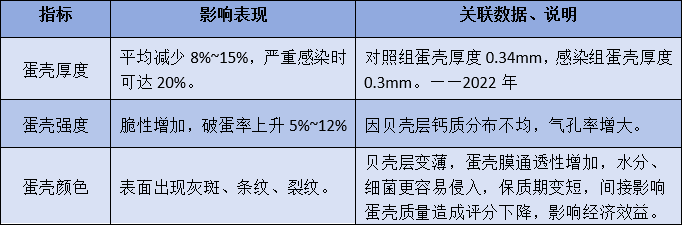
4. Oviduct-tropic MS damages the oviduct shell gland’s ability to secrete calcium, resulting in EAA eggs (Figure two). The eggshells become thinner and more brittle, making them prone to breakage during egg collection (Figure three). Increased eggshell membrane permeability and thinner eggshells make eggs with watery rings more likely, reducing egg quality (Table one).
5. Severe infection with oviduct-tropic MS causes calcium deposition in the shell gland of the chicken oviduct, increasing the proportion of soft-shelled eggs.
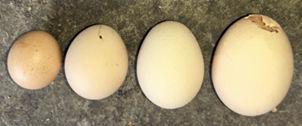
Figure one
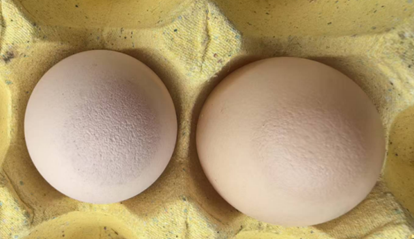
Figure two
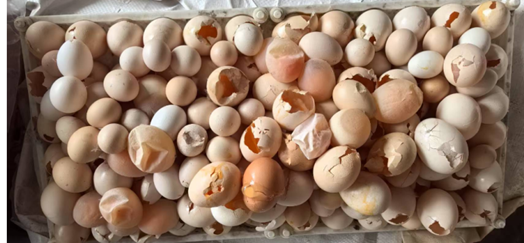
Figure three
Overall assessment:
III. Severe oviduct lesions caused by MS — calcium particle deposition in the eggshell-secreting glands of laying hens
This disease appears to involve many mixed-infection factors; here, only the role of MS is briefly described. The main manifestation is soft-shelled eggs in laying hens before peak production (Figure four). Both watery and thick egg whites are observed, with a proportion of over 15%. Dissection of affected laying hens reveals red and yellow lesions in the uterine part of the oviduct (Figure five). In severe cases, the eggshell glands in the uterine part of the hen’s oviduct are filled with white, granular material (Figure six). Drug treatment produces no obvious improvement. After some affected hens are culled, the condition stabilizes for a period, but then recurs.
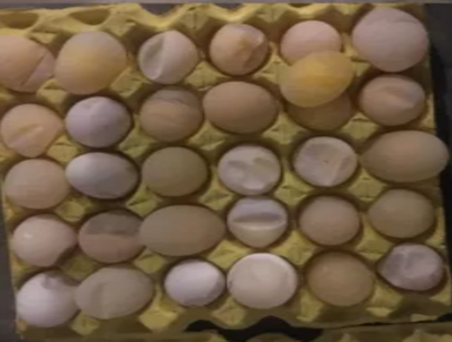
Figure four
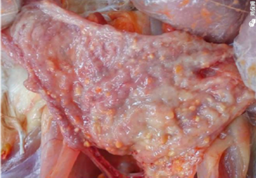
Figure five
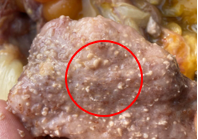
Figure six
Before 2018 year, this phenomenon occurred occasionally. From 2020~2022 year, aquaculture companies in Liaoning, Shandong, Gansu, Hebei, Henan, Jiangsu, Anhui, and other areas consulted about these types of problems. In these areas, after investigating the medication background, samples of diseased material were collected under relatively clean conditions, and microscopy, sectioning, PCR pathogen testing, and other work were carried out.
1. Microscopic examination
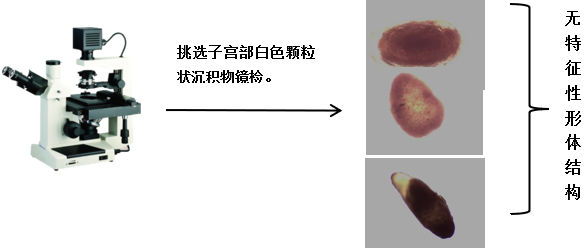
2. Slice observation
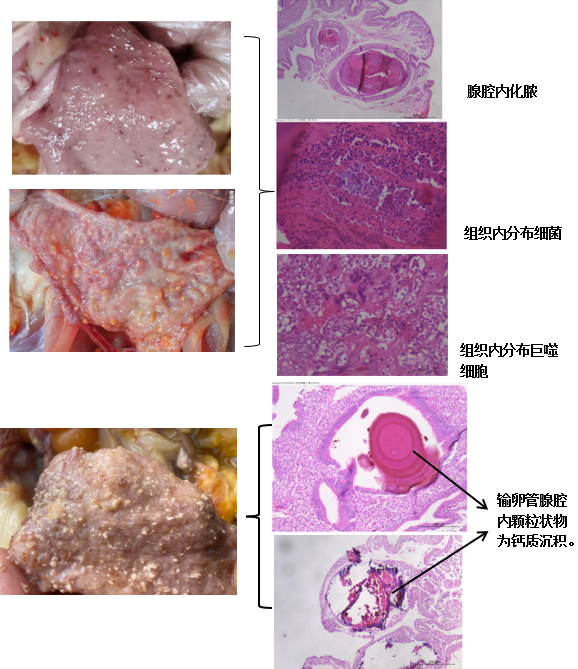
3. Test the pathological material at the same time:
Laboratory PCR test results summary:
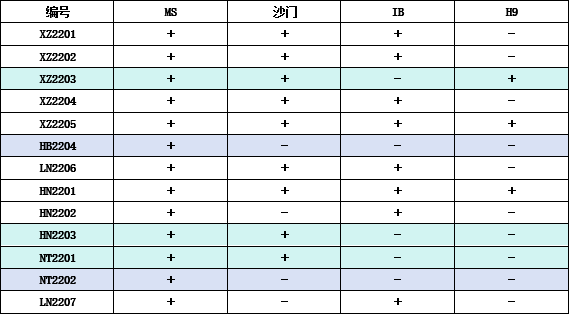
MS was detected in all results, and the test results corresponded to the on-site conditions. Some soft-shelled or thin-shelled eggs had watery egg whites, while others did not, or were barely watery. This suggests a possible link to co-infection with infectious bronchitis.
Four. Comprehensive prevention and control of MS
First, it should be noted that hygiene and disinfection at layer farms are an important part of controlling epidemic diseases.
1. Strictly control the introduction of breeding stock and develop and maintain clean flocks (breeding farms)—closely monitor the MS-positive rate among chicks;
2. Biosecurity and enhanced management—use an all-in/all-out system, reduce stress, improve flock condition, and promptly cull weak birds;
3. Vaccination and medication for prevention
(1) Short-term, concentrated medication can be effective for short-term MS clearance. It is necessary to understand MS transmission and shedding cycles. Alternating medication at different stages during brooding is a feasible and effective approach. Tilmicosin, tylvalosin, tylosin, and other drugs remain effective against MS, but antimicrobial resistance must be monitored!
(2) Live vaccine immunization:
The conditions of use are relatively strict. Pay attention to the timing of immunization and assess wild-type virus exposure. If early infection is present, vaccination may trigger or aggravate the condition, so medication-based clearance is needed in advance. It cannot prevent MS from colonizing the body long term.
(3) Inactivated vaccine immunization
Inactivated vaccines cannot prevent infection with wild-type strains. Once humoral antibody levels reach a certain threshold, they can reduce disease severity after infection, reduce pathogen shedding, and lower economic losses. In recent years, the MS inactivated vaccine HN01 strain has attracted considerable attention in the market.
Source: Sinopharm Animal Health Disease Prevention Technology; Author: Li Yimin