
A common phenomenon during the process, and also a major factor in flock illness. Some people may ask: My poultry house temperature is kept very stable, there is no high ventilation, and no air is blowing directly on the chickens. So why do the chickens still get chilled and become ill?
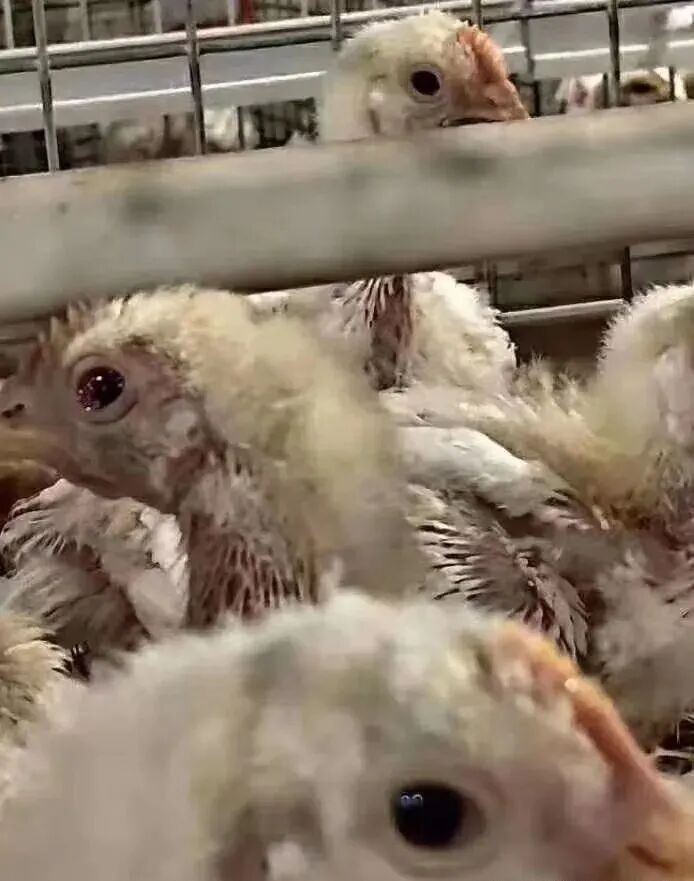
Chickens can get chilled at many stages of raising them. It is not only temperature control or ventilation blowing on them that can cause chilling. I have summarized some factors that can chill a flock during raising, and hope this will be helpful to everyone!
1, wet feathers can cause chickens to get chilled. Anything that causes chicks to “take a bath”; during brooding, the water line is too low and the water pressure is too high, so chicks climb into the drinking cups; leaking nipples cause their feathers to get wet; damaged spraying equipment, severely dripping nozzles, or spraying for too long can wet their feathers; condensation on partitions in the poultry house or leaking roofs in some buildings can also cause this.
2, improper humidification: focusing only on humidification without considering the flock’s temperature. When the flock feels cold, humidifying with a humidification pipe can chill the chickens; the water used for humidification is too cold, and when the mist lands on the chickens, they get chilled; if a large amount of water accumulates on the floor during humidification, the cool air produced by evaporation can also chill the chicks’ abdomens.
3, poor sealing of the poultry house can cause drafts at side windows, waste outlets, bird-loading outlets, cooling pads, exhaust fan openings, and other places, chilling the chickens in those areas due to the low temperature.
4, after air enters the poultry house through the air inlet, obstacles along its path as it warms up can cause the cool air to rebound and blow directly onto the flock, chilling the chickens.
5, unreasonable temperature control: the temperature drops too quickly. This is especially common in cold seasons; such a rapid, deliberately induced temperature drop can often chill the flock.
6, making an incorrect assessment by relying solely on the temperature shown on the thermometer and disregarding the flock’s physiological and behavioral responses, can cause the chickens to become chilled.
The indoor temperature shown on a thermometer can only serve as a reference. The reading is affected by factors such as the accuracy of the thermometer itself, where it is placed (whether the location is representative), and its hanging height (whether it is appropriate). The temperature suitable for the chickens depends not only on the temperature in the poultry house, but also significantly on humidity, air speed, lighting, and feeding conditions. At the same poultry-house temperature, higher humidity makes the chickens feel warmer, increased air speed makes them feel colder, turning off the lights makes them feel cooler, and feeding makes them feel warmer, while hunger makes them feel colder.
7, neglecting duties or sleeping during night shifts can cause the fire to burn weakly or go out, lowering the furnace temperature and chilling the flock.
8, when the weather changes suddenly and the outdoor temperature drops, the temperature inside the poultry house may also drop after a delay. If ventilation is not adjusted promptly, the falling indoor temperature can chill the chickens.
Therefore, remain highly alert when outdoor temperatures change (during strong winds, heavy snow, rain, or when temperatures drop in the afternoon) and monitor the poultry-house temperature frequently so that timely action can be taken, such as reducing ventilation, increasing heating, or narrowing the air inlets.
9, insufficient heating from the hot-water boiler can lower the poultry-house temperature and chill the flock. Inspect and maintain the heating equipment, and train staff in proper boiler-firing methods.
10, incorrectly positioned or overly large air inlets can chill the flock. The principle for using air inlets is to increase the inlet area where the temperature is relatively high and reduce it where the temperature is relatively low. If, in practice, the relative temperature differences are not taken into account and inlets are opened simply to let air in, the flock may become chilled.
11, failing to install protective measures at the air inlets can cause the chickens below them to become chilled.