
Have you ever run into this situation when raising chickens?—
The flock seems alert enough, but the droppings look wrong: either loose and shapeless, or in all sorts of colors—yellow, white, green, or black. Feed-like droppings, tomato-like droppings, and fish-gut-like droppings take turns appearing. You quickly start antibiotics, switching between neomycin sulfate, amoxicillin, and enrofloxacin. You spend quite a bit, but the results are inconsistent, and the problem comes back a few days later.
What’s the problem?
Intestinal disease is never just one disease; it is a category of diseases. Different causes call for completely different treatments. Using antibacterial drugs against coccidiosis, or applying an antiviral approach to fight mold, is like using cold medicine to treat a stomach problem—it wastes effort and delays treatment. What’s even more painful is that the losses caused by intestinal disease go far beyond medication costs: the feed-to-meat ratio rises, eggshells get dirty, weight gain becomes uneven, and mortality and culling rates climb. Over one flock cycle, the hidden losses can be more than ten times the medication costs.
Today, let’s clearly explain the five types of intestinal diseases in chickens. After reading this article, you should at least have a clear idea of what you’re dealing with and no longer administer medication blindly.
I. Bacterial intestinal diseases—the most common “old adversary”
Pathogens: Escherichia coli, Salmonella, Clostridium perfringens, and others.
This type of disease is very common on chicken farms. Necrotic enteritis caused by Clostridium perfringens is especially common and is considered the leading cause of “rotten gut.” In the early stages, affected chickens pass loose yellowish-white droppings, which gradually turn brown-black. In severe cases, the droppings look like coal tar and contain blood clots. During acute outbreaks, chickens may die suddenly within 1 to 2 hours, and the mortality rate can soar to 50%. Subclinical cases are more insidious: the chickens do not die, but their feed intake drops, weight gain slows, and the feed conversion ratio remains high. By the time you notice, you may already have incurred substantial losses.
How to diagnose: Perform a necropsy on a dead chicken. The intestines show diffuse necrosis, and the intestinal walls are congested and swollen; severe cases may have ulcerative lesions. These are typical signs of necrotic enteritis.
Treatment approach: For bacterial disease, use antibiotics as appropriate. Common clinical combination regimens include “florfenicol + colistin sulfate + neomycin sulfate” or “amoxicillin + colistin sulfate + tinidazole.” However, be sure to follow antibiotic treatment with microbial preparations to restore the intestinal microbiota; otherwise, the condition may recur.
II. Viral intestinal diseases—do not treat viruses as bacteria
Pathogens: Newcastle disease virus, reovirus, mild influenza virus, etc.
Viral enteric diseases are the most likely to be misdiagnosed. When chickens develop diarrhea, the first reaction of farmers is “enteritis,” so they use antibiotics, but they have no effect at all. Why? Because the underlying cause is viral.
Diarrhea caused by Newcastle disease is characterized by hemorrhage in the proventricular papillae and three jujube-stone-shaped ulcers and hemorrhages in the intestines. These are key indicators for differential diagnosis. Reovirus is more insidious: chicks may develop diarrhea and malabsorption syndrome at 8 to 10 days of age. They grow slowly and have poor feather development, but the mortality rate is not high, so the condition is easily overlooked.
How to tell: If, in addition to diarrhea, the flock also has respiratory symptoms or neurological symptoms (twisting their heads, walking in circles), or if feed intake across the flock drops sharply, prioritize investigating viral causes.
Medication approach: The disease is viral, so antibiotics are ineffective. The core strategy is vaccination for prevention plus emergency immunization. Breeder chickens receive a live avian reovirus vaccine at 7 days of age and 5 weeks of age, followed by inactivated vaccines at 10 and 20 weeks. Maternal antibodies can protect chicks for approximately 3 weeks. After the disease occurs, the focus is on controlling secondary infections, repairing the intestines, and boosting immunity.
III. Fungal intestinal diseases — the overlooked “hidden killer”
Pathogens: Aspergillus fumigatus, Aspergillus flavus, Candida albicans, and others.
Many poultry farmers do not even suspect the intestines when it comes to this category of disease. Excessive mycotoxins, moldy litter, and feed troughs that are not cleaned for long periods can allow mold to take hold in the intestines after chickens ingest it, causing chronic inflammation and impaired digestive function.
The symptoms of fungal enteric disease are not as “dramatic” as those of bacterial and viral diseases; instead, they cause more chronic depletion: the flock grows slowly, has poor uniformity, and has persistently loose droppings. On dissection, white or grayish-white pseudomembranes may be seen on the intestinal mucosa. In severe cases, mold patches may also be visible in the crop and proventriculus.
How to assess: If hygiene at your chicken farm is average, feed storage is not sufficiently standardized, and the flock has had occasional diarrhea for a long time that does not respond to antibiotics, consider investigating a fungal cause. Mold culture or microscopic examination can be performed for diagnosis.
Treatment approach: There is currently no specific drug; prevention is far more important than treatment. Nystatin, clotrimazole, amphotericin B, and other drugs may be used under veterinary guidance. The fundamental measures are to manage feed ingredients properly, clean feed troughs and water lines regularly, and keep the litter dry.
IV. Enterotoxic enteric disease—enterotoxemia syndrome
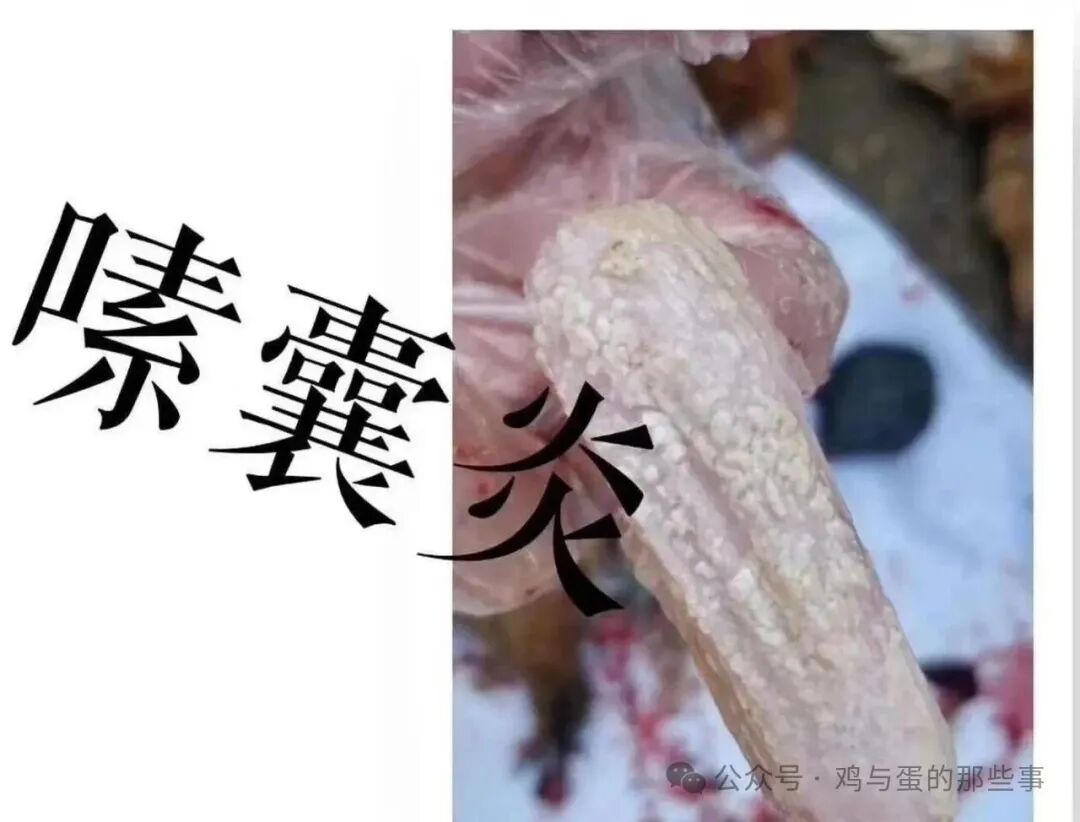
This is not caused by a single pathogen, but by a combination of factors: small-intestinal coccidia strike first, damaging the intestinal mucosa; anaerobic bacteria such as Clostridium perfringens take advantage of the weakened gut, multiply rapidly, and produce toxins; the toxins enter the bloodstream, causing systemic damage.
A typical sign is undigested feed in the droppings—what poultry farmers commonly call “feed passage.” In the early stages, the droppings are loose and pale, appearing light yellow or pale yellow-green. In the middle to later stages, tomato-like or fish-gut-like droppings may appear, and feed intake decreases by 10% to 30%. Most seriously, some chickens in the middle to later stages may become agitated and restless, squawk, and develop head and neck tremors, followed by paralysis, exhaustion, and death. This closely resembles sudden death syndrome; in fact, toxins have affected the nervous system and heart function.
How to tell: When you see the combination of “feed passage + tomato-like droppings + agitation followed by paralysis,” enterotoxemia can basically be identified.
Treatment approach: Antibiotics alone are not enough; an anticoccidial drug, an antibacterial drug, and an intestinal repair agent must be used together. First use an anticoccidial drug to control the protozoa, then use antibiotics to suppress anaerobic bacteria, and finally use cod liver oil or a multivitamin to repair the intestinal mucosa.
V. Adenomyogastritis-related intestinal disease—the root cause is in the stomach, not the intestines
This type is the easiest to confuse with other conditions. When chickens have diarrhea and pass undigested feed, you may think it is an intestinal problem, but the root cause is actually in the proventriculus and gizzard.
Proventriculitis and gizzard inflammation mean that food is already poorly digested in the stomach, so it naturally cannot be absorbed in the intestines. The feces consist entirely of undigested feed. Affected chickens have reduced appetite, stunted growth, and weight loss. Their feces are yellow, soft, and narrow-strip-shaped, with an oily “fish intestine-like” or rotten-carrot-like appearance.
The key difference is that chickens with proventriculitis and gizzard inflammation always have intestinal problems, but chickens with intestinal problems do not necessarily have proventriculitis and gizzard inflammation. So if treating it as an intestinal disease for a long time has had no effect, be sure to perform a necropsy to check whether the proventriculus is swollen and spherical and whether there are ulcer lesions on the gizzard’s koilin layer.
Medication approach: Treating only the intestines is not enough; the stomach, intestines, and mycotoxin detoxification must be addressed together. First deal with mycotoxins (using a mycotoxin binder), repair the gastric mucosa, and then regulate the intestines. Prevent proventriculitis before 20 days of age to greatly reduce the likelihood of later onset.
Why are intestinal diseases difficult to treat? Because the “diarrhea” you see is only the result, not the cause. Bacteria, viruses, fungi, parasites, toxins, and stomach disorders can all cause chickens to have diarrhea, but the appropriate treatment differs completely.
Here are three practical tips:
First, check the droppings before giving medication. Half an hour after cleaning them up, squat down and examine the fresh droppings—are they well-formed? Is there a white layer of urates on the surface? Is the color normal? Is there a lot of feed in them? These details are a hundred times more useful than just saying “diarrhea.”
Second, don’t reach for antibiotics right away. Antibiotics are only effective against bacteria. Coccidiosis requires anticoccidial drugs, viruses are addressed with vaccines, mold is managed through husbandry, and intestinal toxemia syndrome requires combination medication. Using antibiotics blindly not only fails to treat the problem, but also disrupts the gut microbiota, making things worse the more you treat.
Third, prevention is always better than treatment. Starting on day 3 after the chicks are placed in the house, adding probiotics to the drinking water 2 times per week can reduce the incidence of intestinal diseases by 30% and increase the average weight at market by 0.2 kilograms. Managing feed and drinking water, keeping the litter dry, and regularly cleaning water lines and feeders—getting these everyday practices right works better than any miracle drug.