
During the autumn and winter seasons, most poultry farmers focus too much on retaining heat and neglect the important step of ventilation. Many farmers aren’t raising chickens so much as suffocating them. “One stuff-up, one flash, and you’re sure to get the flu”; “If you keep them sealed in and don’t change, they’re prone to ‘支堵’.”
I. Not ventilating for fear the chickens will get cold
In fact, farmers have a misconception about this. Chickens at 30 days old have already grown a full set of feathers and have some ability to withstand the cold.
As long as the temperature is kept between 20-24 degrees and does not fluctuate sharply, the chickens will be very comfortable. Flock problems are often caused by a large temperature difference and alternating hot and cold conditions.
Here is a very simple example: free-range chickens raised at home and kept outdoors in winter rarely develop respiratory problems.
Therefore, when managing temperature and ventilation, as long as the temperature remains stable and ventilation takes priority over heat retention, chickens will rarely develop respiratory problems. You could also say that respiratory problems are caused by stuffiness.
II. Uneven control of brooding temperature
This problem occurs mainly in standardized poultry houses, where the temperature difference between the front and rear of the house is too large.
The temperature in the first row at the front is good, but the temperature in the last row is inadequate. As a result, day-old chicks huddle together when the temperature is too low. This affects access to water and feed and creates risks for their later growth.
The key to brooding is to assess the temperature based on the chicks and adjust it appropriately according to how the flock is distributed. Do not rely on a single temperature reading. At one farm, a problem occurred when the chicks were one day old. The farm worker had placed the indoor thermometer and hygrometer beneath the hot-air duct, where hot air coming from the duct blew directly onto the thermometer. It displayed 39 degrees, and the worker recorded this temperature. However, the thermostat outside showed an indoor temperature of 36 degrees, and the temperature probe was in front of the second row. The chicks in the third row were huddling together, clearly indicating that the temperature was too low. A temperature reading on its own is meaningless; the temperature must be appropriate for the condition of the flock.
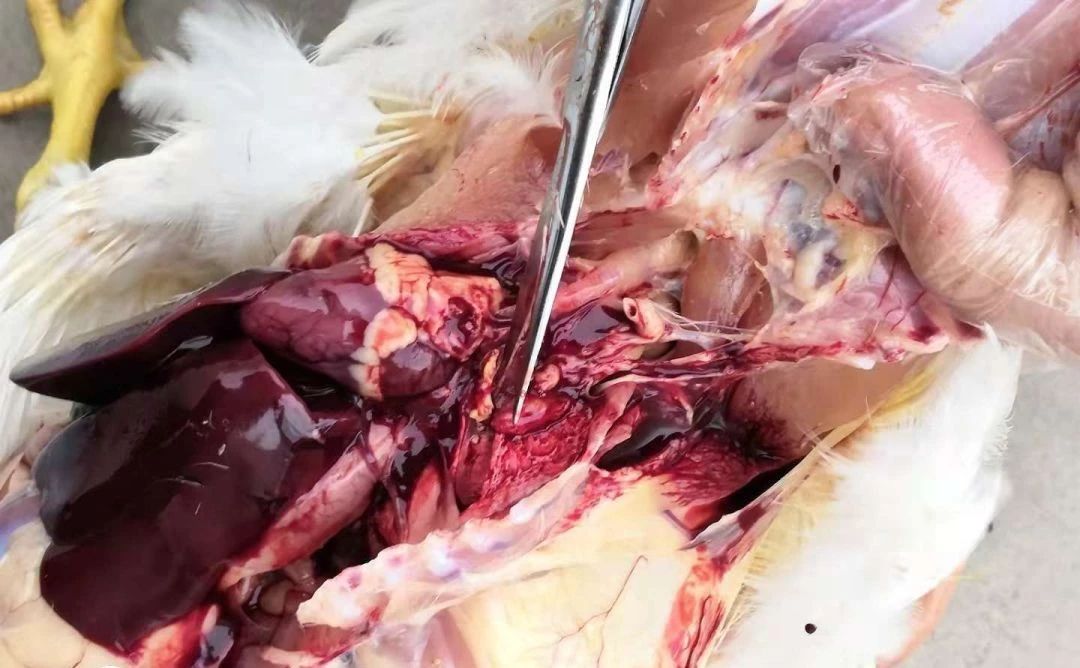
The main problems that occur after 30 days of age are respiratory disease, airsacculitis, and pericarditis and perihepatitis. Most veterinarians diagnose these as influenza, or as conditions caused by influenza—in other words, what is commonly called viral disease.
I saw one farmer whose flock developed the above problems at 35 days of age. When I visited the farm, I found that the ammonia smell in the poultry house was very strong and the humidity was too high.
The recommendation was to prioritize ventilation by opening the vents at both ends of the house to allow air to circulate. Some liver-protective and detoxifying medicines were used. Because mortality and culling were high at the time, the farmer had already spent nearly two yuan on medicines in the early stage and had clearly lost confidence. In a fit of frustration, the farmer also removed the plastic sheeting at the front of the poultry house, stopped closing the windows at night, and considered sending the flock to market early. As a result, by 40 days of age, the chickens no longer had respiratory problems, there were virtually no more deaths, and feed intake had increased.
Recently, the most common problem I have encountered is respiratory disease in flocks. Once respiratory symptoms appear, the disease is difficult to control. Feed intake does not increase, and controlling the problem is costly for farmers. Therefore, I will share in detail a comprehensive approach to preventing and controlling respiratory disease in flocks, based on recent experience.
Three. Causes of disease in the flock:
The main reason for the recent high incidence of disease in flocks is seasonal. At this time of year, there is a large difference between daytime and nighttime temperatures, as well as between the temperatures inside and outside the chicken house. This makes ventilation difficult for poultry farmers, and the flock can easily suffer cold stress, leading to a series of problems. To address these problems, poultry farmers need a detailed understanding of the changes in chickens’ bodies after they experience cold stress so that they can provide more targeted treatment.
Four. The process of disease onset in the flock:
Respiratory symptoms in a flock develop over time. Chickens do not suddenly develop problems such as colds, high fever, or death; these develop step by step.
1, Formation of cold stress:
First, due to an oversight in management, cold air or similar conditions reach the flock, exposing the chickens to a “cold” stimulus and triggering a stress response. At this point, the flock shows abnormal reactions, with a temporary increase in water intake and feed consumption. This is because, after being exposed to cold, the chickens develop mild symptoms of fever and show an increased thirst, resulting in unusually high water intake and feed consumption. This is one indicator of whether the flock is experiencing cold stress. If the weather suddenly turns colder and the flock’s feed consumption increases unusually, the poultry farmer should take note: the flock is already experiencing cold stress. At this point, the poultry farmer can use Xiao Chai Hu San or ginger and brown sugar water. During this stage, the poultry farmer should also raise the temperature in the chicken house by 1~2 degrees Celsius, which can effectively alleviate the flock’s cold stress.
2, Onset of a cold:
The cold stress phase is brief. Many poultry farmers lack experience and do not notice it in time, and the disease progresses to the next stage, developing into a cold. After chickens experience cold stress, their capillaries constrict. The mucous membranes in areas such as the larynx and eyelids then receive insufficient blood supply, reducing their ability to resist external pathogens and leading to early symptoms of a cold. The chickens develop clear nasal discharge, their eyelids become congested, and their eyes become watery.
3, Appearance of the H9 virus
After chickens catch a cold, the illness continues to develop. The flock develops a fever, and its resistance declines further. At this point, the H9 virus on the farm will take advantage of the situation and emerge. Many poultry farmers are now puzzled about colds in their flocks: what exactly is the difference between a cold and influenza?
Mild H9 influenza is actually a common occurrence and can be detected directly at most farms. However, the H9 virus itself has a very low fatality rate, and the H9 virus alone does not pose much of a threat to chickens. Under normal circumstances, the mucous membrane of a chicken’s trachea is intact, and its own resistance is strong enough that these viruses cannot cause it any harm. But after chickens get chilled and catch a cold, their resistance declines, and the H9 virus begins to trigger outbreaks alongside diseases caused by mycoplasma and other pathogens inside the chickens.
4, formation of tracheal inflammation
When H9 virus, mycoplasma, colds, and other infections occur together, respiratory symptoms in the flock develop rapidly, with widespread severe coughing. At this point, the chickens’ tracheas become damaged, with diffuse bleeding in the trachea. Once the tracheal mucosa is damaged, the gateway to the chickens’ respiratory systems is completely opened. E. coli, staphylococci, streptococci, mycoplasma, dust, and other agents in the air then begin to colonize the trachea and multiply in large numbers, causing inflammation.
5, formation of pneumonia
The H9 virus then moves further down and attacks the chickens’ lungs, with various pathogens following it. The chickens develop symptoms such as pulmonary edema, pulmonary congestion, and lung necrosis. At this point, some chickens show occasional neck-stretching breathing. This indicates that their lungs have already been damaged. On dissection, small amounts of mucus or yellow caseous material may be seen in some chicken lungs.
6, formation of airsacculitis.
The chickens’ lungs and air sacs are connected. Once the thoracic air sacs become infected, the abdominal air sacs are quickly infected as well, resulting in peritonitis. When chickens develop peritonitis, E. coli begins to proliferate in large numbers. These fibrous exudates begin to cause symptoms of hepatoprotection, then progress upward to form pericarditis. As E. coli multiplies, it produces large amounts of endotoxin. At this point, the chickens develop septicemia, which can lead to widespread deaths.