
Escherichia coli (E. coli) is one of the leading causes of death in laying hens worldwide.
This poultry disease is commonly described as
colibacillosis
colisepticemia/bacteraemia
E. coli peritonitis syndrome (EPS)
salpingitis/peritonitis/salpingoperitonitis (SPS)
coligranulomas
We leave discussions about pathogenicity to scientists.
For us, any E. coli present outside the gut but in the body cavity of a laying hen is pathogenic.
If E. coli stays where it belongs—in the gut—it will not cause problems.
Under high infection pressure, such as severe contamination of the drinking water system or high levels of dust (=dry manure) in alternative housing systems, E. coli can act as a primary pathogen.
But in most cases, E. coli is a secondary infection, with damage to the integrity of the intestinal wall caused by viral infections, high ammonia concentrations, or gut dysbiosis/enteritis “opening the door.”
Stress also makes laying hens more susceptible.
Among these, production stress and stress caused by poor ventilation (such as drafts) are the most important.
— 1 —
Clinical symptoms
In healthy, high-performing flocks, acute deaths with no other clinical symptoms may indicate colisepticemia.
Airsacculitis, coligranulomas, and ascending infection of the oviduct can cause more chronic mortality.
Affected birds have small combs with blue spots, appear lethargic, and die from dehydration.
Yolk peritonitis in young laying hens and yolk masses in the oviducts of older hens are not directly caused by Escherichia coli infection.
— 2 —
Diagnosis
Diagnosis can be based on clinical symptoms.
Pathological changes range from virtually no lesions to polyserositis.
Chickens that die from Escherichia coli often have a foul odor at necropsy, even when the carcass is still fresh.
The odor of yolk peritonitis is similar to that of boiled eggs.
Confirmation requires bacteriological examination of the bone marrow.
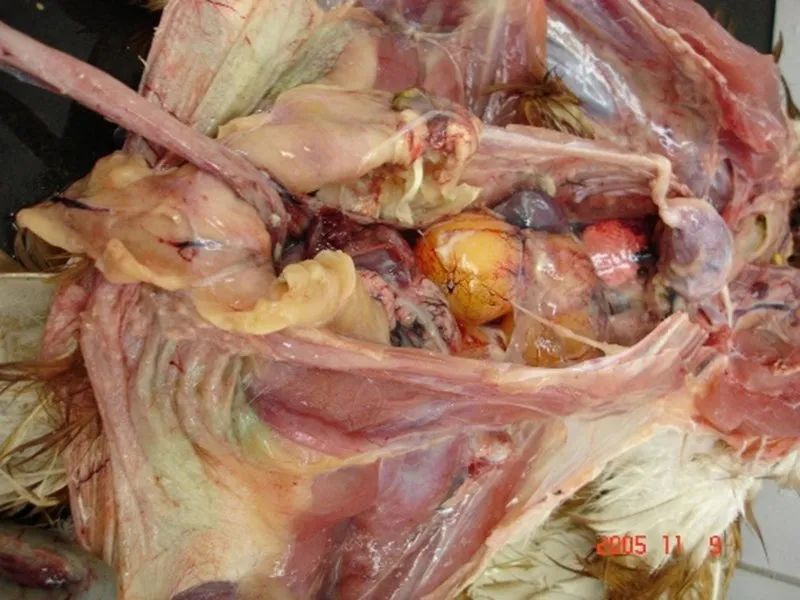
Typical presentation of yolk peritonitis caused by Escherichia coli
— 3 —
Treatment and control
Controlling viral respiratory diseases and mycoplasma, maintaining good intestinal health, and reducing stressors (such as drafts) can significantly reduce a flock’s susceptibility to Escherichia coli infection.
Immunization using commercial or autogenous vaccines can help.
Drinking water hygiene management is also crucial.
Antibiotic treatment is often impractical due to withdrawal period restrictions for eggs (increased costs).
One alternative is treatment with organic acids or chlorine preparations (Chlorin).
Note: This article is excerpted from Hendrix Genetics 汉德柯斯