
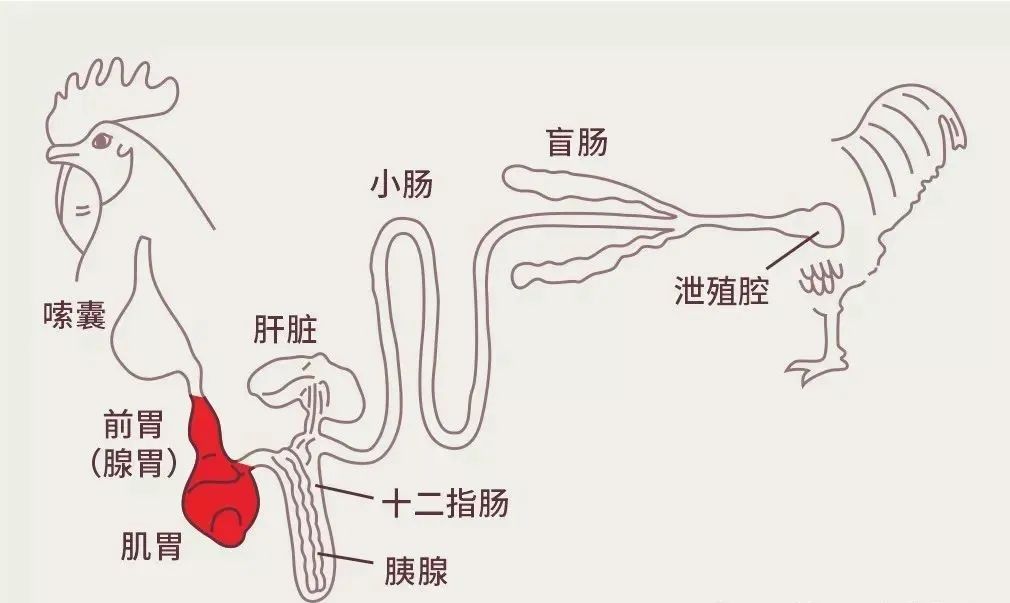
In the poultry industry, intestinal integrity I2 has long been a concern for poultry producers. Since 1970, global poultry meat and egg production has grown rapidly. Compared with other livestock sectors, poultry farming has expanded relatively quickly. Maintaining broiler gut health and normal digestive and absorptive functions not only helps ensure good production performance, but also effectively protects against disease.
Many factors affect poultry intestinal integrity. One survey showed that intestinal damage caused by coccidia and bacteria can increase the rearing cost by 10.2 cents per bird. It is therefore particularly important to deepen our understanding of intestinal integrity and take effective measures to protect and improve gut health. This article mainly explains what intestinal integrity is, the factors that affect poultry intestinal integrity, and corresponding solutions.
I. What is intestinal integrity (intestinal integrity I2)
Intestinal integrity can be defined as the gut maintaining its structure and function intact. Simply put, it means that the gut has not been damaged and remains intact. What, then, makes up an intact gut? Many natural physiological barriers help maintain gut integrity. These barriers prevent the entry of foreign substances and microorganisms (primarily into the bloodstream and other organs), helping to maintain the integrity of gut structure and function. When the body is affected by malnutrition or external factors (including stress, toxins, poor hygiene and management, and the invasion of pathogenic microorganisms), these barriers can be damaged, resulting in impaired intestinal integrity. The natural physiological barriers that help maintain poultry gut integrity mainly include the following:
1. Mucus (a viscous fluid secreted by intestinal cells)
Mucus is a barrier that prevents the invasion of bacteria and fungi. However, some enzymes, such as urease, which can break down mucus, can disrupt this barrier. Poultry feed containing cooked soybean meal may contain urease.
2. Intestinal epithelial cells
The epithelial cells of the intestine form a semipermeable surface that selectively allows fluids and electrolytes to pass through, and can break down and utilize nutrients. In the digestive tract, the epithelial cells in each section form a continuous physical barrier. When microorganisms and toxic agents damage the epithelial cells, the integrity of the intestine is also compromised.
3. Fluid secretions
Fluid secretions are a mixture of large amounts of water and electrolytes. Fluid in the front part of the small intestine has a protective function: it suspends bacteria in the intestine and carries them toward the back of the intestine as it flows.
4. Blood vessel distribution
Blood vessels beneath the intestinal epithelial cell layer can rapidly dilute and remove any pathogens or toxins (endogenous or exogenous) that might damage the physiological barrier.
5. Immune cells
As shown in the figure below, the functional cells of intestinal immunity mainly include T lymphocytes, B lymphocytes, macrophages, heterophils, dendritic cells, NK cells, goblet cells, plasma cells, and M cells. These functional cells play a very important role in the body's resistance to the invasion of various pathogenic microorganisms and in maintaining intestinal integrity. Lymphoid tissue is the main immune organ in poultry. Lymphoid tissues associated with the chicken intestine include the bursa of Fabricius, cecal tonsils, Peyer's patches, and lymphoid aggregates in the urethra and cloaca. Klipper et al. reported that the form of the antigen, as well as its degradation and absorption rate in the intestine, affects the immune response in poultry. An immune response stimulated by gastrointestinal antigens increases energy expenditure. Mucosal lymphoid tissue is the first line of defense on the gastrointestinal surface.
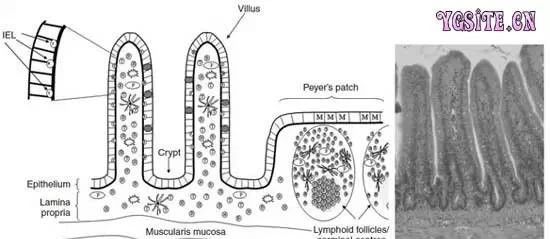
Diagram of various immune cells in the intestine
6. Normal intestinal flora
Normal intestinal flora plays an irreplaceable role in maintaining intestinal integrity. Disruption of the intestinal microbiota can often cause production and economic losses without any clinical symptoms. Commensal bacteria in the intestine play a positive role in maintaining the balance of the intestinal microbiota and stimulating the development of the intestinal wall. The number of bacteria varies significantly between different intestinal segments; bacterial density tends to increase from the duodenum to the end of the intestine. Each region of the intestine is colonized by unique microorganisms, and the microbiota becomes more complex with increasing age9.
II. Various factors that cause impaired intestinal integrity
Before introducing the various factors that affect intestinal integrity, let us first look at the development of the poultry intestine and the factors that influence it:
1. Intestinal development
Intestinal development begins as early as the embryonic stage in poultry, and its rate of development gradually increases as incubation progresses. The small intestine’s proportion of total body weight rises rapidly from 1% at the beginning of incubation to 3.5% at the end. After hatching, the absolute weight of the small intestine also increases significantly faster than that of other organs. However, the rates of increase in the length and weight of the duodenum, jejunum, and ileum differ. The maturity of intestinal development is mainly reflected in the activity of intestinal digestive enzymes and the capacity to absorb nutrients. Changes in intestinal morphology, biochemistry, and molecular biology occur mainly during the first 1-14 days after hatching, and the pattern of maturation is similar to that in newborn mammals.
2. Effects of early feeding on intestinal development
In broiler production, a good start is an important factor in achieving the best production performance and maximum profit. A good start generally refers to the first 7 days after hatching, when brooding conditions and high-quality starter feed are crucial for chicks. Studies have shown that, during the first 48h after hatching, the nutrients that sustain small intestinal growth and development in poultry come mainly from residual yolk sac contents in the abdominal cavity. Poultry need to use the energy stored in the yolk sac during this period; thereafter, nutrients come mainly from feed. Potturi et al. reported that feed is a “catalyst” for accelerating intestinal development and residual yolk absorption in chicks. If feeding is not initiated promptly during the first 24-72h after hatching, intestinal development and production performance will be impaired, and compensatory growth later on is difficult to achieve. In addition, early feeding can expose the body to various external antigens sooner, which is important for the development and maturation of intestinal immune tissues. Delayed feeding is an important cause of delayed development of immune function in poultry. Therefore, a good start is crucial.
3. Factors affecting intestinal integrity
Many factors can affect intestinal integrity. Any factor that directly or indirectly damages the 6 parts of intestinal integrity described in Part One will affect intestinal integrity. Broadly, these factors can be divided into biological factors, physicochemical factors, dietary factors, and other factors. Biological factors mainly include intestinal impairment caused by microorganisms such as viruses, bacteria, fungi, and parasites. Physicochemical factors include temperature, humidity, lighting, ammonia concentration, litter quality, and stressors. Stressors mainly include catching chickens, transportation, noise, overcrowding, and sudden exposure to heat or cold. Dietary factors include feed ingredients, diet structure, feed processing, pelleted feed, and harmful factors in some feeds. Harmful factors include various antinutritional factors (such as non-starch polysaccharides, NSP) and toxins. These categories are not strictly delineated, and the same influencing factor may belong to two categories at the same time.