
- More than 1500 ha, 320 beef cows and pigs—the Przybylski family farm in the Lublin region combines crop and livestock production in one integrated system.
- Their own fields provide feed for cattle and pigs, while some of the land is used for grazing, reducing production costs.
- The plan for the coming years is to grow the herd from 500 to 3500 sows and increase the number of beef cows to 400 head.
- The next stage of development is to be three biogas plants, including a facility producing biomethane from manure from its own livestock production.
- See reports from all the farms taking part in this year’s edition of the Innovative Farmer competition.
For Adam Przybylski A diversified structure is not an add-on, but the foundation for running a farm that is as resilient as possible to all kinds of crises. Large, efficient machines are needed here to get the work done quickly, but they are not what determines success. The most important thing is that Animal and plant production complement each other.
From one branch to many
The farm in Lublin in its present form is the result of several decades of gradually adding more departments. From the very beginning of the farm built by Stanisław Przybylski, Adam’s father, livestock production was the most important focus. Over the years, more animals began to appear, and the farm grew in stability.
Our business began in 1992 in Sawin with pig farming, and we have been gradually developing it ever since,” says Adam Przybylski.
The word “gradually” aptly captures the philosophy behind the entire venture. The farm did not come into being overnight, and new branches were added only when the previous ones had become firmly established within the farm’s structure. The next step was to launch another area of livestock production—the Przybylski family started with a small number of cows and later steadily expanded the herd.
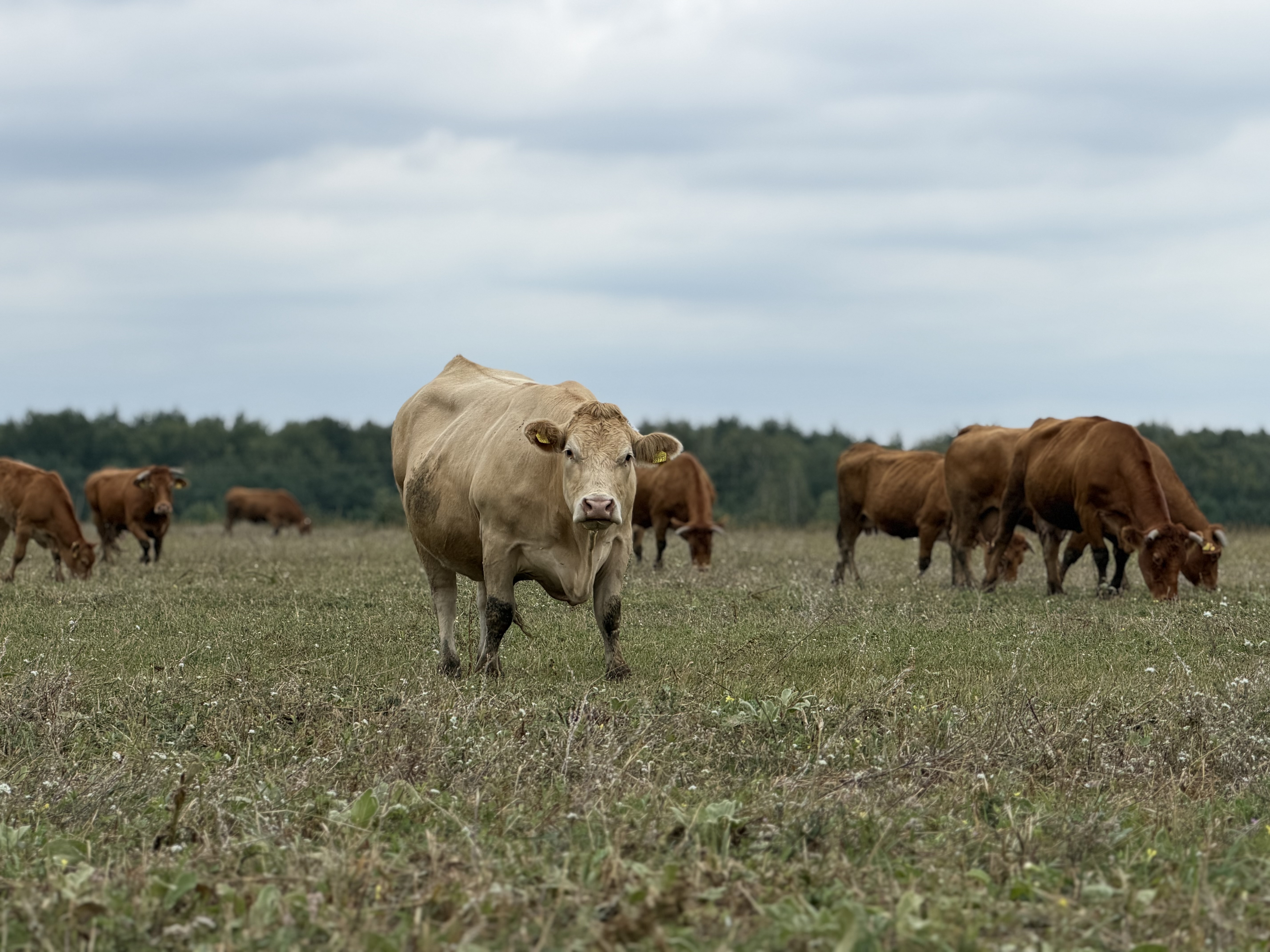
We have been raising beef cattle since 2009. We started with 50 head. At the moment, we have over 320 breeding cows, says the farmer.
For a farm with a history of raising beef cattle spanning more than ten years, this is now not an add-on but a fully fledged pillar. A farm built this way has two extensive livestock branches that rely on shared field infrastructure.
Fields that support the cattle barn and pigsty
The crops grown on the farm are not separate from livestock production. Some plants have a clearly designated recipient, and the type of crop is selected to meet the needs of a specific group of animals. The sowing plan is based on two crops, but the additional crops show how the whole system works—their selection reflects the herds’ needs and is not random.
The crops we grow on our farm are mainly wheat and rapeseed. Additional crops include barley for the core sow herd, because it provides fiber, and maize grown on 200–400 hectares, depending on the season, explains Adam Przybylski.
The size of individual crops depends on the animals’ needs - the area planted with corn varies from year to year, while barley appears in the field for a specific nutritional reason. The farm also uses by-products from the agri-food industry, but from crops produced on the farm itself. The sugar beets included in the crop structure first go to the sugar factory, and in return, beet pulp comes back to the farm as feed for the breeding herd beef cattle.
Each of these crops therefore finds a recipient in the cattle barn or pigsty. Cereals and corn, beets and straw become components of the feed ration rather than goods sold outside the farm. This allows the farm to reduce its dependence on external feed supplies.
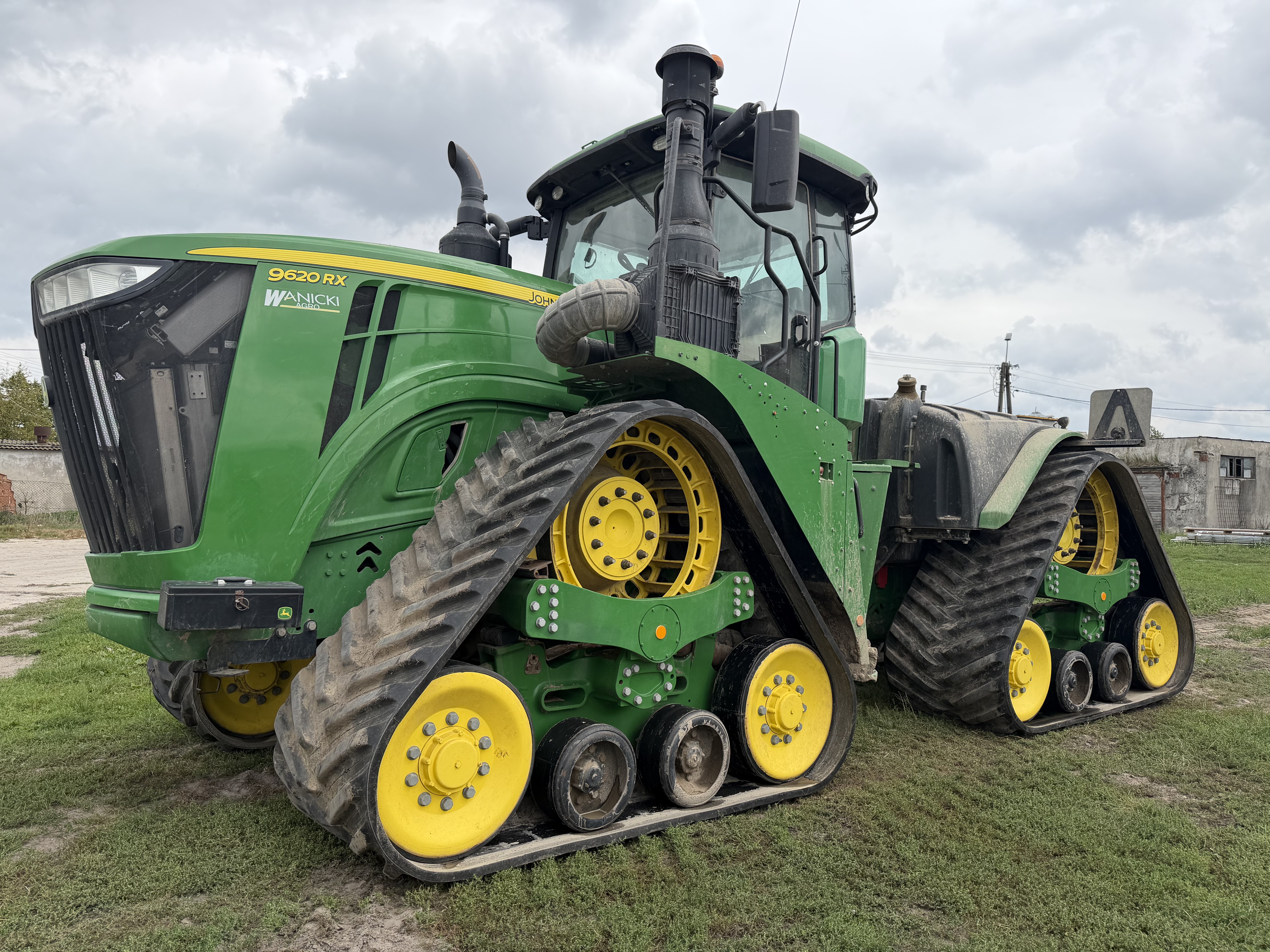
When managing such a large area, large, high-performance machines are essential for both growing and harvesting crops. The main “workhorse” is the John Deere 9RX620 tractor, but the fleet also includes tractors from other brands, such as Fendt and older Ursus models. Many machines are equipped with navigation systems which, combined with parallel guidance accurate to 2,5 cm, deliver real savings in cultivation.
An in-house feed mill for all animal groups
Feed is the binding element of the whole system. The farm operates its own feed mill, which supplies different groups of animals with varying needs. Producing feed in-house provides great stability in feeding, and economics also play a significant role here—producing it in-house is simply cheaper.
“We have our own feed mixer, where we make feed ourselves for the entire breeding herd, the pigs and the cattle we fatten using a dry-feeding system,” says the farmer.
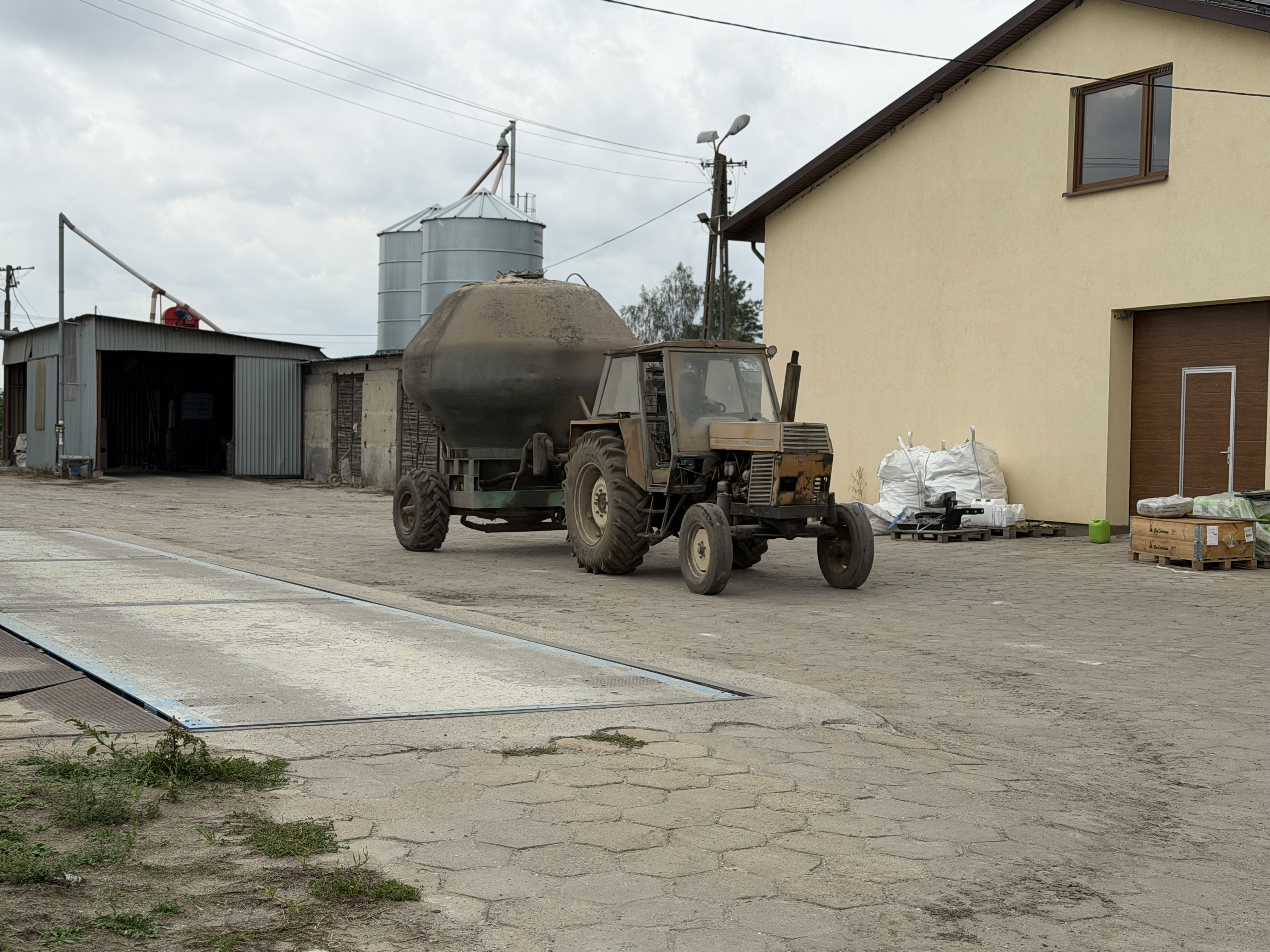
Thus, one mixer serves both the piggery and the cattle barn, although each group receives a different ration. The breeding herd of beef cows, as well as the breeding bulls, are fed in the traditional way. The ration is based on raw materials, a significant proportion of which come from their own fields.
The breeding herd of cows is traditionally fed using a feed mixer wagon. Forage is delivered to the feed bunk. The composition of this feed is rye silage, DDGS, and corn silage, they explain.
Fattening cattle are fed a dry diet, which means their ration consists exclusively of concentrates and cereal straw, provided ad libitum.
We use a dry feeding system, which has streamlined our work and reduced the labor involved in fattening cattle production,” explains Przybylski.
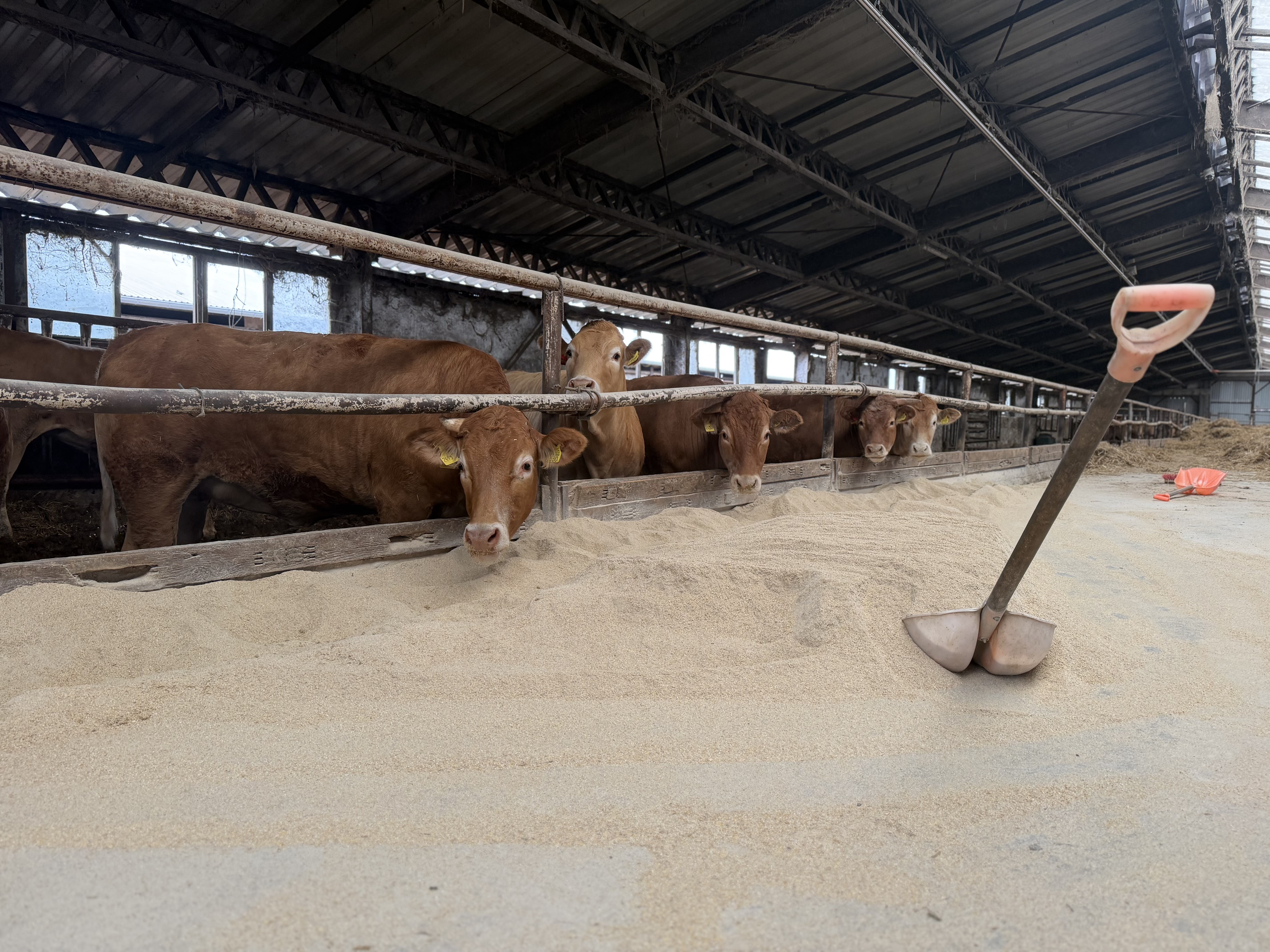
The dry-feeding system for beef cattle has been successfully used for several years, and this year saw the implementation of another project. The new feed conveyor is intended to further reduce the workload for people in daily operations, as well as limit feed losses caused by excessive amounts of feed remaining on the feeding table.
At this point, we have implemented a new bead-feeding system, that is, a bead feed line installed in the building, with dispensers underneath. They are filled with concentrate feed, which is replenished periodically after the supplies run out, the farmer explains.
Investment is not a technological curiosity, but an answer to a specific problem, which affects most households today.
The reason for this investment was to reduce labor input, which, as we all know, is very high. It is now very difficult to find a worker. A good worker, he points out.
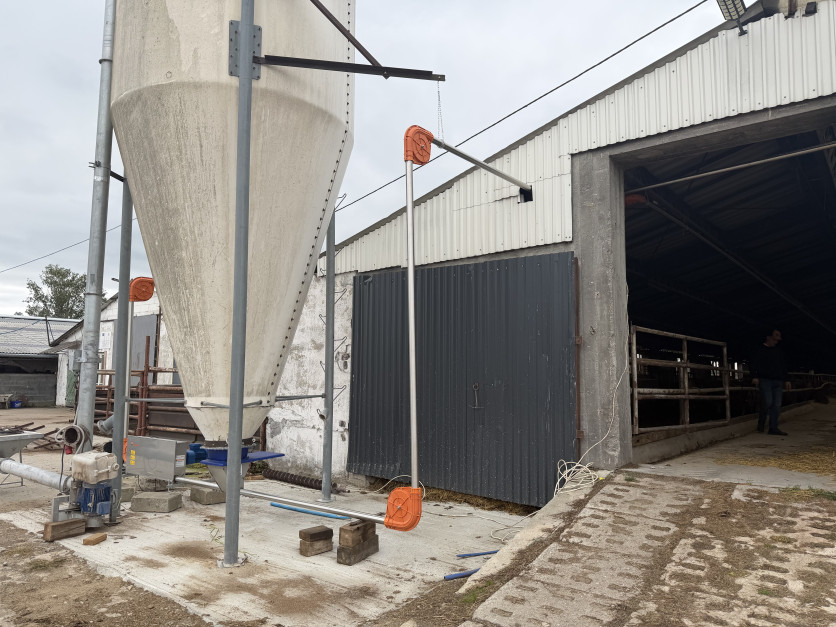 The beef cattle feeding system was modernized this year—the solution adopted is intended to reduce feed losses and minimize labor input. Photo: Tomasz Piotrowski / PTWP
Beef cattle: ambitions, grazing, and lower costs
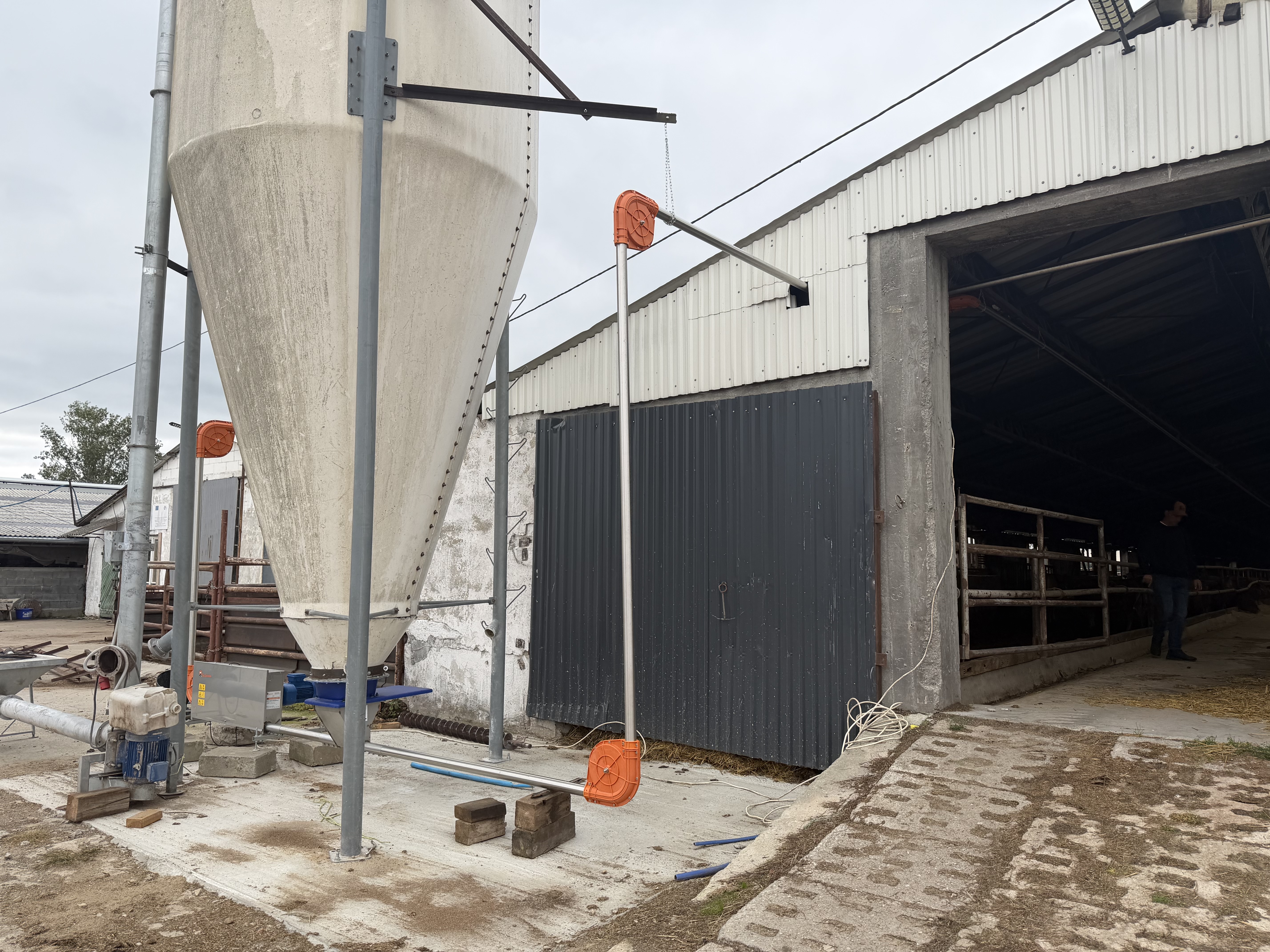
The breeding of beef cows has a clearly defined direction on the farm. The farmer wants consistently improve meat quality, rather than merely increasing herd size. The ambitions therefore concern not only production scale, but above all quality.
The breeding goal is to produce the best possible Polish beef to the highest possible standards, they emphasize.
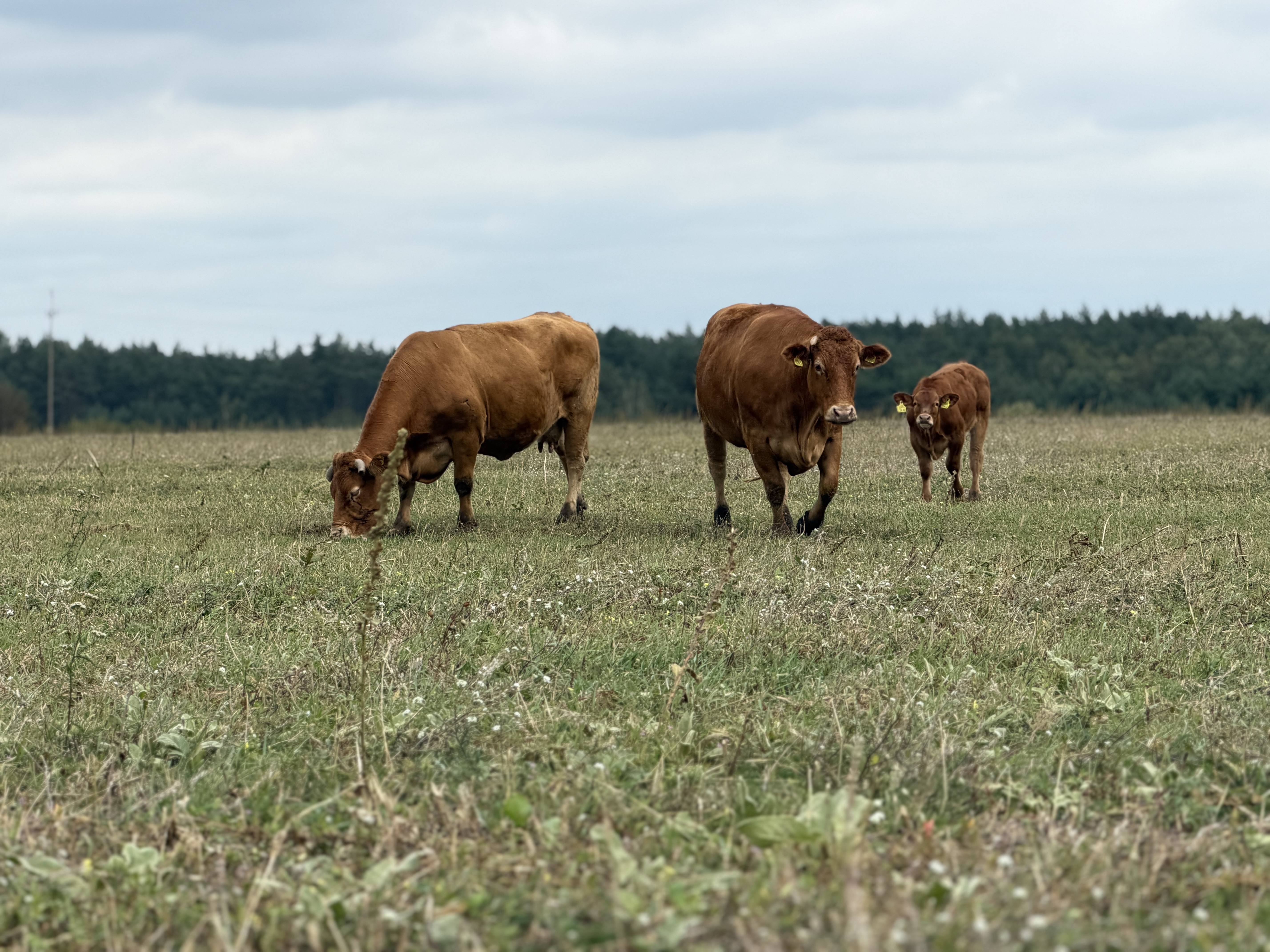
From a diversification perspective, a suckler herd is also an interesting alternative to growing crops on some of the land.Cows can be grazed, and approximately 230 hectares of the farm have been allocated for this purpose. As a result, part of the land does not incur the costs typical of arable farming, which improves production economics..
Beef produced on the Przybylski farm is covered by the QMP (Quality Meat Program) quality system, which, as the farmer explains, brings tangible financial benefits and also fits well with the current market challenges, where beef from many countries is competing for a place. Certification is not only a mark of quality for the farm, but also a real source of additional income.
Pigs: the pillar that has held firm for 30 years
Across the entire operation, pig farming is the oldest and most stable part. Although things have not always been easy, this division has remained a source of income for the farm throughout. Pig farming is also the division that has set the tone for the entire farm for years and around which successive branches have been built.
“Pig farming has, you could say, always been in the black, and over all these years we have never had to subsidize it. It was on the borderline of profitability, but there was always something left over,” says Przybylski.
A result that is rare in the pig industry shows that, with well-managed production and cost control, even periodically operating on the borderline of profitability can translate into a stable business. As with beef cattle, the pig herd is also covered by a quality system, in this case QAFP.
Stable results laid the foundation for further steps. The farm is proceeding with two investments that are set to significantly change the scale of livestock production. The plans cover both livestock branches at the same time, as the farmer sees potential in both the piggery and the cowshed.
Over the next five years, we want to increase the breeding sow herd from 500 to 3500 sows, and we would like to bring the breeding cow herd up to 400 suckler cows, the farmer announces.
Another branch is planned — energy from the farm’s own animals
Expanding the herds opens the way to another line of business. The farm plans to turn a by-product of livestock production into energy and, in one of the options, also into fuel. Larger herds mean a greater flow of raw material, which today is an excellent fertilizer and a cost to be managed, but could also be used to power a biogas plant in the future.
We are planning three biogas plant locations, including two biogas plants that will typically produce only energy—electricity—and one that will work in conjunction with a biomethane plant, meaning we will produce biomethane. The feedstock for the biogas plants will come from our facilities, namely pig and cattle farming, explains Adam Przybylski.
This is how the cycle is meant to close: the fields feed the animals, the animals supply the biogas plant, and the energy it produces becomes another source of income for the entire farm. Such wide-ranging plans, encompassing both electricity and biomethane production, demonstrate an open mind and a broader perspective on the potential uses of animal manure, which is transformed from a troublesome waste product into a valuable raw material. This way of thinking also aligns with EU trends, where livestock farming is increasingly assessed in terms of its impact on the environment and climate, and an on-site biogas plant is one way of meeting these expectations.