During a press briefing on October 22 about the first detection of the Shamonda-Europe virus in a human, experts discussed the likely end of the wave of infection among cattle caused by this new infectious agent. Professor at the Toulouse National Veterinary School (ENVT) Jean-Luc Guérin, director of the laboratory responsible for identifying Shamonda-Europe, believes this wave of infection should end within “a few weeks.” “From the animal population’s perspective, we will probably be nearing the end of the episode, quite clearly,” he says.
Watch: [Video] New “Shamonda Europe” virus detected in cattle: what we know so far
How can the end of the cattle infection wave in France be explained?
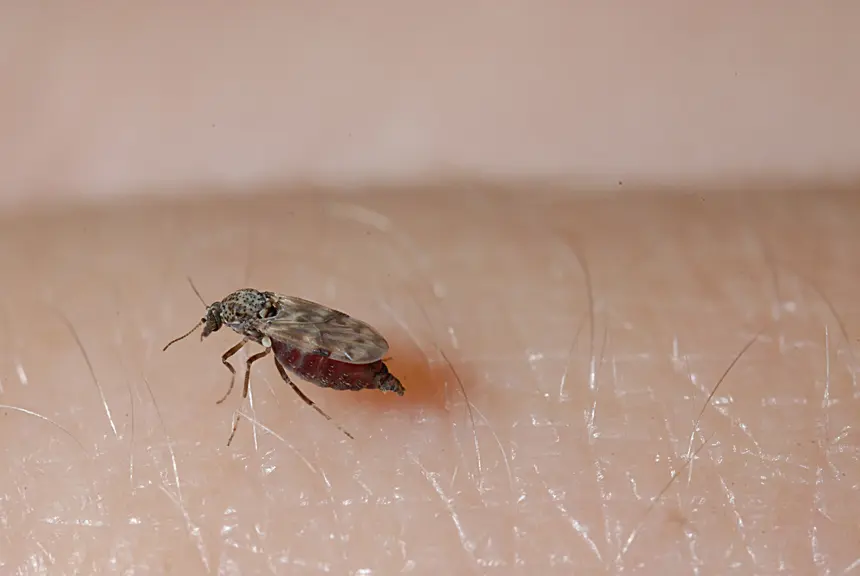
Experts explain the end of this wave by the form of the disease’s infection, its spread across the territory, and how it is transmitted. First, the virus is present in cattle’s blood only during the first, mild phase, which lasts a few days and during which the animals show diarrhea and fever. Very quickly, the virus is therefore no longer present in cattle’s blood, and they can no longer transmit it. Next, the Shamonda-Europe virus has already spread across a large part of the territory, which has therefore “had its infection,” explains Jean-Luc Guérin, leading to immunity in the animals. According to the latest bulletin from the Animal Epidemiological Surveillance Platformanimal health (ESA), outbreaks have been detected in cattle in 52 departments in mainland France since early July. Finally, the Culicoides biting midges, which are the vectors of the virus, should see their activity slow as temperatures dropand the arrival of winter. Experts point out that vector activity generally declines around the end of September and beginning of October, except during very warm late seasons, which can push it back until November. “These infections will continue until there are no more, or far fewer, Culicoides,” notes Gilles Salvat, Deputy Chief Executive Officer at Anses.
Read also: Shamonda Europe: how many new cases have been detected in France?
“Several years” of immunity in cattle infected with the Shamonda-Europe virus
By analogy with the Schmallenberg virus, which emerged in Europe fifteen years ago and of which Shamonda-Europe is a close relative, the immunity conferred on infected cattle can last “several years.” “By analogy with other viruses in the same large family, such as the H1N1 virus, […] we have cycles of approximately 4-5 years,” Gilles Salvat explains. Once again, infection cycles can recur after several years, because the number of immunized animals decreases over time.
Read also: Shamonda Europe: what should you do if you suspect an infection on your farm?