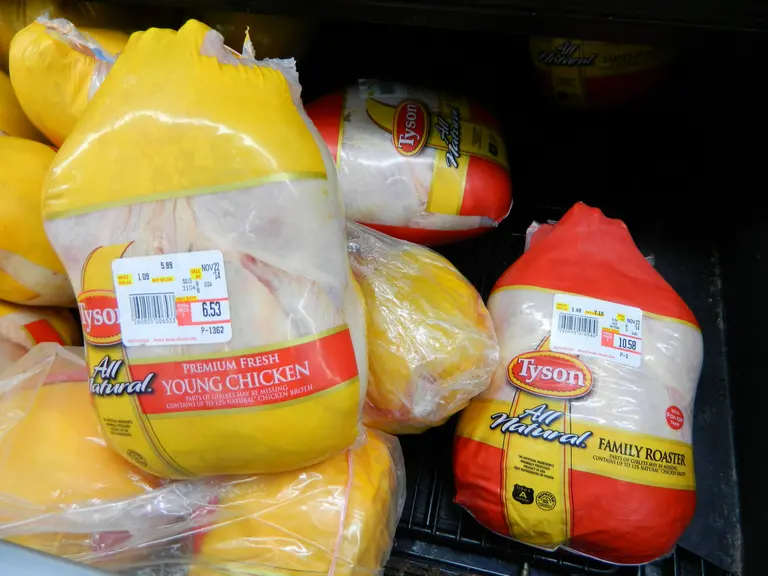
Of the nearly 9.4 billion chickens produced annually in the United States, 45% in 2026 are produced “without antibiotics” under the American slogan “no antibiotic ever,” or NAE. In 2013, around 80% of the market was still based on conventional farming, which used ionophores as the main method of controlling coccidiosis. Under consumer pressure, from that time onward, major companies seized the opportunity presented by “no antibiotic ever.” Ionophore coccidiostats, considered antibiotics in the US by the FDA (Food & Drug Administration), were therefore withdrawn.
During the Covid years, the price per kilo of chicken for consumers reached a peak. In addition to rising energy prices, “antibiotic-free” farming led to an increase in mortality (+1%), “to such an extent that statistics showed that an additional 100 million birds had to be slaughtered each year to offset NAE farming practices,” says Polly Davies, a marketing specialist at Elanco in the United States. The leading US producer Tyson Foods and the fast-food chain Chick-fil-A therefore reversed their decision, switching in 2023 and 2024 to chickens raised “without antibiotics important to human health,” or NAIHM (1). This label allows ionophores. “In 2026, production represents approximately 45% of chickens raised without antibiotics, 45% of chickens raised without antibiotics important to human health, and 10% of conventionally raised chickens. This means that 55% of the market has access to ionophores,” explains Polly Davies.
Stay up to date in real time!
Follow topics, legislative bills, companies, and individuals to be notified as soon as we publish an article.
Confused consumers
It was in 2002 that Perdue Farms, an American integrator, took a very firm stance on withdrawing antibiotics, a position it still maintains today. In 2014, the Chick-fil-A chain responded to concerns expressed by parents and consumers, announcing its strategy to permanently eliminate antibiotics (NAE) from the farms supplying it. Then Tyson, the largest chicken producer in the United States (2 billion chickens per year), followed suit and also announced the permanent abandonment of antibiotics. Ultimately, the increase in the price of chicken led to a second alternative in the United States: chicken produced without antibiotics important to human health. “In 2023, Tyson issued a statement explaining its decision to abandon NAE labeling and switch to NAIHM labeling, citing cost as the main obstacle to its success,” says Polly Davies. “This has confused consumers. In supermarkets, faced with a profusion of brands and labels, it is difficult to know what you are choosing,” the American shares.