
As the logistics and transportation industry has developed, the accompanying transport of live poultry and eggs has also made it easier for diseases to spread. Regional epidemics have become nationwide diseases. Moreover, once many diseases enter a poultry farm, they are difficult to eradicate, especially infectious laryngotracheitis and diseases such as mycoplasma. Empty-farm management is one of the important ways to interrupt disease transmission between flocks. Proper empty-farm management plays an important role in allowing flocks to achieve their production potential and in realizing good economic returns.
To improve empty-farm management, farms are divided into three biosecurity zones according to their distance from the chickens. Poultry houses are designated as the first-level biosecurity zone because they are in direct contact with the birds. Areas within the production site other than the poultry houses make up the second-level biosecurity zone. The offices, living areas, and ancillary facilities on the site make up the third-level biosecurity zone. Each level has different areas of focus, and controls need to be implemented at different stages.
I. Principles for preparing an empty farm
During empty-farm management, there should be no residue from the previous flock, apart from certain fixed facilities. This ensures that the next flock cannot be contaminated by residues from the previous flock.
Preparing an empty farm is a process. The farm can only truly be considered empty after all contaminants on the site have been thoroughly removed and the area disinfected.
Empty-farm management should follow the principle of managing areas from the inside out: thoroughly clean and disinfect one area before moving on to the next.
II. Organization of the Level One Epidemic Prevention Zone
First, clean and disinfect the poultry houses in the primary biosecurity zone. The primary biosecurity zone is the area in closest contact with the flock. Cleaning in the primary biosecurity zone must achieve the goal of having no feathers, chicken manure, dust, eggs, or feed. Empty-house preparation inside the poultry house must follow the operational sequence of moving, sweeping, rinsing, burning, drying, tidying, spraying, and fumigating.
1, removal means cleaning movable equipment, tools, etc. in the poultry house and then moving them out of the poultry house.
This can reduce the spread of contamination through items in the chicken house. Moving equipment that has not been thoroughly cleaned can contaminate clean areas. At the same time, disinfect the feed in the house’s feed lines and the drinking-water lines during this stage. Run the feed lines to remove all remaining feed. Soak the water lines with a dedicated water-line cleaner, then rinse and disinfect them, and keep them dry.
2, sweeping means following the principle of working from top to bottom and from front to back to sweep dust, chicken manure, feathers, eggshells, feed residues, and other material out of the chicken house.
In the management process, where environmental protection is a priority, sweeping is particularly important. How thoroughly the house is swept directly affects the amount of water used to wash the chicken house afterward.
First, thoroughly clean the roof, especially hard-to-clean corners where an entire batch of chickens has been raised. The large amount of dust there contains contaminants with an uncertain quantity of bacteria and viruses.
Next is cleaning up the feathers. It is recommended that feathers be collected from all the equipment in the chicken house. However, in brooding and rearing houses, use a flame sprayer on the cages to burn off the feathers beforehand, to prevent them from being washed all over the place during rinsing, which would make subsequent cleaning more difficult.
Another area that is relatively difficult to clean is egg white, egg yolk, and similar substances. When eggs are damaged, the egg white and egg liquid can solidify over a long period of time, making cleaning relatively difficult.
Finally, at the very bottom, are the manure ditch and manure belt cleaning tasks. After prolonged use, a thick layer of manure inevitably builds up at the bottom of the manure ditch. Therefore, first clean all the accumulated chicken manure from the bottom and side walls of the ditch. Once it has been thoroughly cleaned, cover the electrical components inside the poultry house to prevent them from being damaged during washing.
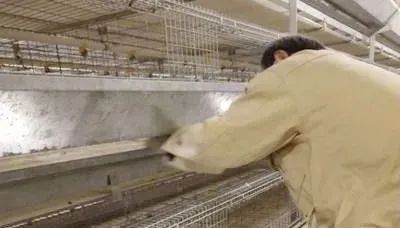
3, rinsing should likewise follow the principle of proceeding from front to back and from top to bottom.
During the washing process, the cages should first be soaked before being rinsed. Because laying hens are raised over a long period, some residues need to be soaked thoroughly before they can be rinsed more effectively. During rinsing, pay particular attention to all hard-to-reach areas in the poultry house and on the cages.
During rinsing, try to rinse in one direction as much as possible to reduce the splashing of dirt.
4, burning is a process for eliminating specific pathogens. Flame-spraying equipment is used to burn the cages, which is highly effective against coccidian oocysts and similar pathogens. It also provides a further removal of chicken feathers and other debris that were not thoroughly cleared.
5, drying is the process of reducing the growth of microorganisms in the poultry house. Since microorganisms grow more readily in environments where both humidity and temperature are suitable, the poultry house must be dried. This also ensures that preparations are in place for the next step: thoroughly disinfecting the poultry house. Drying must last at least 7 hours. Ventilation can be used to reduce humidity inside the poultry house.
6, organize the equipment and cages in the poultry house to ensure that all equipment and cages can be used normally. Parts that are easily contaminated but difficult to clean must also be thoroughly sealed to make it easier to clean out the poultry house after the next flock. Equipment needed for the next flock’s production must also be disinfected before being brought into the poultry house.
7, spray and thoroughly disinfect the chicken coop. Use a glutaraldehyde-based disinfectant to thoroughly disinfect the coop from front to back, ensuring that all areas come into contact with the disinfectant and reducing the microbial load inside the coop.
8, fumigation: Use aerosolized disinfectant to fumigate the chicken house. Formaldehyde is generally heated for fumigation, but due to environmental protection requirements, a fogging machine can be used to atomize concentrated glutaraldehyde for disinfection. Formaldehyde fumigation generally requires a fumigation time of 48 hours. Atomizing concentrated glutaraldehyde requires less time; the corresponding disinfection process can generally be completed in a few hours.
After fumigating the chicken house, keep it sealed. Before the chickens are brought in, prohibit other people from entering. Minimize the entry of other people and items before the house has been completely emptied to reduce the risk of contaminating it.
Three. Organization of the secondary epidemic prevention area
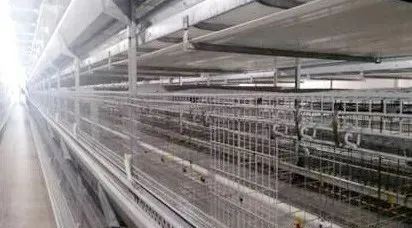
The main work in the secondary epidemic prevention zone is cleaning the production area. The difficult areas to clean are the contaminated passageways, wastewater wells, and the areas behind the exhaust vents.
The manure alley is the passage used for long-term removal of chicken manure. It should be thoroughly washed clean before the surrounding environment is disinfected with caustic soda.
The area behind the exhaust outlet is a long-term contamination zone in the chicken house. The unpaved ground in this area should be tilled and mixed with lime to achieve the purposes of cleaning and disinfection.
Thoroughly clean the wastewater treatment equipment and manure treatment equipment in the facility, removing any residue from the previous flock.
Tilling the open area around the chicken coop allows quicklime to be mixed in to disinfect the soil and surface. Thoroughly burn chicken feathers and other items in the secondary biosecurity zone.
Four. Organization of the Level Three Epidemic Prevention Zone
The tertiary epidemic prevention area mainly consists of ancillary facilities such as bathrooms, offices, cafeterias, storerooms, and pharmacies. These areas should be organized.
Disinfect used items and clean items that have been in storage for a long time.
In areas with high traffic, disinfect after thoroughly cleaning.
Five. Other work
After all biosecurity zones have been cleaned, rodent control should be carried out throughout the site. Rodents are common carriers of many diseases, including Salmonella and influenza. Rodent control must not be overlooked during empty-site management. It can be outsourced to a professional pest control company, ensuring quality while reducing the workload of site management staff.
During the empty-house cleaning process, cleaning and disinfecting personnel’s work clothes and work shoes are easily overlooked. After all Level One, Level Two, and Level Three biosecurity zones have been thoroughly cleaned, clean and disinfect all personnel’s work clothes and work shoes to ensure no residues from the previous batch of chickens remain.
Empty-house management is a systematic undertaking, covering everything from the inside out and from the poultry house to the farm premises. Certain principles must be followed in every aspect to thoroughly prevent disease transmission between batches. As environmental protection becomes increasingly important, particular care should be taken to avoid secondary pollution and reduce the discharge of various pollutants while minimizing the workload.