
During broiler production, management during flock separation is critical. Poor management during separation can easily lead to respiratory disease in the flock, affecting flock health and increasing mortality and culling, resulting in losses to the operation. Therefore, properly managing broiler flock separation and safeguarding flock health are key to successful production management.
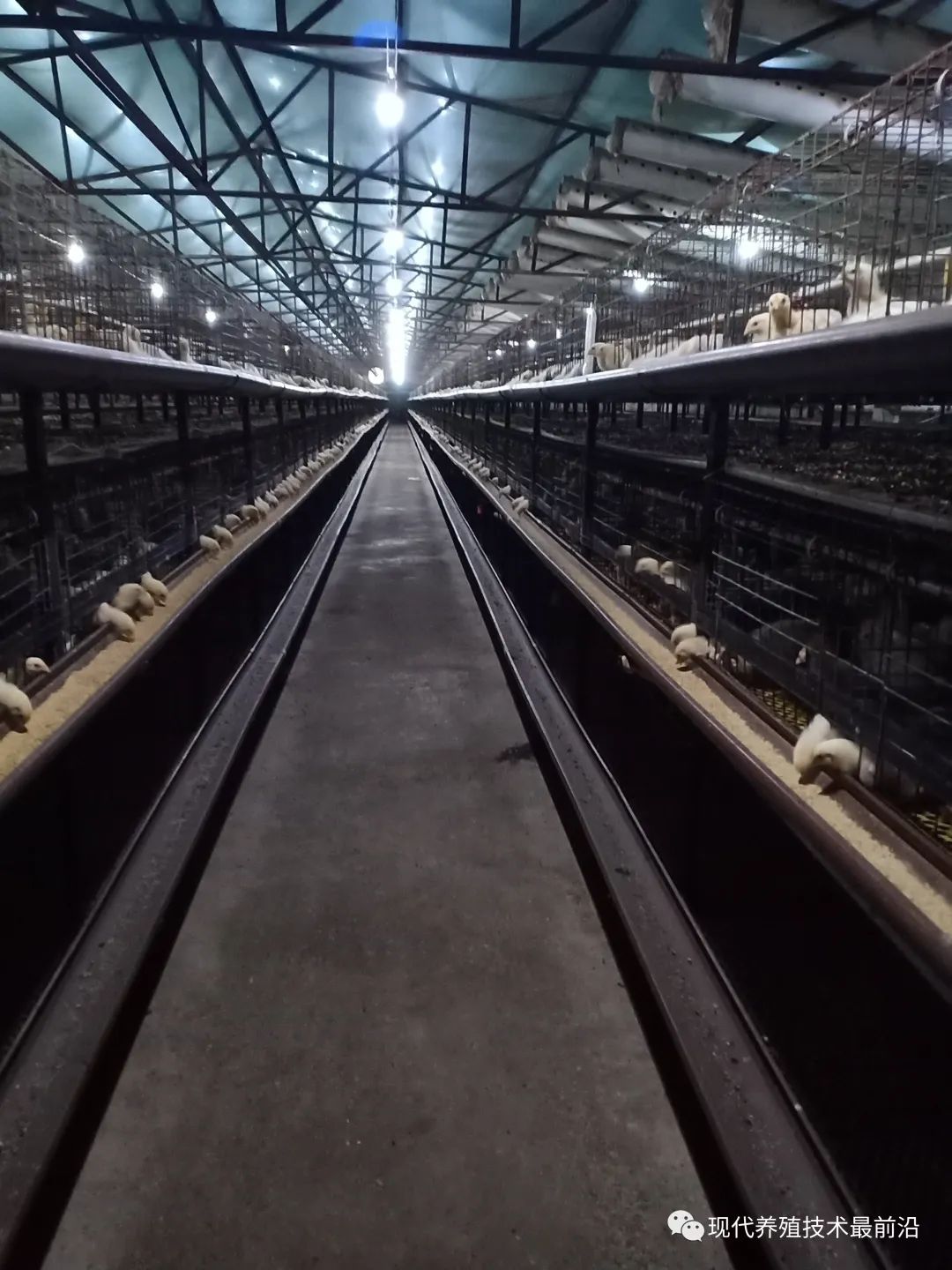
一、Time of Flock Separation
The timing of flock separation should be determined based on a range of factors, including the design of the cage doors, feed troughs, and water lines; seasonal temperatures; flock health; and weather changes. In summer, the first separation can generally be carried out at 6~7 days of age, and the second should be no later than 18 days of age. In colder seasons such as spring, autumn, and winter, the first separation is often carried out between 7-14 days of age, and the second between 19-25 days of age. The timing varies depending on the level of equipment sophistication (cage-tier temperature differences are smaller in poultry houses with underfloor heating).
If vaccination takes place during a warm season, the flock can be separated at the time of vaccination. Separation across the middle and upper tiers is recommended. In some poultry houses with underfloor heating, all three tiers can be separated at 7 days of age. This arrangement provides more space for chicken growth and avoids the stress that a second separation may cause. However, this should generally be avoided in poultry houses heated with warm-air bags and radiators with cooling fans. Even in summer, the temperature difference between the lower and middle tiers often exceeds 1.5℃. If the temperature difference on the lower tier cannot be balanced, it is best to put in a little more effort and wait until later to separate the flock onto the lower tier.
二、Management Before Flock Separation
1. Restrict feed appropriately before separation, but never restrict water, to prevent chickens from becoming overly stressed after eating to fullness. Water deprivation is strictly prohibited. (Before placing the flock in the new cage tiers, adjust the water-line height and water pressure in advance, and fill the feed troughs. Make sure the flock has immediate access to water and feed after separation to reduce stress.)
2, dim the lights. Dim the lights to prevent the chickens from becoming overly excited during redistribution. You can also provide an appropriate amount of electrolytes, multivitamins, or VC to improve their ability to withstand stress.
3, when redistributing the chickens among cages, adjust the house temperature appropriately based on the outdoor temperature and the flock’s condition. Be careful not to make it too high. (In poultry houses with underfloor heating pipes beneath the cage tiers, preheat the tiers before redistribution.)
III. Determining the Number and Density of Chickens for the First Cage Redistribution
There are generally two methods for the first cage redistribution, each with its own advantages and disadvantages. One method is to move half the chickens to the upper tier (or middle tier). This results in the same stocking density and greater flock uniformity, making feed distribution, feed restriction, and feed leveling easier to manage. The disadvantage is that the second redistribution is more labor-intensive. The second method is to move one-third to the upper tier and two-thirds to the middle tier. Its advantage is that the second redistribution is more convenient; its disadvantages are that the chickens on the more densely stocked tier tend to have lower body weights and poorer uniformity, and feeding and feed restriction are difficult to manage. For the first cage redistribution, keep the density at around 30 chickens per square meter.
IV. Management During Cage Redistribution
During cage redistribution, be sure to manage differences in perceived temperature caused by flock density, temperature differences between cage tiers, and perceived temperature differences caused by stress. Adjust the poultry-house temperature appropriately according to the season and heating equipment (generally around 0.5 to 1 degrees Celsius). Also ensure that the humidity in the poultry house is not too low. When catching chickens for redistribution, airborne dust and feather particles can easily damage the chickens’ respiratory mucosa. Maintain normal ventilation and air exchange to ensure adequate oxygen levels in the poultry house, but do not increase the ventilation rate; this is to prevent the chickens from getting chilled due to changes in their perceived temperature.
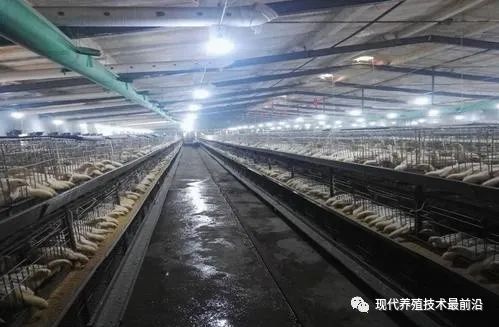
V. Principles for Cage Redistribution
Follow the principle of “redistribute earlier rather than later” and “keep the weaker birds, not the stronger ones.” When brooding in the middle tier, place the larger, healthy chicks in the upper and lower tiers, and leave the weaker chicks in the middle tier. In summer, redistribution can be done somewhat earlier because of the high temperatures. In winter, because of the large temperature differences between the upper and lower cage tiers, redistribution can be delayed somewhat, and one additional chicken can be placed in each lower-tier cage to reduce the temperature difference between the upper and lower tiers.
VI. Management after cage separation
Within 3 hours after cage separation, make appropriate increases or decreases to the house temperature based on the flock’s actual conditions, perceived temperature, and mental state. (Requirement: Keep the temperature difference between two cage tiers within 1 degrees; otherwise, it will be very difficult.) After grouping, promptly check the flock’s feed and water intake, as well as the uniformity of the distribution of the separated chickens, and make adjustments as needed. During rearing, birds may die or be culled, causing uneven numbers of broilers in different cages. Therefore, redistribute the chickens to avoid uneven feed intake that could affect growth. (Detail: When redistributing, try to ensure there are enough chickens in the lower-tier cages, and redistribute chickens in the upper-tier cages for easier handling.)
VII. Ventilation management during cage separation
During cage separation, ventilation management should take into account changes in flock density, temperature differences, and temperature differences between cage tiers. The ventilation rate should not be increased, but take care not to deliberately reduce the air exchange rate in the poultry house. Adjust ventilation and air exchange in the poultry house appropriately based on the flock’s actual conditions and perceived temperature. Keep ventilation steady. Once the flock has adapted to the environment, gradually adjust and increase the ventilation rate based on the flock’s condition.