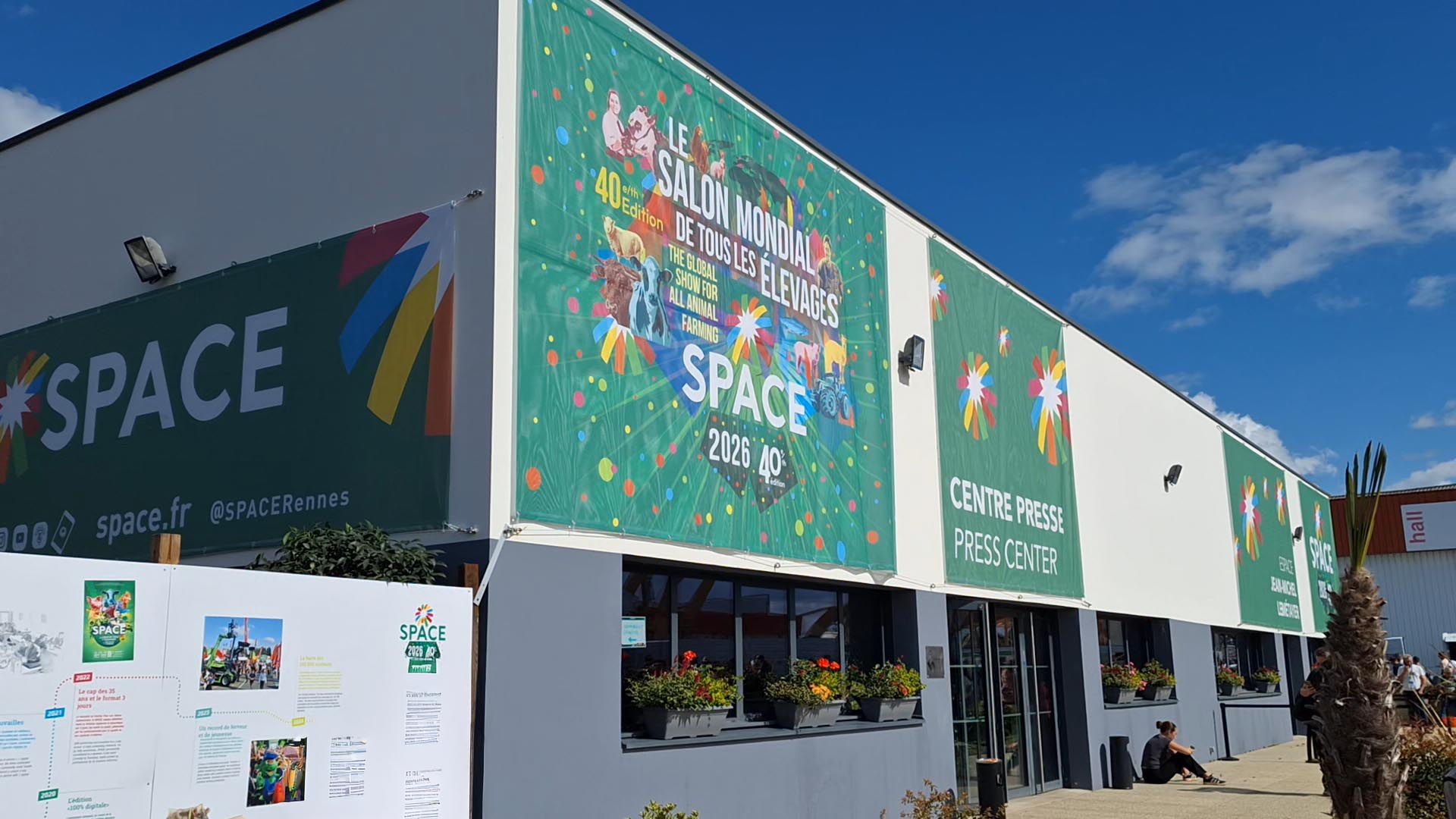
The 40th edition of SPACE, held from 15 to 17 September 2026 in Rennes, highlighted several technological developments that are gaining ground across the livestock sectors. Digital technologies, artificial intelligence, precision feeding, animal health and resource management were among the main trends at this year’s event.
The Innov’Space 2026 awards provided an overview of these trends. After assessing 78 entries, an independent multidisciplinary jury recognised 32 innovations: 26 received one star and six received two stars. Three of them subsequently received the special “3-star” distinction during the awards ceremony held at the show.
Digital technologies and AI gain ground in livestock farming
One of the main trends identified at SPACE was the growing role of digital technologies and artificial intelligence. Several of the award-winning innovations reflected the drive to measure, analyse and manage different production parameters with greater precision.
In the pig sector, the solutions presented focused in particular on precision feeding for sows, estimating piglet weight without handling, and the use of artificial intelligence to analyse carcasses and certain health and welfare indicators.
Beyond digital technologies, animal health and biosecurity also featured prominently among the award-winning innovations. The solutions addressed areas including disease prevention, health monitoring, vaccination protocol management, mycotoxin risk management and improved biosecurity.
Water management: a challenge for the pig sector too
Technology, however, was not the only major theme. Through its Espace pour Demain, SPACE 2026 placed sustainable water management at the heart of discussions during its 40th edition.
This issue directly affects pig farms. Topics on the programme included pigs’ water requirements and the choice of drinking systems, as well as options for collecting, storing and reusing water from building roofs.
These examples showed that water management is no longer limited to ensuring the availability of the resource. It also encompasses water monitoring, its use within farm buildings, providing drinking water for animals, and finding alternative sources to reduce dependence on the mains water supply.
Innovations focused on better farm management
The trends observed during this edition reflect a shift towards tools that enable more precise farm management by combining automation, data collection and decision support.
The growing presence of artificial intelligence, alongside innovations in animal health, biosecurity and resource management, also highlights the wide range of technological solutions being developed to address the technical and economic challenges facing livestock production.
September 2026-SPACE, Rennes