
A word at the outset: The downtime between flocks is not only the end of one flock, but also the beginning of the next.
1, Six steps for cleaning the poultry house before chick placement
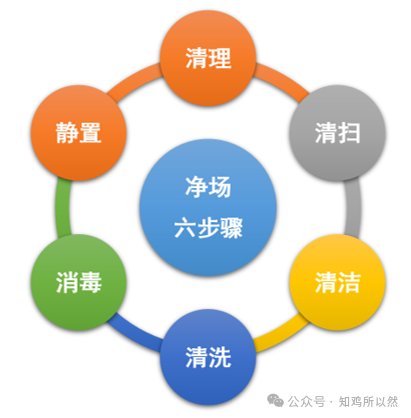
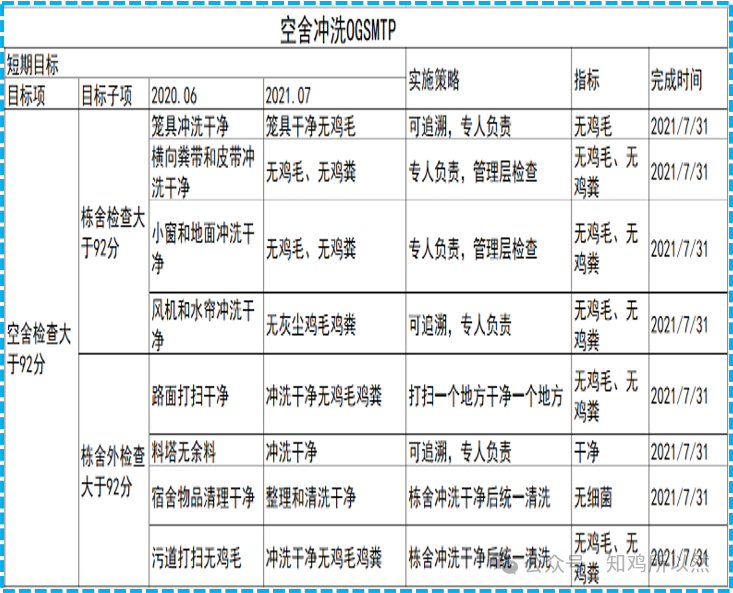
All disinfection depends on physically cleaning the poultry house first; otherwise, even the best disinfectant will be ineffective.
Goal: After cleaning, the poultry house should be like a nearly new poultry house.
Physical disinfection and chemical disinfection
Physical removal (sweeping, rinsing, etc.) is the foundation of chemical removal (disinfection, fumigation, etc.). If physical removal is incomplete and organic matter left behind by the previous flock—such as feces, feathers, and dander—remains inside and outside the poultry house, it will severely impede chemical removal, preventing it from reaching various pathogenic microorganisms. As a result, disinfection will be very ineffective, or even close to zero. Therefore, thorough sweeping and rinsing are the top priority in sanitation.
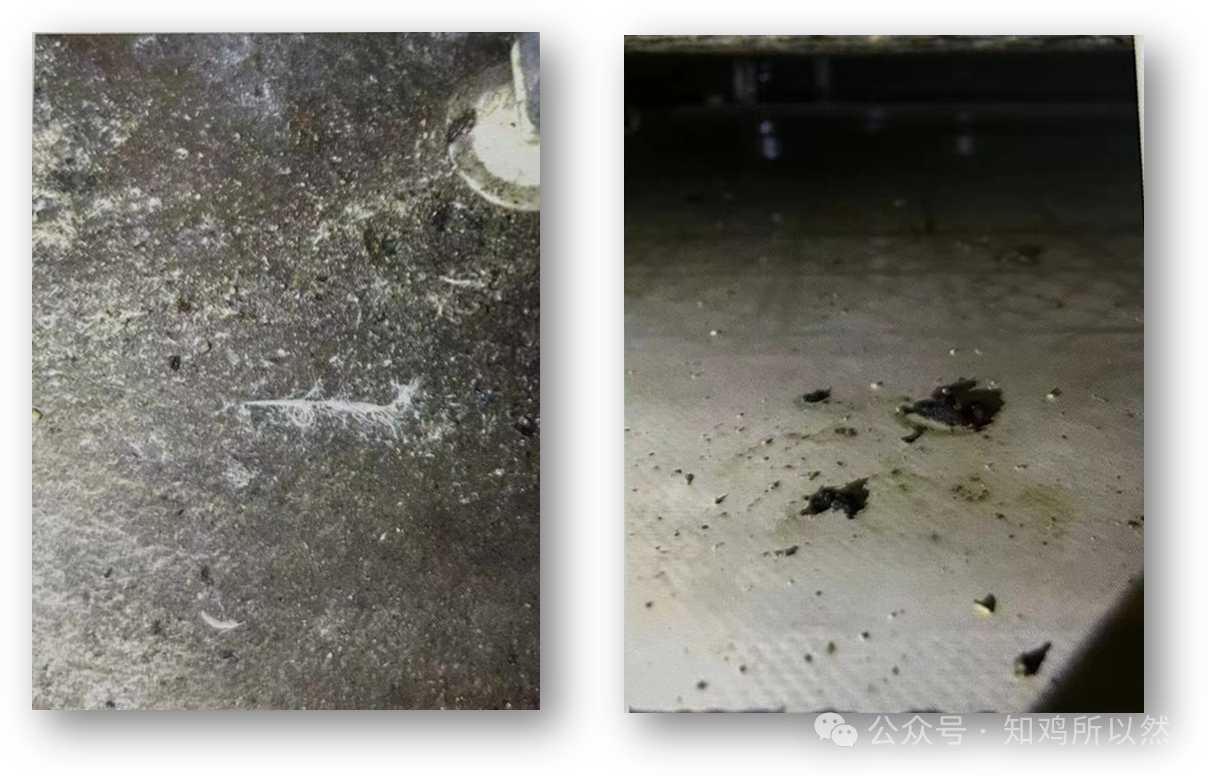
The photo above shows a poultry house after washing, with large amounts of organic matter such as chicken feathers, feed, and feces still remaining. This is seriously unacceptable. With washing results like this, no matter how much disinfectant is used or how many times disinfection is repeated, pathogens cannot be completely eliminated.
2, empty-house period management—quality acceptance
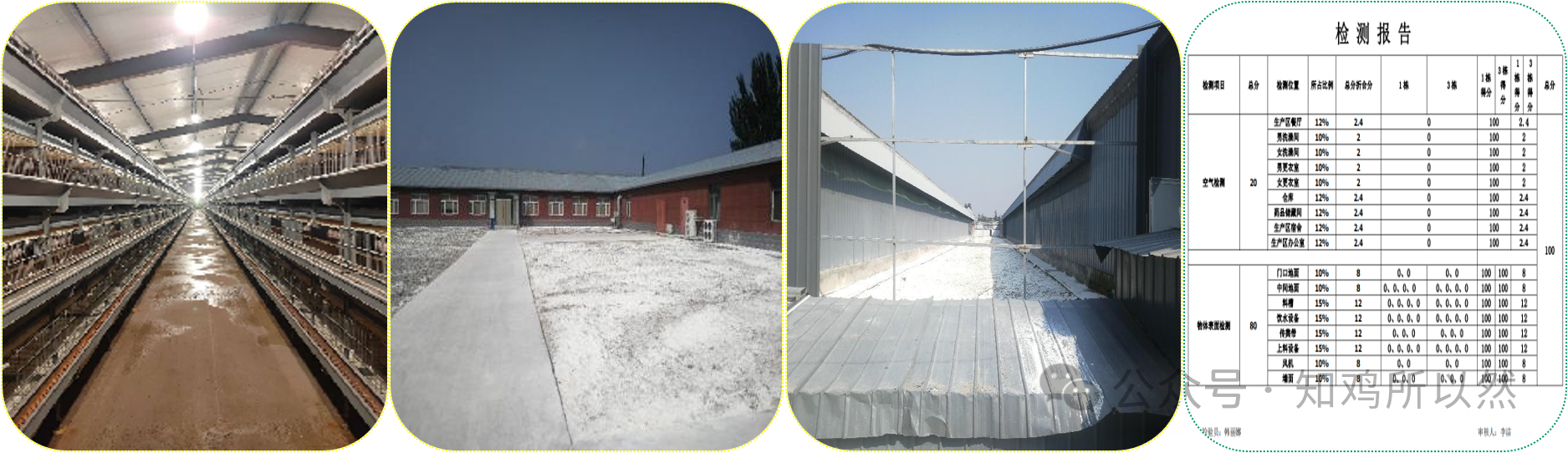
Physical “7-absence” standard: no chicken feces, no chicken feathers, no chicken carcasses, no garbage, no weeds, no wastewater, and no foreign matter
Biological testing standard: total microbial test score ≥90 points, with zero detection of harmful pathogenic microorganisms.
2, About Waterline Management
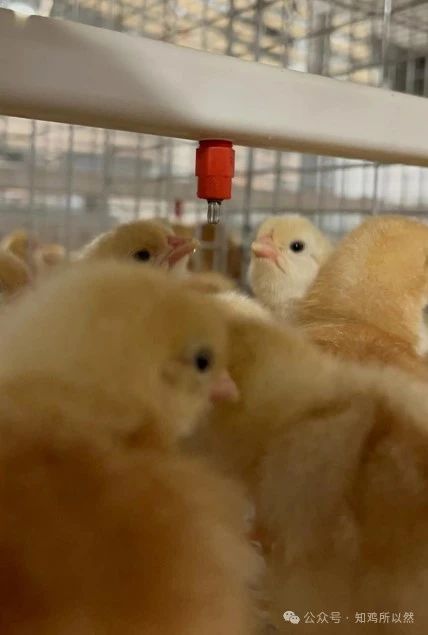
Cleaning steps for the water lines during the empty-house period:
1, select a water-line soaking agent: Use “sodium dichloroisocyanurate” or soak with hypochlorous acid (1%~2% concentration), or use a commercially available cleaning product specifically designed for water lines during the empty-house period. (Guantong)
2, completely drain the water from the water line, then fill the water line with the solution.
3, soak for 12 h. Do not soak for too long, to prevent the soaking agent from crystallizing again and to reduce excessive corrosion of water line components.
4, flush each water line after 12 h. If conditions at the end of the line permit, use a basin or bucket to collect water at the end of the line and observe the suspended matter in the water until it runs completely clear. If collecting water is inconvenient, flush each water line for at least 10 min.
5, while flushing, press the nipples to let any soaking solution remaining inside them drain out, and wash the water cups on the water lines.
6, after flushing is complete, check the cleaning results for the pressure-reducing valve, water line pipe, and nipples.
Things to note:
Thorough cleaning of the water lines is especially important in cage brooding. Water line management, maintenance, and inspection must be monitored at all times, because if the nipples in a cage become blocked, all the chickens in that cage will be unable to drink, and they cannot go elsewhere to get water.
During the downtime between flocks, be sure to thoroughly remove foreign matter left by the previous flock inside the water line pipes and nipples, including drug carriers, residue, and algae biofilm. Together with routine maintenance while chickens are present, this will ensure that the water lines and nipples remain unobstructed at all times.
Case study:
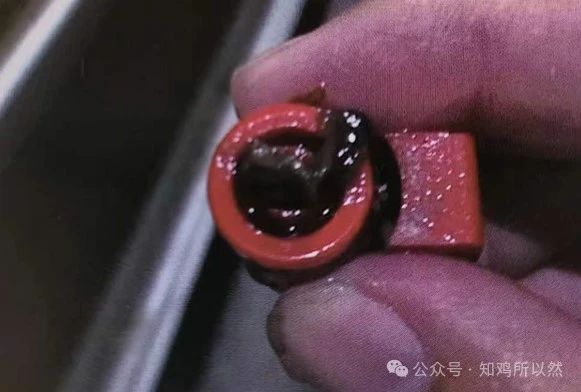
Nipples for a certain batch of chickens at a certain farm at 7 days of age
The drinking nipple is already so severely clogged at 7 days of age, and the blockage is black in color. This indicates that it was not caused entirely by the current flock; it was mainly caused by inadequate cleaning of the water lines after the previous flock was shipped out, affecting the chicks’ daily water intake and even water-based immunization. This situation must not occur!
Today, we have mainly discussed cleaning and disinfection in two areas: the chicken house and the water lines.
(Note: Some of the content above comes from notes taken while attending training at Huayu Nongke, and some reflects my own insights from production practice. I would like to thank all the teachers at Huayu Nongke!)