During the daily rearing and management of a flock, routine checks make it possible to assess the flock’s health at the earliest opportunity, identify issues in rearing and management at any time and make timely adjustments, laying the foundation for stable production performance.
I. Principles for flock checks
Strictly follow biosecurity requirements: proceed first from houses with younger birds to houses with older birds, and from healthy houses to houses that are not healthy. When entering a house, step into the disinfection footbath and change into dedicated biosecurity clothing. Implement the biosecurity protocols for Level One biosecurity zones.
II. Flock check process
Flock checks generally follow four steps: observe, smell, ask and examine by hand.
1、Visual inspection
According to the visual inspection checklist, focus on observing the flock’s mental state, movement, feed intake, water intake, droppings, appearance, anus, oviduct, egg production, and so on.
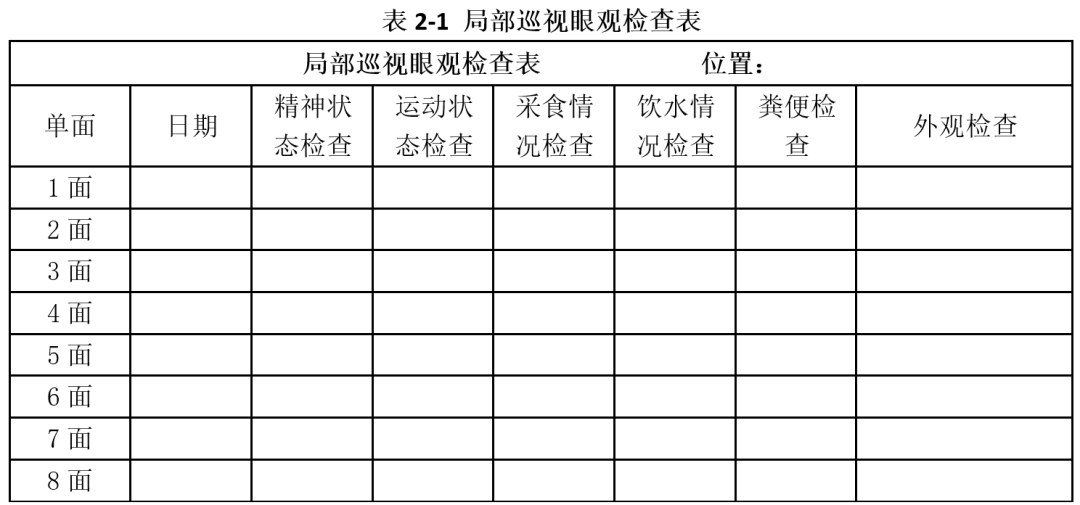
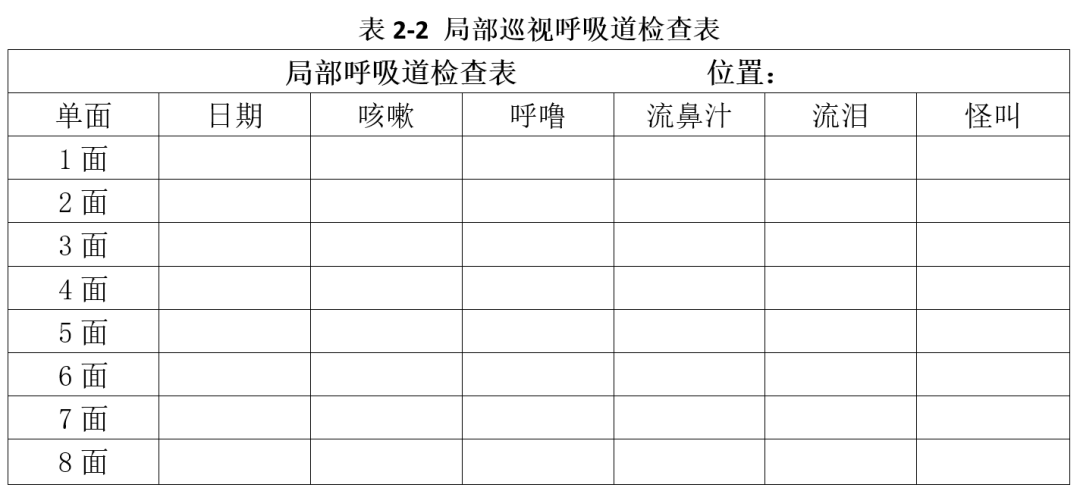
2, Respiratory examination
Use the respiratory tract examination checklist to distinguish the flock’s calls and their proportions, and smell the odors of the chickens, the chicken house, and the feed.
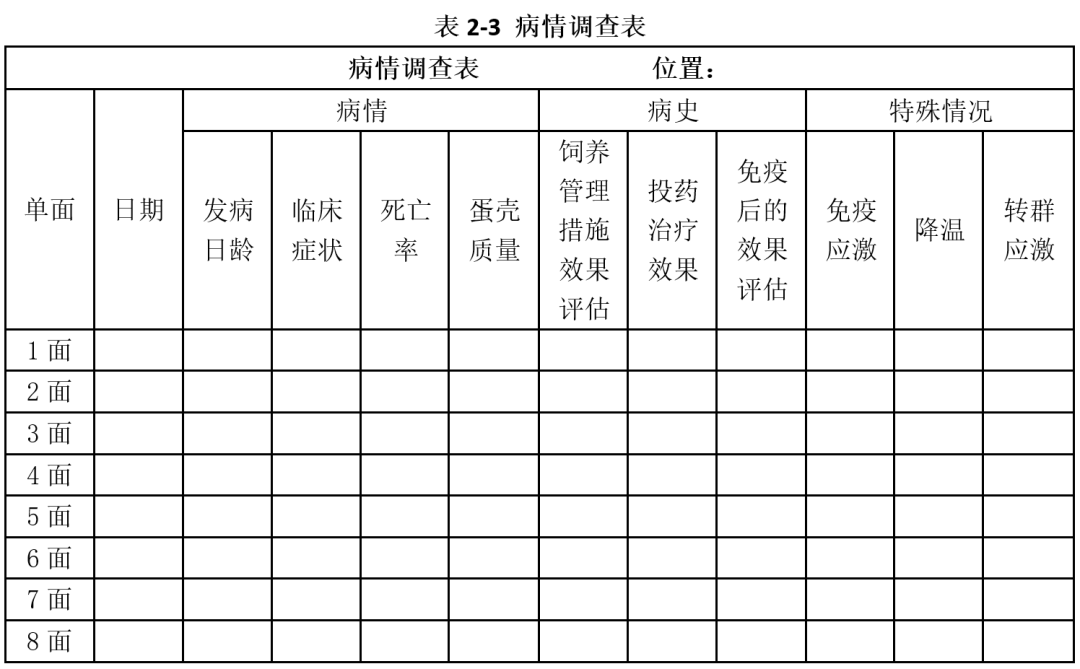
3, Disease investigation
Use the disease investigation checklist to ask about three aspects: the condition, medical history, and special circumstances.
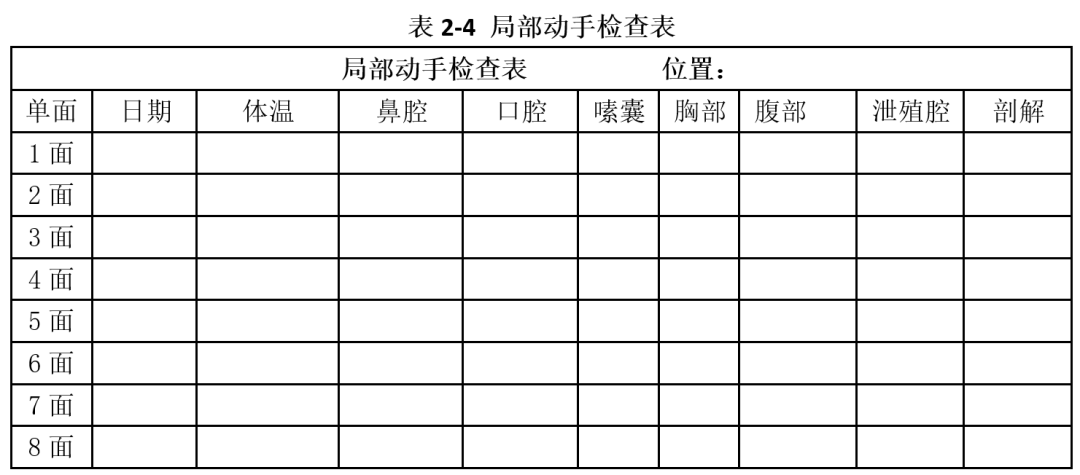
4, Hands-on examination
Use the hands-on examination checklist to check the chickens’ body temperature, nasal cavity, oral cavity, crop, chest, abdomen, and cloaca, and so on.
III. Putting flock inspections into practice
1, monitor feed intake
Before feeding in the morning, check the remaining feed in the trough, and monitor daily feed consumption at 8 o'clock in the morning, comparing it with the previous day.
2, check water intake
Check the heights of the front and rear water-level pipes and the water meter pressure, and compare water intake on the previous day with that on the current day.
(1) duty checks
According to the duty schedule for the production staff on the front line, the farm manager and personnel on duty record water intake daily at 6, 9, 13, 18, and 21 o'clock.
(2) routine checks
The head of each barn records the daily water-intake checks, mainly checking water pressure and the heights of the front and rear water-level columns to ensure an adequate water supply.
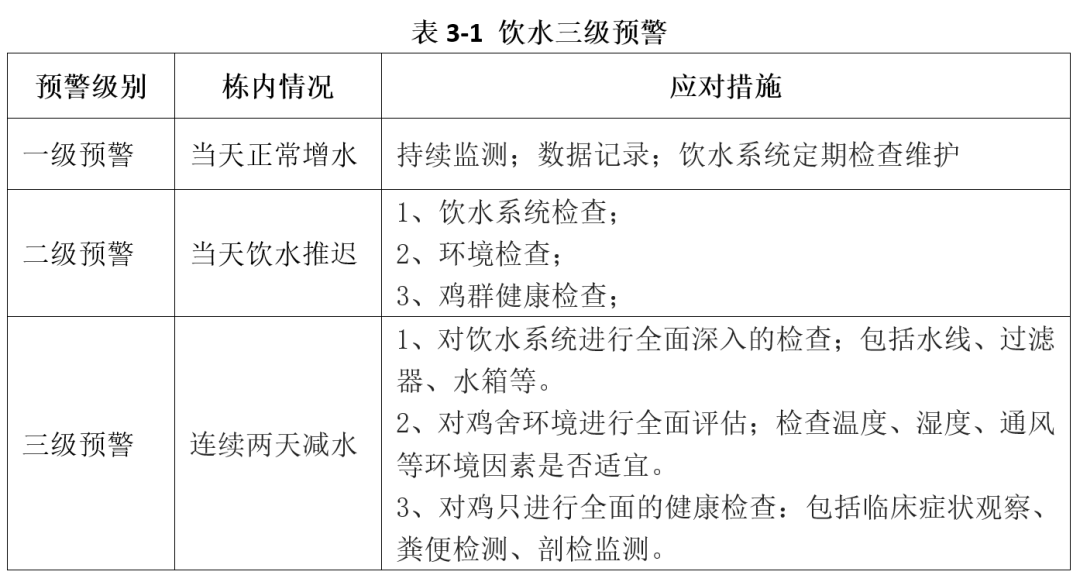
(3) Response to Level Three Alerts
On-duty staff promptly report the difference between the water consumption for the current day and the previous day. The farm manager analyzes the chicks’ health based on the difference and takes corresponding measures according to the three-level alert system.
3, observe individual birds
(1) Daily Inspections
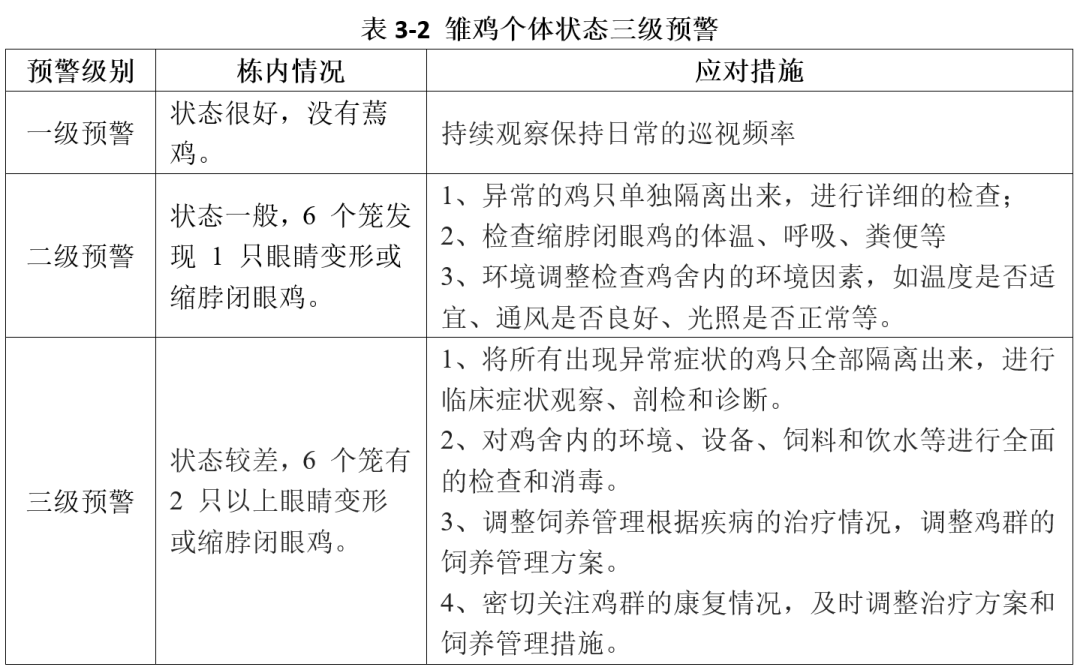
After turning on the lights each day, the house manager inspects the flock at the front, middle, and rear, and at the upper, middle, and lower levels of each section. They remove dead or sub-healthy birds and record their locations. If abnormal flock activity is observed, such as lethargy or huddling, immediately check environmental factors and the flock’s health, and promptly report it in the production group; the farm manager inspects 1-2 houses each day.
(2) Response to Level Three Alerts
Take corresponding measures according to the three-level alert system based on the flock’s condition.
4, compare weight gain
(1) Weight monitoring
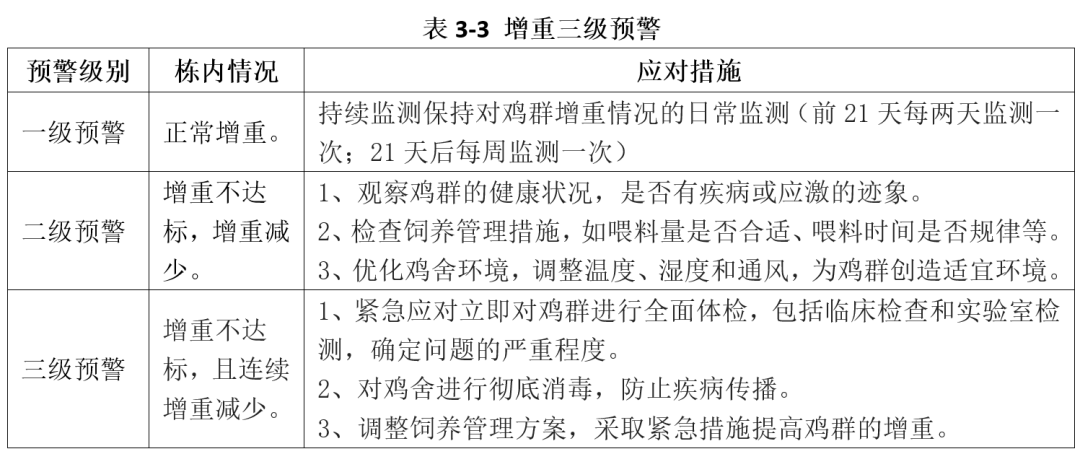
For the first 21 days, monitor weight every two days. After 21 days, monitor weight weekly and prepare a weekly weight report. Compare the data with last week's figures to understand the chicks' growth this week.
(2) Three-level warning response
Take appropriate measures based on the chicks' weight gain, following the three-level warning system.
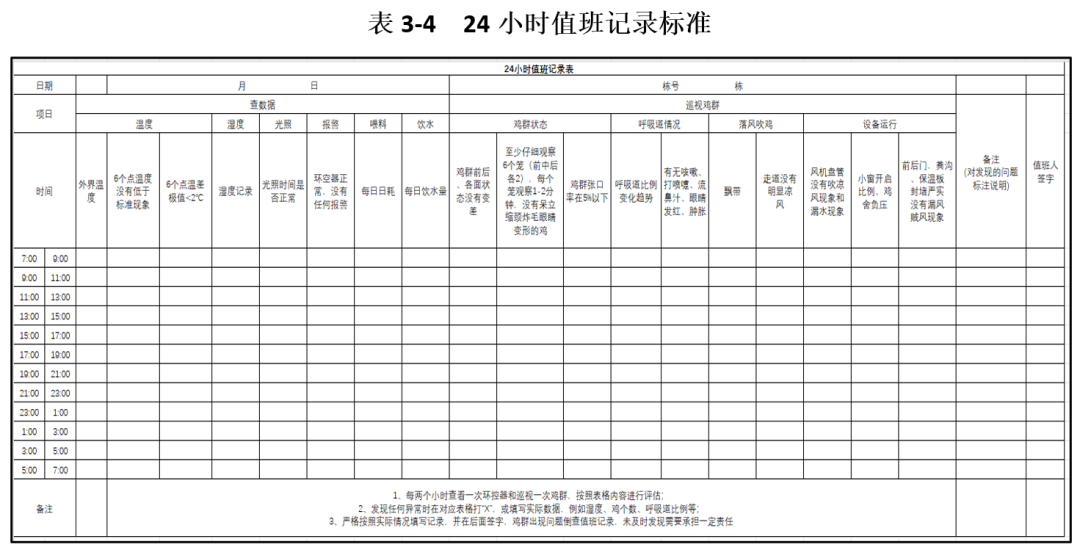
5, implement the 24-hour duty system
Welcome to the Poultry Disease Professional Network forum to learn and share!
Welcome to submit a quotation at the Quotation Center!
The official WeChat account of the Layer Information Collection of the Chicken Disease Professional Network: 15237170695. The mobile number is synchronized. You are welcome to provide us with information!
For comprehensive and timely updates on egg prices every day, following one public account is all you need.
You can scan the QR code.