
Chicks meet the target body weight, but flock uniformity is not ideal. Besides sorting the flock, what else can you do?
1. Optimize feeding management
Group rearing by stage
Divide the flock by body weight into large, medium, and small groups, and provide different feeding regimens for each: (Discuss the driving force in practical operations)
Small, weak chicks: Increase feed nutrient concentration (such as protein and energy) and extend feeding time;
- Chicks meeting the target: Maintain the standard feed allowance;
- Overweight flocks: appropriately control feed intake to prevent excessive growth.
- Ensure uniform feeding
- Increase feeder space: Ensure each chicken has sufficient feeding space (feeder width ≥5cm per bird) to reduce competition;
- Feed little and often: distribute feed 3-4 times a day to stimulate appetite and prevent feed waste;
- Supplementary lighting and feeding at night: provide an additional feeding 1 hours before lights-out to encourage smaller, weaker chickens to eat.
2. Drinking water management
- Adjust water line height and pressure
Set the water line level with the chickens’ backs and maintain moderate water pressure (during the chick stage, nipple drinkers are recommended, with a water pressure of 10-20cm water column) to ensure all chickens can drink easily.
- Cleaning and disinfection
Clean the water lines regularly to prevent biofilm buildup from blocking them and disrupting the water supply, which can result in uneven water intake.
3. Environmental control
- Temperature and humidity uniformity
Maintain a stable temperature in the poultry house (recommended at 28 days of age: 25-28℃), with a temperature difference not exceeding 2℃ and humidity of 60-65%. Avoid localized overheating or overcooling, which can lead to differences in feed intake.
- Ventilation and air quality
Set fans and air inlets appropriately to reduce the ammonia concentration (<10ppm), ensure an adequate oxygen supply, and reduce growth suppression caused by respiratory diseases.
4. Density and space management
Reduce stocking density
Recommended density at 28 days of age: floor rearing ≤15 birds/㎡; cage rearing ≤25 birds/㎡. Excessive density can easily cause stress and competition for feed.
Distribute equipment evenly
Distribute feeders, water lines, and lighting equipment evenly to prevent uneven growth caused by differences in location within the flock.
5. Health management
Disease prevention and control
Focus on preventing and controlling diseases that affect digestion, such as coccidiosis and proventriculitis. Monitor droppings and crop fullness regularly, and administer medication promptly.
Maintain intestinal health
Add probiotics (such as Bacillus subtilis) and organic acids to improve feed digestibility and reduce nutrient loss caused by diarrhea.
6. Lighting strategy
Scientific lighting program
Gradually shorten the lighting period from 28 days of age to 10-12 hours/day; light intensity: 10-20 lux (avoid excessively bright light that can trigger pecking), with even light distribution.
Check the bulb layout to avoid insufficient lighting in corners and ensure consistent brightness throughout the house.
7. Feed nutrition adjustment
Phase-specific formula
Use high-protein feed suitable for the brooding period (1-6 weeks) (crude protein ≥20%, metabolizable energy 2850-2950kcal/kg) to ensure a balance of amino acids (methionine and lysine).
Crushing particle size control
Feed pellets should be a suitable size (1-2mm) to avoid being too fine, which can make feeding difficult, or too coarse, which can lead to uneven nutrient intake.
8. Behavioral management
Reduce stress
Avoid stressors such as sudden feed changes, noise, and frequent handling of chickens. Stress can reduce feed intake and exacerbate differences in body weight.
Train feeding habits
Guide the flock to feed synchronously by providing feed at fixed times, tapping feed bins, and using other methods.
Effect evaluation
Regular weighing
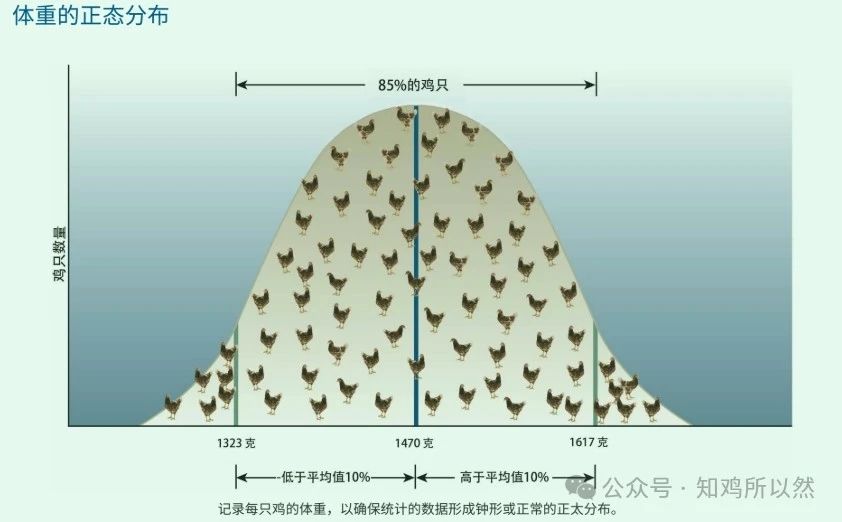
Each week, randomly select 5-10% of the chickens for weighing (fasted), and calculate uniformity (the proportion of body weights within ±10% of the average body weight).
Standard: At 28 days of age, uniformity of ≥75% is acceptable, and ≥85% is excellent.
By implementing the above measures, flock uniformity can be systematically improved without relying on “chicken selection,” laying the foundation for high and stable egg production in the subsequent laying period.