
North Minahasa (TROBOSLIVESTOCK.COM). To increase productivity while maintaining the sustainability of pig farming businesses in North Sulawesi (Sulut), the Ministry of Agriculture (Kementan), together with Commission IV of the Indonesian House of Representatives (DPR RI), is encouraging the development of modern pig farms. These farms focus on supplying quality breeding stock, strengthening animal health, and partnering with smallholder farmers.
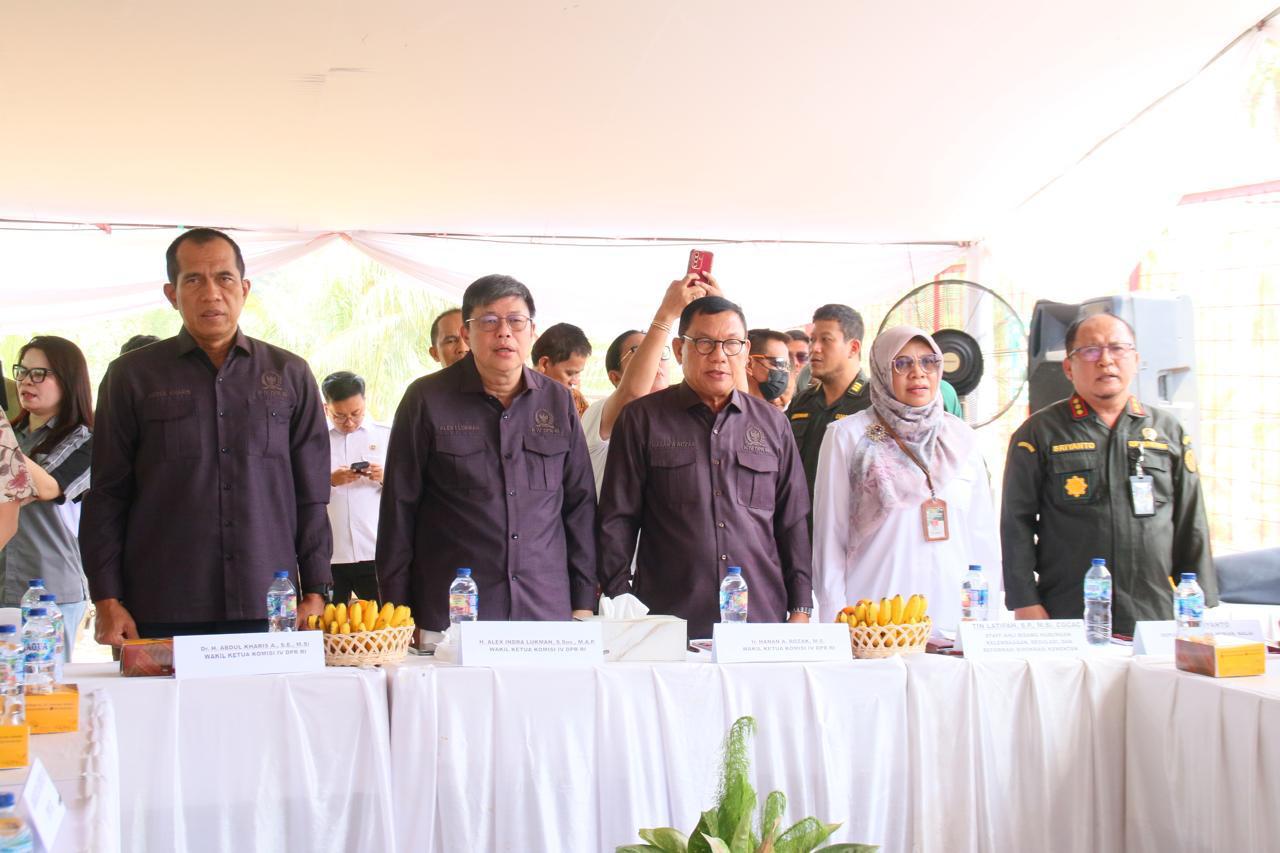
This came up during a recess working visit by Commission IV of the Indonesian House of Representatives to PT Sulawesi Optima Wirakarya (SOW) in North Minahasa Regency, North Sulawesi, on Friday (9/10). The visit discussed strengthening breeding (breeding), biosecurity, and opportunities to develop a livestock industry connected with smallholder farmers.
Alex Indra Lukman, Deputy Chair of Commission IV of the Indonesian House of Representatives and head of the recess working visit team, said that developing modern breeding facilities could help address the need for quality breeding females, which is one of the challenges facing pig farmers. “This is a well-intentioned effort to help farmers by preparing good breeding females. Hopefully, this will receive a positive response from our colleagues in the government,” he said.
He also emphasized that the company can play a role in supplying breeding stock and developing supporting facilities, while farming activities need to continue to provide space for smallholder farmers. “In Commission IV, we want farming to be entrusted to the people. Companies are welcome to build factories or develop breeding businesses, but farming is still expected to provide opportunities for smallholder farmers,” said Alex.
Integrated Pig Farming
Meanwhile, PT SOW President Director Andreas Surya Putra explained that the company is developing an integrated farm focused primarily on providing quality replacement breeding stock that farmers can further develop. The company wants to help farmers establish breeding businesses while independently producing livestock ready for production.
“Our focus is not on the sale of final stock for slaughter, but rather on replacement breeding stock. We hope this replacement breeding stock can be distributed to farmers so they can breed the animals and produce their own final stock ,” said Andreas.
To support this pattern, PT SOW prepares a package of potential breeding sows accompanied by Duroc boar semen and artificial insemination assistance. This approach enables farmers to breed without having to move boars between locations, which can help reduce one of the risks of disease transmission.
Andreas explained that the system was designed to help farmers obtain breeding stock with more targeted genetic quality. The company uses three pig breeds—Landrace, Yorkshire, and Duroc—to support its crossbreeding program.
The Landrace and Yorkshire cross, he continued, is intended to produce potential breeding sows with good reproductive characteristics. Duroc, meanwhile, is used as a source of boar semen to support the meat quality and growth of its offspring. “What we hope is that farmers can use these potential breeding sows for breeding, obtain final stock, and then market them,” he said.
PT SOW uses a closed-house system (closed house) equipped with air circulation and cooling controls. The company also enforces strict biosecurity by dividing the farm area into four zones—black, red, yellow, and green—with access controls based on the level of animal health protection.
“Visitors and vehicles entering must undergo inspection and sanitation procedures. Access to more protected zones also requires hygiene, disinfection, and clothing-change procedures to reduce the risk of disease agents entering,” Andreas explained.
The company is also developing supporting facilities, including feed mixing, waste management, biogas, and an incinerator. These facilities support farm operations, waste management, and the handling of livestock carcasses in accordance with procedures.
Needs Cross-Sector Support
Andreas said that the development of modern livestock farming still requires cross-sector support. Issues of concern to the company include permits and interregional livestock movement, access to vaccines for pig diseases, certainty of corn supplies and prices as a feed ingredient, as well as the development of partnerships and market access.
“We hope for support from several agencies, particularly in relation to quarantine, livestock movement, and livestock services, so that this business can expand into other regions while continuing to take disease risks into account,” he added.
Intervention Community-Based ASF
The Director of Animal Health at the Ministry of Agriculture, Hendra Wibawa, explained that control African Swine Fever (ASF) does not depend solely on vaccination. The simple implementation of biosecurity by farmers is also an important part of protecting livestock, especially when the ASF vaccine being discussed has not yet received safety approval for use.
“What we are promoting is community-based ASF intervention, namely empowering smallholder farmers to implement simple biosecurity measures. In North Minahasa, we have followed up with the relevant agency so that this approach can be replicated among other farmers,” said Hendra.
He added that livestock movements need to take animal health status and applicable technical requirements into account. Coordination between the central government, regional governments, and quarantine authorities is needed so that the distribution of livestock that meets the requirements can proceed while protecting the region from disease risks.
The Ministry of Agriculture is also planning to apply for ASF-free compartmentalization once the required documents are complete. If the requirements are met and recognition is granted, the certification is expected to support animal health management and facilitate livestock movements in accordance with regulations.
Adjusting Breeding Stock & Market Needs
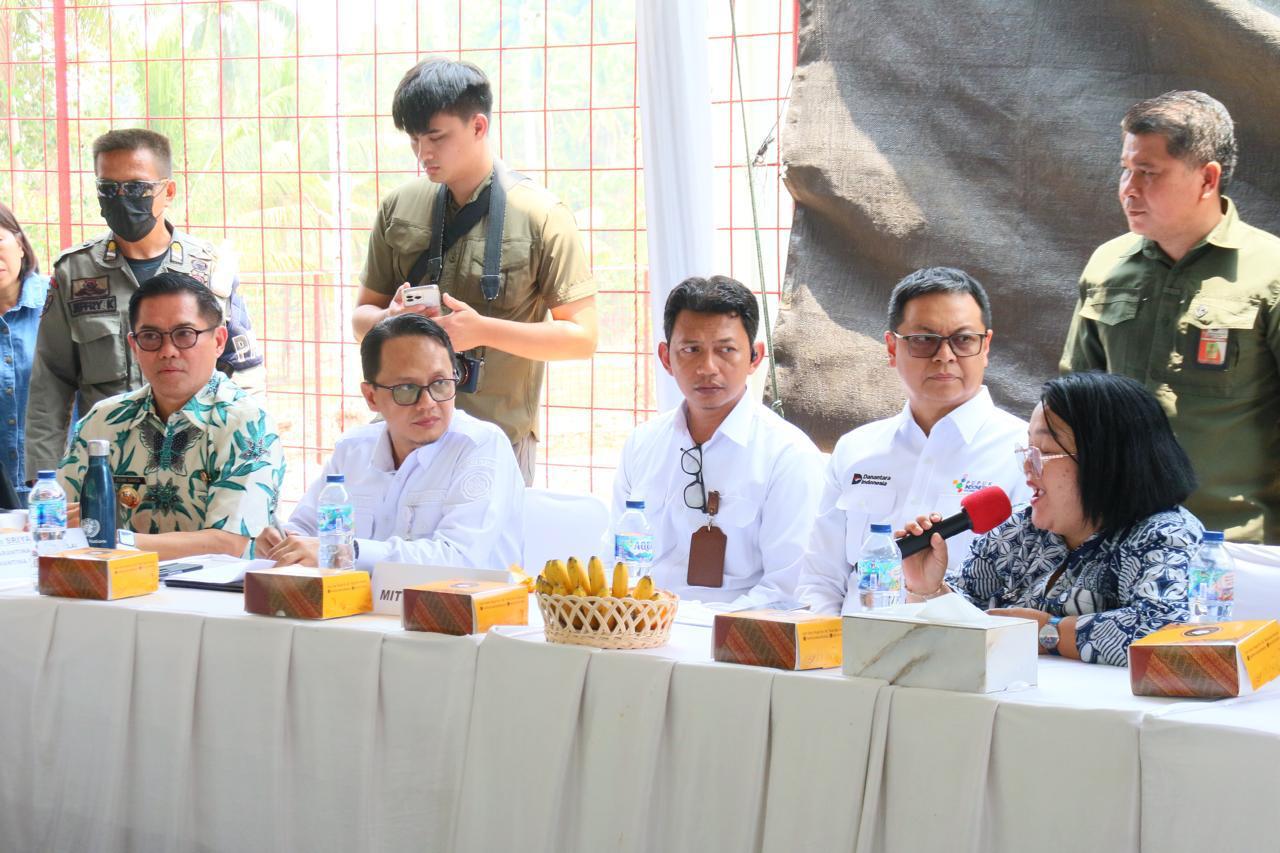
Hendra emphasized the importance of aligning seed production with market needs. Proper planning is necessary to ensure that the breeding business genuinely meets farmers’ needs and does not drive a shift into the fattening segment, where it could compete directly with small-scale farmers.
“Success is determined not only by corporations, but by partnerships among companies, communities, cooperatives, the government, and universities. They must all support one another,” said Hendra.
From the regional government’s perspective, North Minahasa Regent Joune Ganda welcomed PT SOW’s modern livestock farming development as an opportunity to help meet the region’s pork needs. According to him, pork prices also affect the rate of inflation in North Minahasa. “We hope this livestock farm will greatly help maintain price stability, particularly in keeping inflation in North Minahasa Regency under control,” Joune said.
He hoped that the business development could contribute to meeting the demand for pork in North Minahasa and North Sulawesi. The regional government also stated its readiness to promote partnerships and provide support alongside businesses to anticipate changes in demand and price surges.
The Ministry of Agriculture views the development of modern livestock farming as needing to go hand in hand with stronger animal health, strict biosecurity, genetic quality, and mutually beneficial partnerships. In this way, higher productivity is expected not only to strengthen the industry, but also to create opportunities for smallholder farmers to improve livestock quality and develop their businesses sustainably.bella