
- Dairy
- Livestock
- Livestock diseases
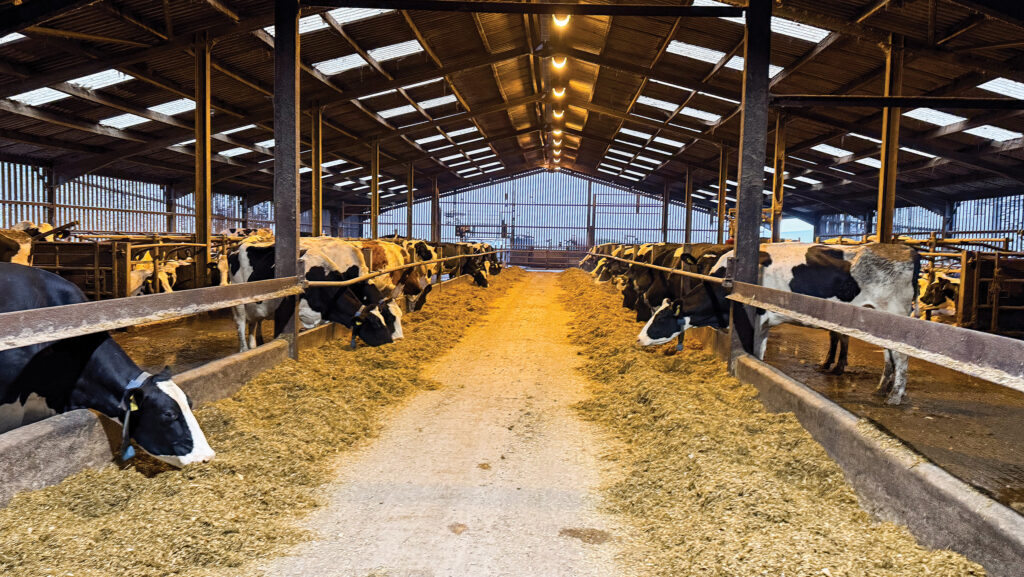 The herd is split into two management groups and grazes when conditions allow © Rhian Price Media
An ongoing commitment to individual cow testing and strict culling has helped a Somerset dairy family reduce its herd’s Johne’s disease average test value by 45% in six years.
See also: How Johne’s management cut disease to less than 2% of herd
Samuel Dyer, together with his parents, Michael and Janet, milk 197 Holsteins at White Ash Farm, near Chard in Somerset, supplying Barber’s.
The family first began screening for Johne’s a decade ago, initially to meet the requirements of a previous milk buyer.
Since then, they have reduced the herd’s average test value (ATV) from a peak of 10.7 in 2020 to 5.6 today.
ATV represents the average of all Johne’s disease antibody test results taken at a particular point, and indicates the overall level of infection within a herd.
However, the farm’s vet, Keith Cutler, from Synergy Farm Health, stresses that knowing individual cow results is critical when making management decisions.
“ATV gives you a sound starting board, but herd management decisions must be based on individual cow results,” he says.
Farm facts: White Ash Farm, Chard, Somerset
- Milks 197 Holsteins
- Calves year-round
- Vaccinated for infectious bovine rhinotracheitis, leptospirosis, bovine viral diarrhoea and mycoplasma
- Yields 9,700 litres at 4.48% butterfat and 3.6% protein
- Somatic cell count of 158,000 cells/ml and bactoscan of 16,000 cells/ml
- Sells heifers at Sedgemoor, and beef calves sold at one month old
- Farms 178ha, owned and rented, plus 8ha of contract-grown maize
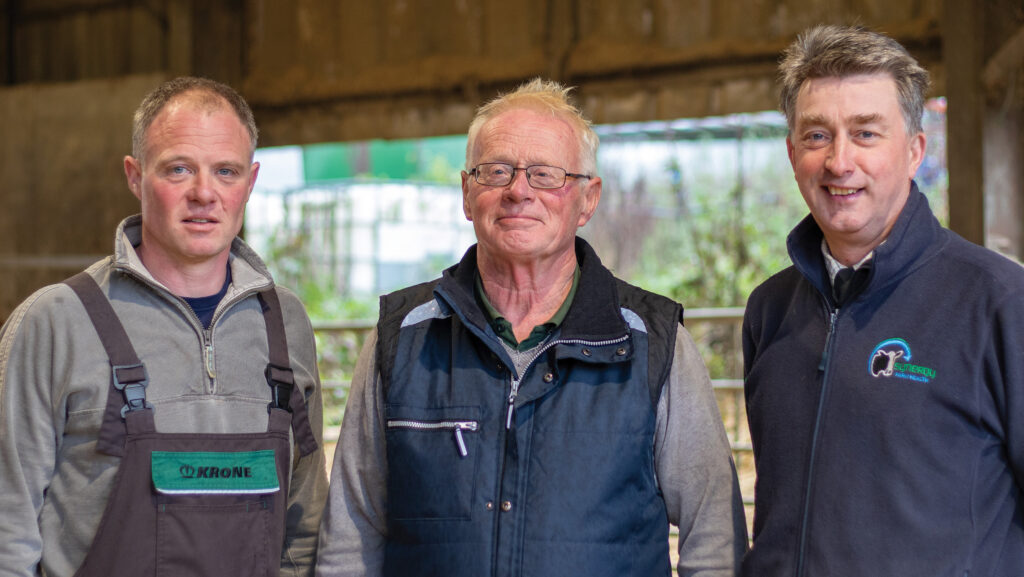
From left: Samuel Dyer and his father, Michael Dyer, with vet Keith Cutler © Rhian Price Media
Testing and culling strategies
The Dyers operate a closed herd and use National Milk Record’s HerdWise service to test individual cows quarterly.
This allows them to identify high-risk animals and monitor changes in herd infection levels.
Under the National Johne’s Management Plan, cows are assigned a risk category from J0 to J5 based on their test history.
A cow is classified as J5, the highest-risk category, if she records two positive antibody tests (readings above 30) within her previous four recordings.
J4 animals are also considered infectious and can shed Mycobacterium avium paratuberculosis (MAP), which causes Johne’s disease, explains Keith.
Once a cow is classified as J5, her risk status cannot be downgraded, he adds.
“It’s important not just to cull infected cows, but to stop more cows becoming infected. J5 cows are already broken, and J4 cows are on their way to being broken,” he says.
At White Ash Farm, the Dyers have adopted a strict approach to breeding and culling higher-risk animals to prevent disease transmission.
The commercial Holstein herd runs a replacement rate of 35%.
The best maiden heifers and cows are served twice to sexed semen before being mated to an Aberdeen Angus or Hereford sweeper bull.
Johne’s disease test results and dam test history determine which animals breed replacements, which go straight to beef, and which are not bred.
Any cow recording a test value above 60 in a single test is culled as soon as practicable, explains Samuel.
Meanwhile, those testing above 30 on two occasions won’t be served again and will be closely monitored and culled at the end of lactation, while cows testing above 30 once are closely monitored and served to beef.
This strict approach is paying off, with just two cows in the herd currently classified as J4 and two as J5. Keith says the proportion of J4 animals in first lactation is a good indicator of whether Johne’s disease control measures are working.
At White Ash Farm, just 0.8% of the whole herd is classified as J4. This figure falls to 0.2% in first lactation.
“It shows the situation is improving, and that’s because of the control measures they have in place before calving,” says Keith.
Reduced transmission at calving
Keith explains that calving presents the biggest risk of Johne’s disease spreading because cows’ immunity becomes compromised.
At the same time, newborn calves are vulnerable to MAP infection, which disrupts the formation of tight cell junctions, allowing the bacterium to permeate the intestinal wall.
He says although infection can occur in utero, most calves become infected through exposure to contaminated faeces, dirty udders or infected colostrum within the first hours, days or weeks of life.
“You need to manage the transmission of infection to make sure more animals are not getting on that disease escalator,” explains Keith.
For this reason, a key focus at White Ash Farm has been reducing disease transmission at calving.
Calving yards are cleaned regularly, with fresh bedding topped up daily. Higher-risk animals are calved in a separate area to reduce the likelihood of exposing newborn calves to infection.
“If a J4 or J5 cow is due to calve, we try not to calve her in the calving area, and we snatch the calf straight away,” explains Samuel.
Practical measures
Maintaining hygiene is one of the biggest challenges for herds calving year-round like the Dyers, because facilities are in constant use. Keith says this makes it difficult to thoroughly clean, disinfect and rest calving areas between animals.
The Dyers have addressed this by using a powdered, dry disinfectant and calving cows outdoors when weather conditions allow. However, they acknowledge that another calving area would let them rotate and rest facilities.
Keith stresses that control measures must be affordable and practical to ensure they are consistently implemented. “It’s not perfect, but in some situations it’s important to do something rather than nothing, and it has to be easy – then it gets done.”
Colostrum and milk management
Managing colostrum and milk fed to newborn calves is another critical part of Johne’s disease control. Calves born from high-risk animals are fed substitute colostrum powder, explains Michael, adding they have recently secured grant funding for a mobile milk pasteuriser.
They plan to switch from skimmed milk powder to feeding pasteurised whole milk to reduce labour requirements and feeding costs.
However, Keith warns that Johne’s bacteria can be harder to eliminate through pasteurisation than other pathogens such as salmonella and E coli.
“Pasteurisation is good, but it was introduced to control TB. Although TB and Johne’s disease are similar, TB bacteria are shed as single bacteria and are easier to kill. MAP is shed as clumps of bacteria, so you need to pasteurise at higher temperatures or for longer, and even then, it may not eliminate contamination. “
On balance, though, he and the Dyers believe feeding pasteurised whole milk will be better. Milk from Johne’s-positive cows will be disposed of rather than fed to calves.
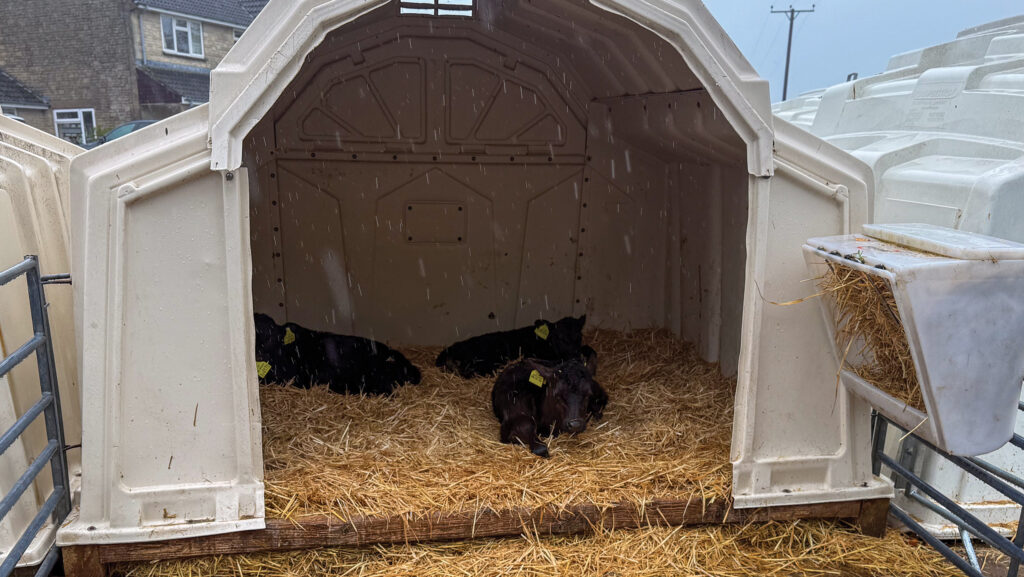
Calves will be fed pasteurised whole milk © Rhian Price Media
Next steps
The National Johne’s Action Group has set an industry target of reducing Britain’s ATV to 5.5 by 2030. With the Dyers well on track to achieve this, they say next steps include changing the goalposts to remove animals at even lower test values.
“We want to keep making progress and for the herd ATV to continue to go down,” says Samuel.
He adds that the biggest challenge is changing the mindset around culling cows. “Test every cow to root out the disease. You might think you’re getting rid of good cows, but you must trust the test results.”

Farm advice and AI survey
- Dairy
- Livestock
- Livestock diseases