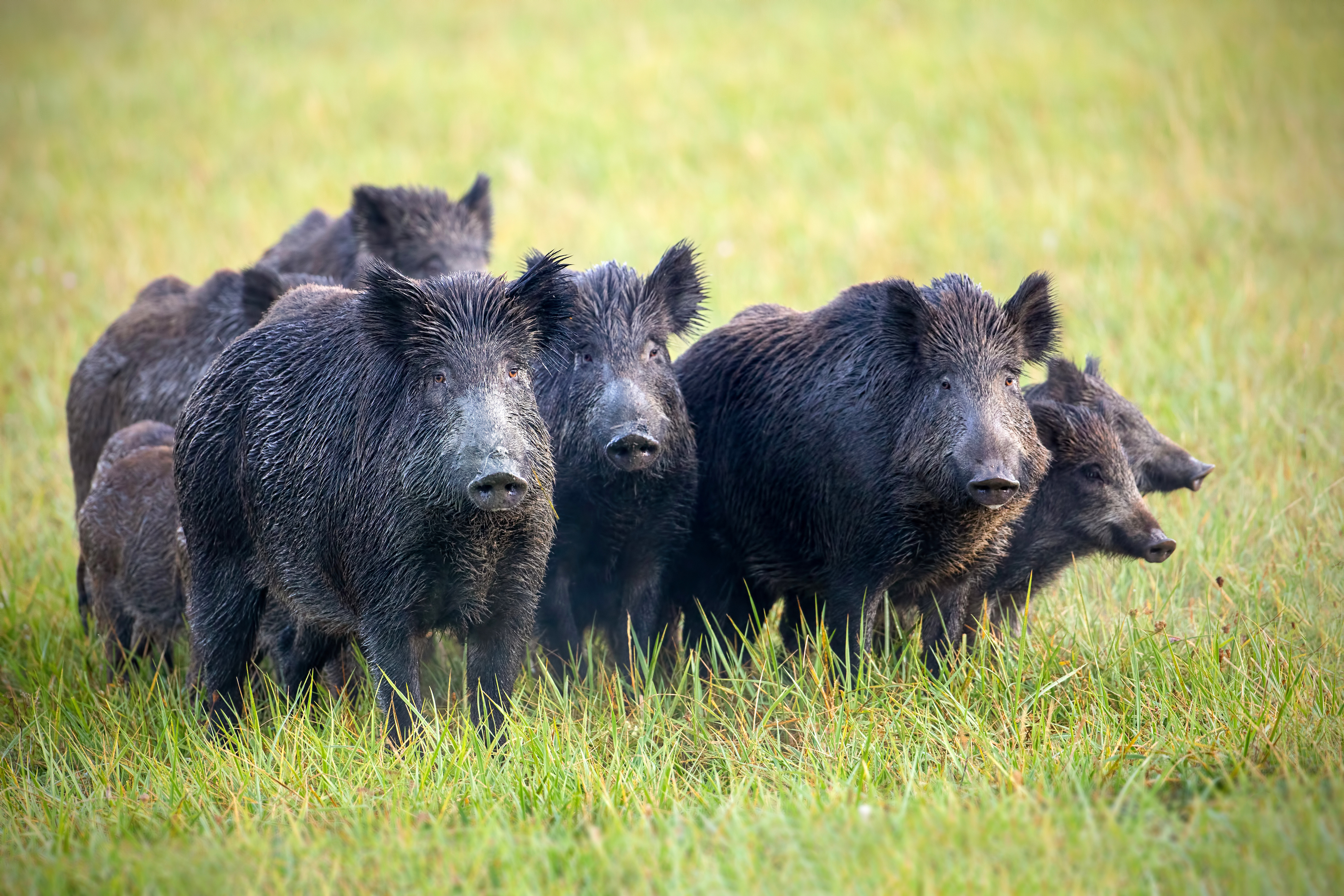
The European Food Safety Authority (EFSA) has published a new report on wild boar movements and behavior and their relationship with the spread of African swine fever (ASF). The work also analyzes factors associated with the persistence of the disease and methods for locating wild boar carcasses.
To study their movements, researchers analyzed GPS tracking data from approximately 700 wild boar from ASF-free areas in 13 European countries, collected through the EUROBOAR project.
The results show that wild boar usually move within relatively small areas. Over periods of 14 days, the average area covered was 2,4 km², although, exceptionally, movements of up to 60 km were recorded during the same interval.
The study also examined how often wild boar approached pig farms. In 22% of the monitored 14-day periods, tracked wild boar whose ranges included pig farms were within 50 meters of a farm at least once. This highlights the importance of rigorous biosecurity measures on farms located in regions where ASF is present in wild boar populations.
In addition, higher wild boar density was associated with greater spread of ASF to previously unaffected areas. The results suggest that surveillance and control efforts should focus especially on regions with high wild boar densities in the peripheral areas of advanced outbreaks.
Regarding the persistence of the disease, the report found that in regions with higher minimum temperatures, the proportion of ASF-positive carcasses was lower and the disease tended to persist for less time.
Finally, EFSA evaluated different methods for locating wild boar carcasses and estimating the time elapsed since death. Trained detection dogs improve search effectiveness, while the usefulness of drones depends on terrain characteristics. Visual assessment of the state of decomposition remains the most commonly used method for estimating the time elapsed since death.
18 November 2026/ EFSA/ European Union
https://www.efsa.europa.eu