
Currently, in the major broiler-producing regions of China, extensive sampling and monitoring have shown that both the positive detection rate and incidence of viral arthritis in broiler chickens are significantly higher than in the past. Chicken viral arthritis was formerly called viral tenosynovitis. Its clinical diagnostic features include inflammation around the hock joint, synovitis, tendon swelling, tenosynovitis, and rupture of the gastrocnemius tendon, among others.
Because affected chickens have swollen joints and difficulty walking, they cannot eat normally, leading to an increase in the number of birds culled and causing farmers varying degrees of economic loss. This disease is especially a case of “adding insult to injury” for broiler farmers during the persistently depressed market conditions of recent years. The disease was detected in multiple provinces in mainland China in the mid-80s of the last century.
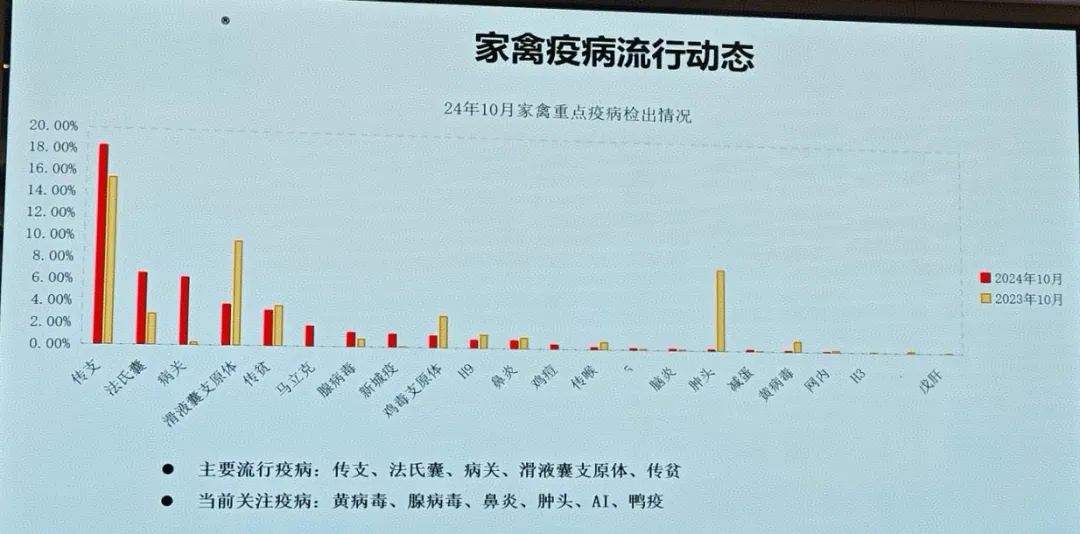
For quite a long time, viral arthritis seemed to have “almost disappeared” from poultry production and was rarely seen. However, since the beginning of this year, both the positive detection rate and the clinically diagnosed incidence of the disease have risen significantly and are higher than in previous years. Given the current situation and trend, it may become another infectious disease, after synovitis, that farmers at the grassroots level must not overlook.
[Pathogen and Routes of Transmission]
The pathogen responsible for the broiler viral arthritis mentioned above is, in fact, avian reovirus. The virus particle is non-enveloped, and its genome consists of double-stranded RNA in 10 segments. Avian reovirus has some resistance to heat and can withstand 60℃ for 8–10 hours. The virus can be inactivated with 70% ethanol and 0.5% organic iodine.
Broiler reovirus is widespread in nature. Although it can be isolated from various bird species, chickens and turkeys are currently the only known species that can contract viral arthritis. The pathogen can also spread horizontally. Transmission between chickens is more widespread, with shedding occurring mainly through the digestive tract. Chickens carrying the latent virus are the main source of infection; the older the chickens, the lower their susceptibility, and the more widespread the disease, with an incidence rate above 5%; cases occur sporadically in local areas.
After chickens are 10 weeks old, the incidence of the disease decreases markedly: chicks at 1 days of age are most susceptible to infection, but develop the disease less often. Clinically, some medium-to-large chickens aged 3–6 weeks develop the disease in consecutive batches in the same poultry house. The clinical severity of the disease and the difficulty of treating it depend not only on this pathogen, which is a key factor, but also on concurrent and secondary diseases, which must be treated at the same time. For example, Escherichia coli can trigger and aggravate the progression of viral arthritis.
[Clinical symptoms]
Affected chickens have painful, swollen joints and difficulty walking, with a typical staggering gait. In severe cases, they lie prone and immobile, eventually dying of starvation. Swelling on the ventral side beneath the joints is commonly seen.
[Post-mortem findings]
The digital extensor tendons at the front of the hock joint and the digital flexor tendons at the back are visibly swollen. In particular, the flexor tendon sheath is swollen, congested, hemorrhagic, and purulent. In some cases, the flexor tendon is damaged or ruptured; the joint fluid is cloudy, the articular surface is damaged, and the femoral head periosteum is damaged or absent.
[Key diagnostic points]
1, Clinical features
Joint swelling, difficulty walking, lying prone and immobile, struggling to eat
2, Post-mortem findings
Subcutaneous bruising, subcutaneous suppuration, tendon rupture, and synovitis.
3, to confirm this disease, laboratory serological testing and virus isolation and identification are required.
4, Differential diagnosis
This disease should mainly be differentiated from the synovial form of mycoplasmosis. Viral arthritis mainly affects the joints adjacent to and above the joints, causing swelling, suppuration, and tendon damage or rupture; synovitis mainly affects weight-bearing organs, such as swelling and suppuration of the toe joints, footpads, and subcutaneous bursae.
[Prevention and control methods]
Once this disease occurs in commercial broilers, there is currently no particularly effective treatment. Traditional Chinese medicines or biological products are generally used to improve immunity. Viral arthritis alone does not cause suppuration; suppuration indicates a concurrent or secondary infection. Antibiotics can be selected for symptomatic treatment based on the color, odor, and viscosity of the pus; an antibiotic sensitivity test can be performed if necessary.
For example, lincomycin + polyinosinic-polycytidylic acid + interferon + atropine sulfate + Astragalus polysaccharide injection may be used. This approach focuses on broad-spectrum antibacterial, anti-inflammatory, and anti-swelling supportive treatment, supplemented by multiple products to enhance immunity and improve the chickens’ disease resistance. Another example is a newer supportive treatment combining lincomycin + highly sensitive cephalosporin-class drugs + thymosin injection + Astragalus polysaccharide injection + meloxicam injection. In short, there is no specific drug for this disease; do not expect a complete cure.