
Overview
420 days old, Hy-Line Brown, 9800 birds. Eggshell color has become lighter and whitish. Previously, there were 1-2 deaths per day; deaths then suddenly increased to 4-5 per day.
The farmer reported that earlier, due to market conditions, they changed the brand of mold binder to control farming costs, choosing a low-cost product made by a small manufacturer. After using it for some time, the flock's droppings began to appear abnormal: the amount of black droppings gradually increased, and the droppings also became thin and unformed, with undigested feed particles mixed in. During this period, the farmer tried adjusting the feed formulation, but this did not improve the abnormal droppings. Increased mortality and lighter eggshell color then appeared, prompting them to seek consultation and treatment.
Clinical observations
On-site observation showed that the flock's overall condition was poor. Some birds had fluffed feathers, tucked-in necks, and closed eyes, and were slow to respond. Their feeding rate had slowed, and small amounts of regurgitated water could be seen in the feed troughs, spread across a relatively wide area. As for the droppings, most birds had thin droppings with obvious feed passage; black droppings accounted for around 20%, and some black droppings were sticky.
Post-mortem examination
The mesentery was blackened; the liver was friable, rotten, and discolored; the intestinal mucosa had sloughed off.
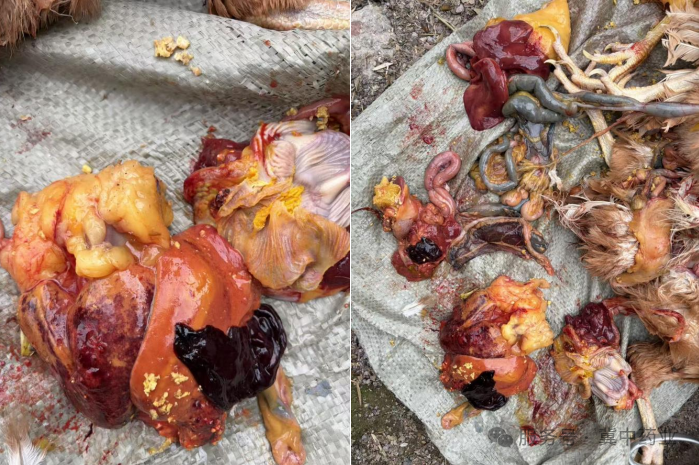
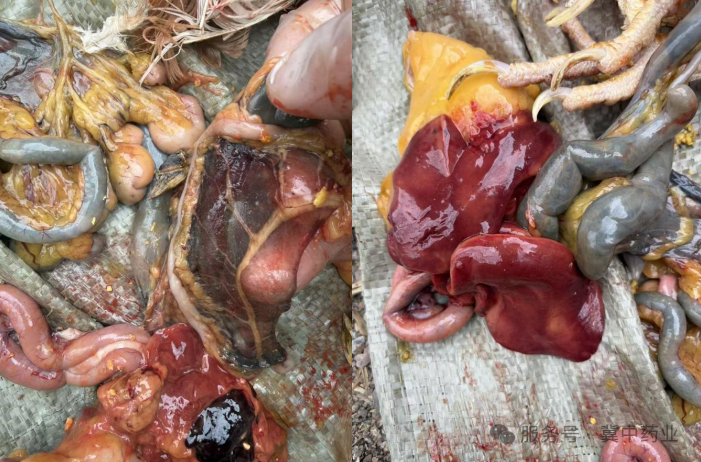
Pathogen-related gap: The core issue is excessive mycotoxin levels. The effectiveness of mold detoxifiers from small manufacturers is unstable, and they cannot effectively eliminate mycotoxins in feed. This leads to toxin accumulation in chickens, damaging organs such as the liver and intestines, causing symptoms of poisoning, and reducing the flock’s immunity.
Three major gaps in the case
Six climatic factors-related gap
Dampness is predominant. Insufficient ventilation in the chicken house results in high indoor humidity, creating favorable conditions for mold growth and reproduction. This not only accelerates feed spoilage but also irritates the intestines and obstructs qi movement, worsening liver damage and abnormal feces.
Human-related gap
Mold prevention and control are handled carelessly. Farmers blindly choose low-cost mold detoxifiers and fail to prioritize feed storage and clean drinking water. Water lines are left uncleaned for long periods, environmental controls in the chicken house are inadequate, ventilation is not provided in a timely manner, and the importance of mold prevention and control is overlooked.
Three-part purification
Feed-source purification: Immediately switch to high-quality, mold-free feed and use 美速解 according to instructions; thoroughly clean the water lines to remove biofilm and dirt, ensuring clean drinking water, and continue with regular cleaning and maintenance. At the same time, regulate the balance of intestinal flora to reduce intestinal damage.
Environmental Sanitation
Extend ventilation time in the chicken house to ensure air circulation and reduce indoor humidity. Promptly remove manure and debris from the chicken house, and regularly disinfect the chicken house, feed troughs, and drinkers to kill mold spores in the environment and improve the breeding environment.
Differential Diagnosis
Diagnosis: Fungal liver disease combined with mycotoxin poisoning, accompanied by intestinal mucosal damage and mild secondary infection.
Prolonged exposure of the flock to mycotoxins, together with dampness obstructing the body, causes stagnation in the liver, impaired liver-dispersing function, and reduced detoxification and toxin-elimination capacity. Dampness also impairs the spleen’s function, damaging the spleen and stomach’s ability to transport and transform nutrients and resulting in symptoms such as feed passing through undigested and loose stools. Impaired circulation of qi and blood further aggravates organ damage.
Combined Formula
Gandan Granules, 500 grams per sachet, for 1500 jin of water
Meisujie, 1 kilograms per sachet, for 4000 jin of water
Neomycin sulfate: 100 grams per 400 jin of water,
use Meisu Jie continuously for 7-10 days,
use Gandan granules + Neomycin continuously for 4 days.
Follow-up status
A telephone follow-up was conducted on the day the medication ended. The flock had recovered well. Specifically, losses were effectively controlled; eggshell color had improved noticeably, with most returning to normal; eggshell quality and laying rate were gradually recovering. The flock's condition had improved, feed and water intake had returned to normal, the water-spitting phenomenon at the feeders had basically disappeared, and droppings had formed. Passage of undigested feed and black droppings had decreased significantly. It was subsequently recommended that the farmer continue purification and prevention and control measures to consolidate the treatment results, and conduct regular follow-ups to observe the flock's complete recovery.