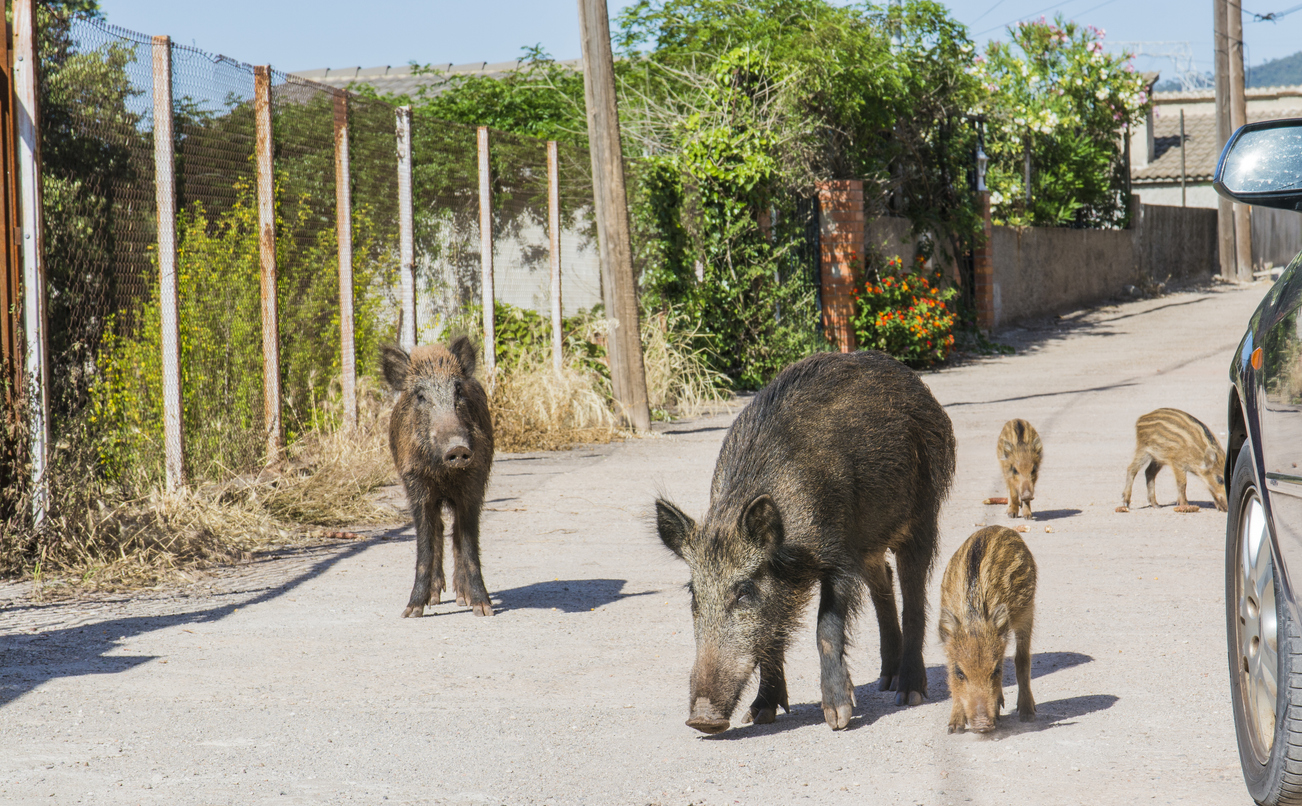
The Faculty of Veterinary Medicine of the Universitat Autònoma de Barcelona (UAB) and the Catalan Bar Association have signed an agreement to promote wildlife management models based on scientific, ethical, and sustainable criteria, with particular attention to wild boar populations in urban and peri-urban areas. The agreement was formalized on 9 October during the II Animal Rights Congress, held in Mataró.
The collaboration resumes a line of work begun in 2016. The UAB will contribute the results of its research, while the Council will provide legal and institutional advice. Both entities will promote the exchange of knowledge and the drafting of recommendations for public administrations.
During the meeting, the dean of Veterinary Medicine at the UAB, Manel López-Béjar, discussed the management of wild boars in the context of African swine fever (ASF). According to the data presented, since the first outbreak was detected in Cerdanyola del Vallès, in November 2025, more than 13.541 wild boar have been tested in Catalonia, of which 400 tested positive.
López-Béjar acknowledged that reducing wild boar density may be necessary in a public health emergency, but warned that culling alone is not a sustainable long-term solution, due to the populations’ ability to recover and the availability of food and water near cities.
The proposed alternatives include restricting access to waste and food sources, discouraging the public from feeding the animals, adapting urban spaces, and applying fertility control methods.
Between 2017 and 2021, the UAB and several collaborating organizations conducted an immunocontraception study on wild boar in Matadepera, Terrassa, Sant Cugat and Vacarisses. According to the results presented, females vaccinated before puberty remained infertile throughout the study. In the intensive vaccination areas, complaints from residents decreased by 80 % and no traffic accidents involving wild boar were recorded.
A ten-year projection based on these results estimates that sustained vaccination of young females, combined with basic control measures, could reduce the annual need to cull wild boar by about 64 %. Those responsible for the agreement emphasize the importance of having a regulatory framework, stable funding, and coordination among public administrations, researchers and the public.
9 October 2026 / Universitat Autònoma de Barcelona (UAB) / Spain.
https://www.uab.cat/