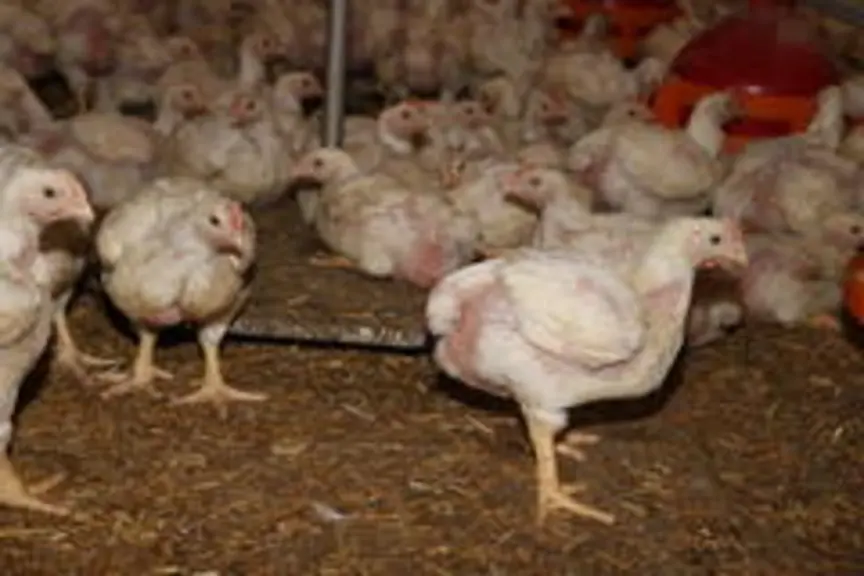
“In 2024, the number of coccidiosis cases reached 30% of heavy broilers,” Sarah Betz said at an Elanco seminar. In focus: Emeria acervulina and Emeria maximawhose lesion severity and number of coccidiosis cases are increasing, particularly in heavy broilers. The risk period falls within a window of between 20 and 28 days.
Read also: How to correctly identify coccidiosis in chickens
Perfectly suited to our production systems, the parasite ranks among the top 3 diseases in broiler chickens, alongside colibacillosis and infections caused by Enterrococus cecorum. At farm level, unmanaged coccidiosis can cost up to 18 cents per bird, the veterinarian points out. “Today, it is estimated that in France, nearly one in four chickens will have its potential limited by the presence of coccidia and digestive lesions that will hinder its growth.”
Read also: Coccidiosis: The disinfectant evaluation model challenged in poultry houses
Stay up to date in real time!
Follow topics, legislative projects, companies and personalities to be notified as soon as we publish an article.
A staggering cost on a global scale
The global repercussions are very significant, estimated at a cost of around 12 billion euros in poultry production (1). In Europe, the economic impact could reach 1,2 billion euros when direct losses, control costs and indirect losses (additional labor, disinfection....) are added together. France even differs from its European neighbors when it comes to intestinal integrity, with higher lesion scores for E. Maxima and Acervulina, more gizzard erosions and liquid digestive contents. “In terms of digestive health, what we notice is that in France, based on field data via HTS, there is room for improvement,” reports Sarah Betz, who also highlights considerable variability among the different French groups.
(1) According to a scientific publication by Damer P. Blake et al., “Re-calculating the cost of coccidiosis in chickens,” Vet. Research
Good to know
Elanco’s HTS monitoring, or “Health tracking system”, is a poultry health monitoring tool that also tracks digestive health. Present in 52 countries worldwide, the HTS system generates a huge database. In France, around thirty partner veterinary laboratories perform autopsies throughout the country. That is 2 000 to 2 500 autopsies collected and analyzed each year.