- Municipal general plans were intended to organize land use, but farmers fear they will block the expansion of farms and livestock buildings
- Agriculture Minister Stefan Krajewski announced amendments to the law intended to enable the construction and expansion of existing farms
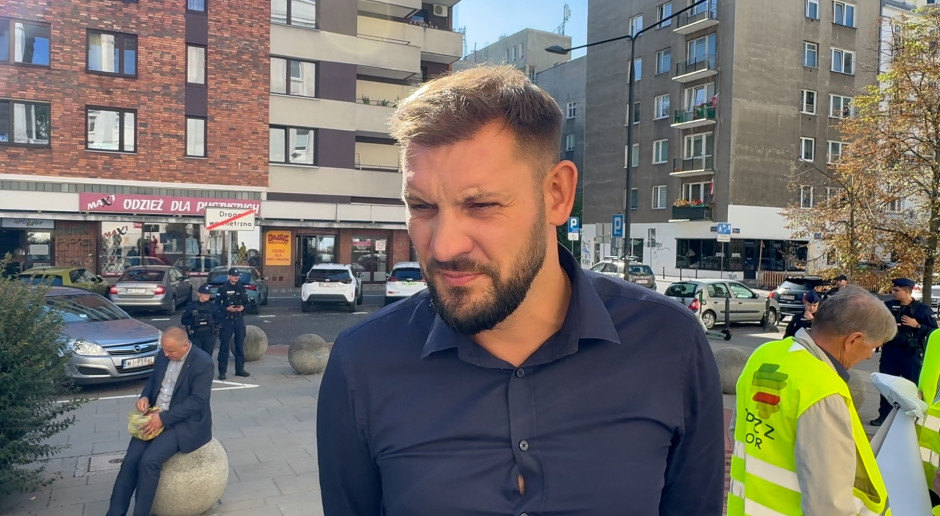
- Pig farmer Damian Kacprzak warns that the issue also affects warehouses and silos, as well as obtaining WZ, which could limit investment in agricultural production
Will general plans make farm investments more difficult?
Municipal general plans were intended to organize land use and limit conflicts related to new investments in rural areas. In practice, however, concerns are emerging that the adopted solutions could make it more difficult for farmers to expand existing farms.
During a question-and-answer session with Agriculture Minister Stefan Krajewski, the Wielkopolska Chamber of Agriculture raised the issue. It asked about planned changes to spatial planning regulations that would allow municipalities to block the expansion and modernization of existing farms, particularly livestock buildings.
The minister confirmed that the problem primarily concerns general plans, and that the government sees the need for changes.
These general plans were meant to organize space in rural areas and to prevent these tensions, so that new investments could be made on the basis of general plans prepared by municipal authorities, Minister Stefan Krajewski said.
As he acknowledged, the assumptions do not everywhere translate into the smooth implementation of investments.
Krajewski: We drew attention to the timeframe being too short
The minister recalled that, during work on the act, objections had already been raised regarding the time needed to prepare new planning documents and the availability of specialists.
Today we can see that this act, which was adopted by our predecessors, was one I was working on at the Infrastructure Committee at the time, and we drew attention to the fact that the timeframe was too short, that there was a shortage of planners, and that there could be problems with construction, especially livestock buildings—and this is happening today, Krajewski said.
The minister’s most important declaration concerned the planned amendments to the regulations. They are intended to make it possible to carry out investments on farms that are already operating.
We are preparing changes and amendments to this act to make it possible to build and expand on existing farms, the Minister of Agriculture announced.
However, he did not provide a detailed work schedule or a date when any potential changes would take effect during this statement.
This is not about an unlimited right to build
Krajewski also noted that making it easier to expand existing farms should not mean complete freedom to make investments. As he pointed out, the relevant administrative procedures would still apply, including those relating to the environmental impact of investments.
“It is not the case that a farmer can freely build these buildings, because decisions are issued, including administrative decisions and environmental decisions, which are intended, in some way, to regulate this situation in rural areas and in the countryside. But these changes are needed, because we cannot use general plans to restrict agricultural production,” he stressed.
For farmers, therefore, not only the adoption of the changes but also their scope will be important. The key question will be whether the new solutions will actually make it possible to expand existing farms, as well as how municipalities will apply them.
Farmers sound the alarm: the problem also affects storage facilities and silos
As Damian Kacprzak, a pig farmer from the Teresin municipality, points out, in practice some producers may have trouble obtaining development conditions (WZ) and, consequently, carrying out new investments.
“Farmers have found themselves in a difficult situation. In fact, it looks as if they are not part of this situation at all, because farmstead development has been practically excluded from the possibility of filling in gaps in existing development,” says Kacprzak.
As he explains, the problem also affects farms where existing buildings were erected in compliance with regulations and are located close to one another. Despite this, farmers who would like to expand their production facilities may encounter obstacles in obtaining permission to carry out further investments.
“Many farmers who would like to continue developing their farms, even though all the buildings were erected in compliance with regulations as part of the infill development and are close to one another, are currently being blocked by the system from carrying out infill development in their cases,” he stresses.
Not only pig barns, but also warehouses and silos
The consequences of difficulties in obtaining development conditions may extend far beyond investments directly related to animal production. Farmers also need facilities for storing agricultural produce and infrastructure essential to the smooth operation of their farms.
“We’ve been waiting for the situation to change for practically two, three, maybe even four years, so that we can’t even put up a small garage over three hundred and five meters. People no longer talk about production buildings, which we should be saving—pig production in Poland—but also grain warehouses and silos. We are deprived of any possibility of obtaining a WZ decision and a permit,” says the farmer.
In his view, this means a serious restriction on the ability to invest in production farms. The problem is particularly significant when some producers need to adapt their facilities to the needs of their operations or plan to increase the scale of production.
“The law is flawed”
Damian Kacprzak believes that the current legal framework does not meet the needs of farms that want to grow. “This is a total blockade on investment, and at the moment we have no influence over it, because the law is flawed and prevents municipal office employees from designating an area for infill development,” he says.
At the same time, farmers are unsure whether or when solutions will emerge that will allow them to get out of this situation. As Kacprzak says, information that the administration recognizes the problem still does not answer the question of whether this will translate into concrete changes.
- As farmers, we don't know. There are rumors that someone sees the problem, but do they really see it, and will anything change as a result? That is definitely a question for the Ministry of Agriculture and the Ministry of Infrastructure - he says.
Another obstacle for pig producers
In the farmer's view, the problem with spatial planning compounds the difficult economic situation of farms. High production costs and pressure on profitability are already limiting farmers' ability to invest. Additional administrative barriers may make it harder for those who want to expand their operations to carry out their plans.
– However, given the difficult situation in agriculture, no sector is doing well today. Everyone has valid reasons to complain about the enormous production costs. In this difficult situation, if someone wanted to expand further, or circumstances forced them to develop something—expand their production—they would be legally blocked. So, whether by the stick or the club, they are being hit from every direction, says Kacprzak.
He adds that the association he is active in also receives reports of similar problems. They concern farmers who have been struggling for years to obtain building permits.
– We do receive such reports from members of our association, from people who, as you know, have struggled for years with problems obtaining a building permit. Now, they will not even be able to obtain zoning conditions (WZ) anymore, so we are taking another step backwards instead of forwards, he concludes.
For farms planning expansion, the key question therefore remains whether and how the issues surrounding the designation of built-up area infill zones will be resolved. Without changes, farmers may have difficulty not only implementing large production investments but also expanding their basic farm infrastructure.