
Comfortable chicks breathe through their nostrils and lose 1 to 2 grams of body weight (as water) during the first 24 hours. The yolk also contains 1 to 2 grams of water, so chicks lose weight but do not become dehydrated. If chicks start panting, they may lose 5 to 10 grams of water during the first 24 hours, resulting in dehydration. Higher relative humidity can reduce water loss, but affects thermoregulation, so providing the correct temperature according to the relative humidity conditions in the poultry house is essential. (See the table below)
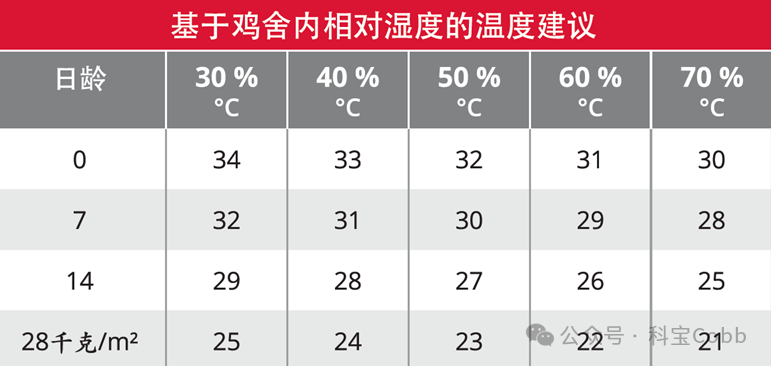
Chicks from pre-peak breeder flocks are smaller and have a higher surface-area-to-body-weight ratio, so they lose more body heat than larger chicks. For smaller chicks, the air temperature can be increased by 1 °C during the first week.
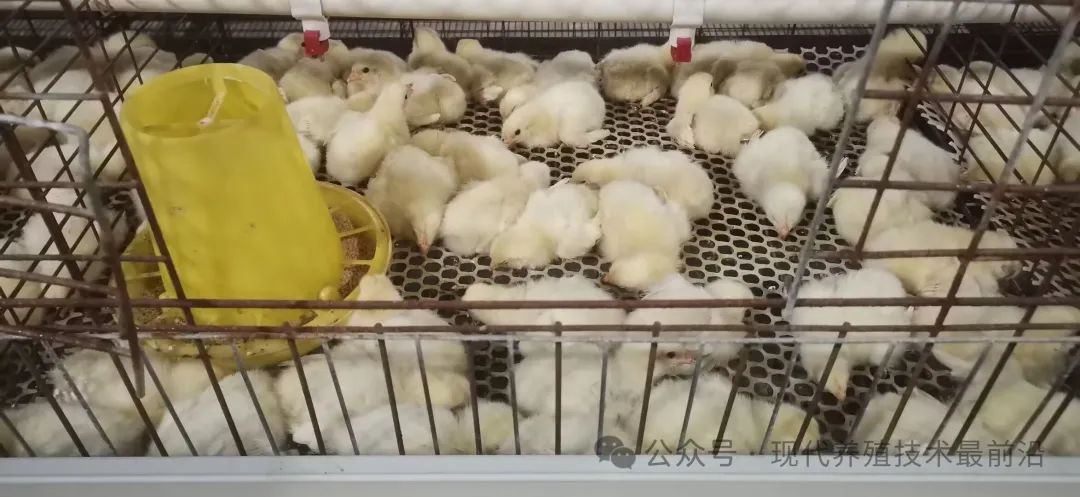
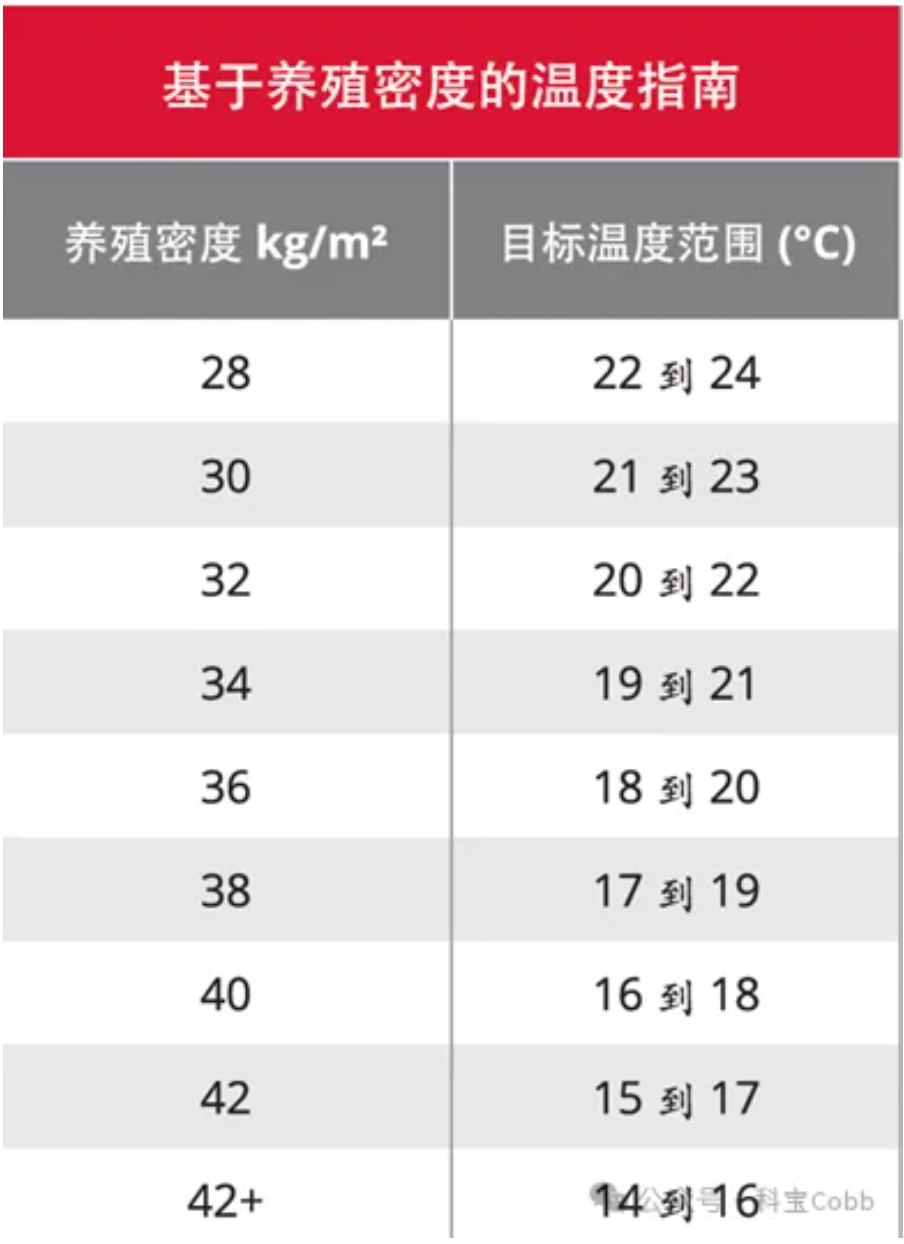
Whenever stocking density exceeds 28 kilograms/square meter, heat trapped beneath the chickens rapidly builds up. Higher chicken body temperatures lead to more panting and reduced feed intake, which in turn lowers daily weight gain. Increased panting indicates that energy needed for growth is being used for heat dissipation, thereby increasing the feed conversion ratio. Do not exceed a stocking density of 42 kilograms/square meter, because the flock has difficulty dissipating heat through the ventilation system.
When stocking density exceeds 28 kilograms/square meter, caretakers need to continuously monitor the chickens’ behavior, feed intake, and body temperature. Adjustments to the air exchange rate, air speed, and setpoints are needed to ensure the chickens’ comfort. These adjustments depend on whether the poultry house has tunnel ventilation, and do not take the “wind chill effect” into account.
Before deciding to adjust the indoor set temperature, always observe the chickens’ behavior and measure their body temperature.
Animal welfare tips
Activity check: Whenever you enter the poultry house, always observe the following activities:
• Chickens are eating
• Chickens are playing
• Chickens are drinking water
• Chickens are crowing
• Chickens are resting
• Chickens should not be crowded together