
The Breton agricultural cooperative Cooperl inaugurated the livestock Observatory on 8 October, a new building within its r&d ecosystem - Le FarmLab - in Hénanbihen (Côtes-d'Armor).
 ©Fabrice Picard
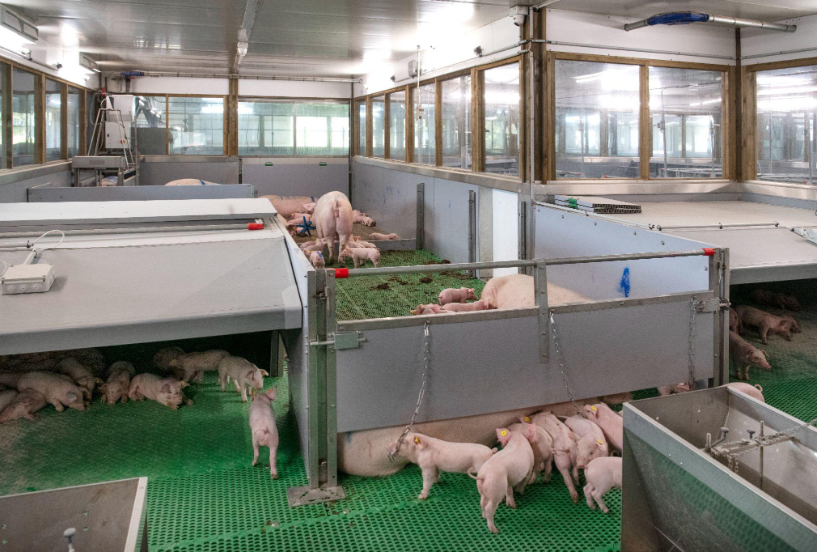
This unprecedented infrastructure in Europe brings together research, artificial intelligence and new farming practices to develop the pig-farming model of tomorrow. A place for validation and experimentation, this infrastructure turns scientific questions into validated practices for use in the field. It directly benefits animals and farmers on the ground.
©Fabrice Picard
This unprecedented infrastructure in Europe brings together research, artificial intelligence and new farming practices to develop the pig-farming model of tomorrow. A place for validation and experimentation, this infrastructure turns scientific questions into validated practices for use in the field. It directly benefits animals and farmers on the ground.
The Observatory: a research tool serving animals and farmers
A true link between scientific research and production, the Observatory was designed to test and validate technical solutions tailored to the configuration of each livestock farming model. This fully modular livestock building makes it possible to adapt housing systems to animals’ needs and scientifically study their behavior to improve their comfort, health, and farmers’ working conditions. The aim is to build a high-performing livestock farming model with a low impact.
The data collected at this experimental site are intended to contribute to knowledge and support the entire sector in adopting practices that take animal welfare into account, measure environmental impacts, and deliver economic performance.
Already two flagship projects in development
 ©Sacha Drouart
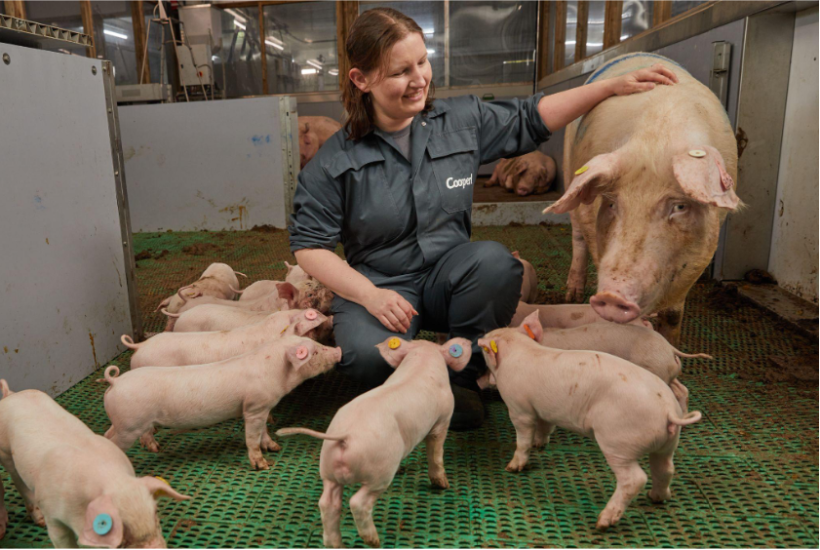
The “GOODPIG” project: based on observing relationships among animals and between animals and humans, this project rethinks group living by allowing sows and piglets to live together in large spaces, from birth until they leave the farm. This setup reduces stress without compromising the animals’ reproductive and growth performance.
©Sacha Drouart
The “GOODPIG” project: based on observing relationships among animals and between animals and humans, this project rethinks group living by allowing sows and piglets to live together in large spaces, from birth until they leave the farm. This setup reduces stress without compromising the animals’ reproductive and growth performance.
The “IRIS Twin” technology (Artificial Intelligence in livestock farming):By creating a virtual digital twin of the farm, connected to environmental sensors and smart cameras, farmers can monitor their animals and the parameters associated with farming conditions in real time. Using algorithms currently under development, the technology will be able to predict anomalies, tension, or signs of stress in the animals, thereby enabling farmers to intervene preventively.
An honored guest: Hervé Guyomard
The event was honored by the presence of a leading research figure: Hervé Guyomard, former Scientific Director of Agriculture at INRAe’s General Directorate. He has conducted numerous foresight studies and internationally significant research in the fields of agricultural economics and transitions.
Lamballe, 8 October 2026-Cooperl