
Today, step into any technologically advanced hatchery and you will see advanced single-stage/multi-stage incubators, automatic control systems, modern ventilation systems, smoothly running fans, and digital touchscreens displaying seemingly perfect readings.
However, behind this impressive equipment lies a biological reality more precise than any technology: the embryo depends entirely on accurate temperature control.
What is often underestimated is that even tiny temperature variations can have enormous biological effects.
A deviation of just 0.2℃ can alter embryo development, widen the hatch window, increase mortality, and quietly reduce chick quality while the machine appears to be operating normally.
This article explains why this tiny temperature difference is not an acceptable margin of error, but a critical factor that determines hatching success or failure.
—1—
Why can such a tiny temperature change have such a major impact?
A poultry embryo is a highly sensitive biochemical system.
Its growth and development are controlled by enzyme-driven reactions, which can only function optimally within a very narrow temperature range.
Even very small temperature changes can affect the entire developmental process.
Research shows that a temperature increase of 0.1°C can increase the embryo's metabolic rate by 7–8%.
When the temperature rises by 0.2℃, the heart rate increases, heat production rises, oxygen demand increases, and carbon dioxide accumulates more rapidly.
Excessively accelerated embryonic development may lead to abnormal organ formation.
A temperature decrease of 0.2℃ lowers the metabolic rate.
Embryonic development is delayed, hatching occurs later, and chick uniformity and physical strength decline.
Unlike mammals, embryos cannot regulate their own temperature and instead depend on the microenvironment inside the incubator.
Therefore, 0.2℃ is not an insignificant number—it determines whether embryonic development is in balance or under stress, whether hatching is concentrated and consistent or staggered and prolonged, and whether chicks are strong or weak.
—2—
How 0.2℃ affects embryonic development during incubation
Embryonic development is a biological process driven by temperature.
Enzyme activity, cell division, blood vessel formation, and organ formation all depend on a very narrow temperature range.
A temperature deviation of just 0.2℃ is enough to alter the metabolic rate, thereby affecting the entire developmental process.
Different incubation stages are affected differently by temperature changes, but the end result usually manifests as chick quality issues.
Early stage (0–7 days of age): the foundational stage of life formation
The first week of incubation is a critical period when the embryo begins to form its heart, brain, neural tube, blood vessels, early organs, and chorioallantoic membrane.
This stage is extremely sensitive to temperature.
Even slight temperature changes may have long-term effects.
If the incubator temperature is slightly too high, the embryo develops too quickly.
Early structures may form abnormally, organs may lose their normal symmetry, and the embryo may also be stressed.
The chorioallantoic membrane may develop poorly, thereby limiting the oxygen supply later on.
This temperature difference of just 0.2℃ may affect the embryo all the way through hatching.
If the temperature is slightly low, embryonic development slows, and both cell division and key developmental milestones are delayed.
Although the embryos can survive, hatching will be delayed. The chicks may have difficulty regulating their own body temperature, and the entire batch may develop unevenly.
This will further affect the chicks’ performance after hatching.
In short, the first week lays the foundation for life’s development.
Maintaining precise temperatures helps ensure healthy, uniform embryo development, providing every chick with the best possible start in life.
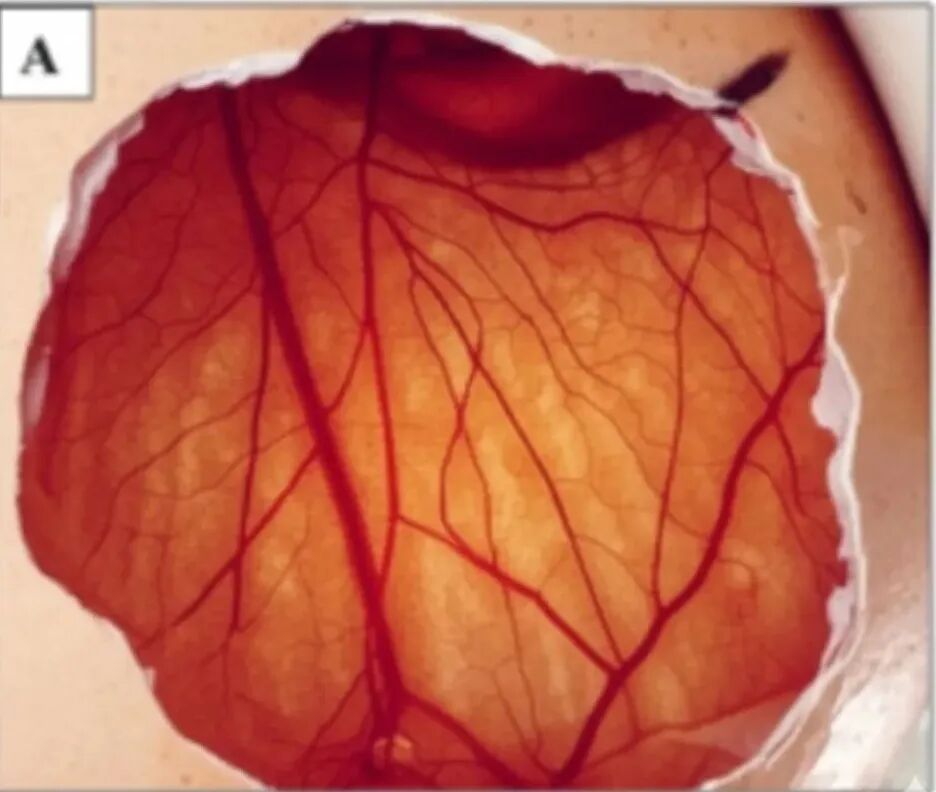
Chorioallantoic membrane
Mid-incubation (7–14 days of age): rapid growth stage
After entering the second week, the embryo grows rapidly.
Metabolic activity increases, the chorioallantoic membrane functions fully, and bones and muscles develop rapidly.
At this stage, temperature and oxygen supply must be precisely balanced, because the embryo is very sensitive to environmental changes.
If the incubator temperature is slightly too high, the embryo generates more heat.
This causes the temperature inside the egg to rise, increasing oxygen demand while carbon dioxide accumulates.
Subsequently, the chorioallantoic membrane may be unable to meet demand, blood vessels may develop inadequately, and muscles and bones may remain weak; some embryos may even die.
If the temperature is slightly lower, the growth rate will decrease.
The embryos are smaller, with underdeveloped muscles and blood vessels and reduced energy-use efficiency.
These chicks may hatch weakly, take longer to break out of the shell, and have poorer adaptability after hatching.
Mid-incubation is a critical stage.
The embryos are growing rapidly, and the allowable temperature deviation is very small.
Maintaining a precise temperature ensures normal growth and helps prepare the chicks for good production performance after hatching.

Sticky chicks
Final stage (15–21 days of age): a critical stage for survival
In the final stage, the metabolic heat produced by the embryos reaches its highest level.
At this point, temperature control is especially important, as even minor changes can stress the chicks.
If the temperature is slightly higher, the embryo cannot dissipate heat effectively.
As body temperature rises, the heart rate increases, and oxygen demand may exceed the available supply.
Chicks may hatch prematurely, showing signs of dehydration, small body size, and poor yolk absorption.
The navel may appear red or black.
Immune function is weaker, vitality is reduced, and growth performance is affected during the first week.
If the temperature is slightly lower, development slows down.
Chicks hatch late, appearing tired, damp, and weak, with residual yolk sacs.
Their digestive systems adapt more slowly, reducing nutrient absorption and affecting early growth.
Even at this stage, the temperature margin of error remains very small.
Maintaining precise and stable temperatures ensures that chicks hatch healthy and can grow well on the farm.
—3—
Hatching window: a practical demonstration of temperature accuracy
With a well-managed incubation process, most chicks will hatch within 12–24 hours.
When the temperature changes by only 0.2℃, the hatch window may expand to 36–48 hours.
Early-hatched chicks are prone to drying out and dehydration.
Late-hatched chicks are usually weak and underdeveloped.
Chick uniformity declines, affecting production performance.
This situation occurs frequently, even when the data shown on the incubator display appear completely normal.
Microenvironmental differences exist within the incubator, so the temperature actually experienced by the embryos may not be the same as the temperature shown by the sensor.
Therefore, eggshell temperature and airflow uniformity are important indicators that must be monitored.
—4—
Why do temperature deviations still occur in advanced incubators?
Even advanced equipment can be affected by the following factors:
Sensor calibration drift 0.2–0.4℃;
Insufficient airflow and a clogged filter;
Unreasonable egg-loading density;
Temperature fluctuations in the incubation room;
Heat contributed by embryos in a multi-stage incubation system.
These factors can cause high- and low-temperature zones to form inside the incubator.
—5—
Maintaining Temperature Accuracy: Scientific Hatchery Management Strategies
Sensor calibration: Calibrate regularly using certified instruments; do not rely solely on data displayed on the screen.
Eggshell temperature: This is the best indicator for assessing embryo comfort. When monitored at multiple egg tray positions, the target range is typically 37.8–38.2℃.
Airflow management: Keeping filters clean, loading appropriately, and using the correct fan speed can ensure uniform temperature.
Stable environmental conditions: Significant fluctuations in incubator room temperature can force the equipment to overcompensate, resulting in system instability.
Temperature distribution detection: Identify hot and cold spots inside the incubator and adjust them before they cause losses.
—6—
Economic impact: Profit effect of 0.2℃
Precise temperature control can improve: hatchability, chick quality, uniformity, first-week performance, and survival rate.
At the scale of millions of hatching eggs, this small difference translates into substantial economic gains.
In actual production, even a temperature deviation of 0.2℃ may determine whether you make a profit or a loss.

—7—
Conclusion
Incubation is not merely operating a machine; it is managing a developing living embryo.
A difference of 0.2℃ can determine whether chicks are strong or weak, uniform or uneven, have good production potential, or are already under stress.
Precise temperature control can maintain metabolic balance, ensure an adequate oxygen supply, promote normal organ development, and shorten the hatch window.
For successful operation of a modern hatchery, temperature precision is not optional; it is fundamental to ensuring chick quality and rearing performance.
Note: This article is sourced from the Zootecnica website. Rasel Ahmed, hatching and hatchery management expert