
Introduction:Eggshell formation is a dynamic, sequential process that takes place mainly in the uterus (shell gland). This process requires large amounts of calcium ions and involves several stages, including intestinal absorption, medullary bone mobilization, and uterine secretion. This article reviews the calcium metabolism mechanisms involved in eggshell formation and their influencing factors, providing a theoretical basis for regulating eggshell quality.
1, Calcium Metabolism Mechanisms in Eggshell Formation
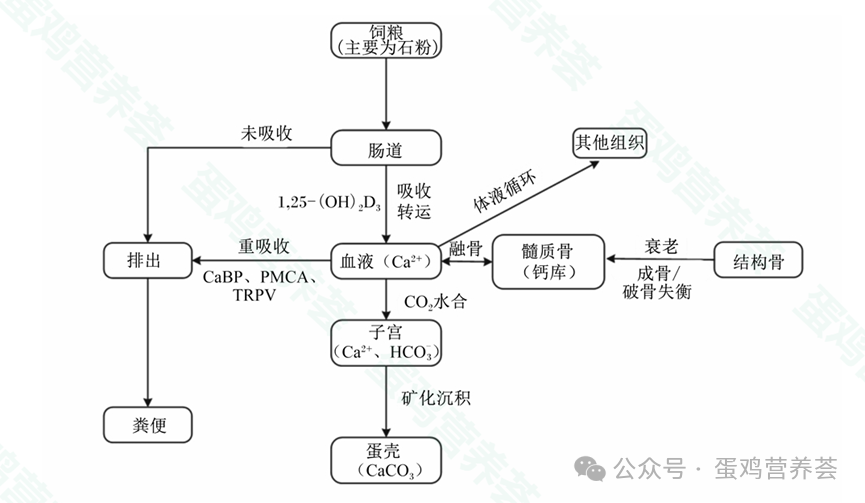
During the dynamic, sequential process of eggshell formation, uterine epithelial cells continuously take up calcium ions from the blood and then secrete them into the uterine lumen, where they act together with bicarbonate ions to form calcium carbonate deposits. Some of the calcium ions in the blood are absorbed through the intestine, while the rest come from the mobilization of medullary bone (a dynamic calcium reserve). Therefore, calcium ion metabolism and its regulatory mechanisms in laying birds play an important role in eggshell formation and quality.
1.1 Absorption and transport of calcium ions in the intestine
During eggshell calcification, the concentration of calcium ions in the intestine increases significantly. Calcium ions are absorbed mainly in the duodenum through active transport (the primary mechanism) and passive diffusion. Key carriers involved in this process: TRPV6: responsible for calcium ions entering epithelial cells; calcium-binding protein D28k (CALB1): promotes intracellular calcium ion transport; NXC and PMCA: pump calcium ions out of the cells.
1.2 Formation and mobilization of medullary bone calcium
After laying hens reach sexual maturity, dietary calcium is preferentially stored in medullary bone, which can provide approximately 40% or even more of the calcium for the eggshell. Medullary bone is a dynamic calcium source with a large surface area and a high metabolic rate. At the end of eggshell calcification, especially at night when the dietary calcium supply is insufficient, it provides large amounts of calcium ions for eggshell formation.
1.3 Transport and secretion of calcium ions in the uterus
Calcium ion secretion in the uterus directly affects calcium carbonate deposition in the eggshell and occurs in synchrony with ovulation. Calcium ions are transported against the concentration gradient through tubular gland cells into the uterine cavity. This involves various ion carriers, such as TRPV, CALB1, endoplasmic reticulum calcium pumps, and inositol trisphosphate receptors, and the carriers in uterine cells are more complex than those in the intestine.
2, factors affecting calcium metabolism during eggshell formation
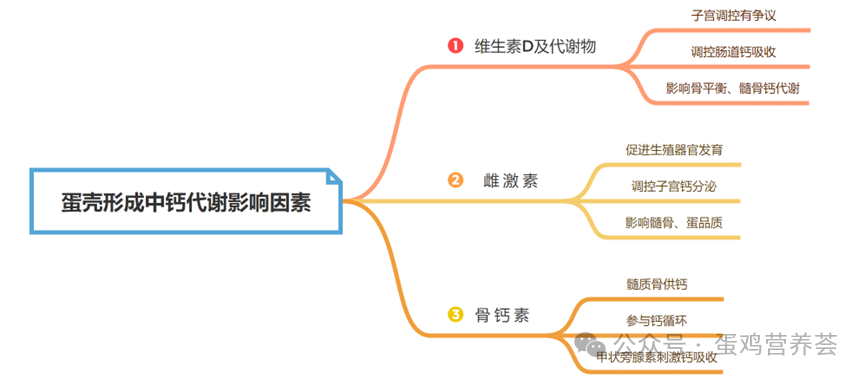
(Factors affecting calcium metabolism during eggshell formation)
2.1 Vitamin D and its metabolites 1,25-dihydroxyvitamin D₃
Regulates calcium ion absorption by intestinal epithelial cells and affects the synthesis of CALB1 and PMCA1, but its regulatory effects on other calcium ion transporters require further study. Its regulation of calcium ion transport and secretion carriers in uterine cells is controversial. It also affects the balance between medullary and cortical bone, as well as the synthesis and mobilization of medullary bone calcium. The effects of dietary vitamin D₃ supplementation on eggshell quality and bone performance vary.
2.2 Estrogen
Stimulates the development of the oviduct and uterus, activates the uterus’s capacity to secrete calcium, and regulates uterine CALB1 levels to affect calcium secretion. It is a key factor in medullary bone formation and acts together with vitamin D₃ to affect medullary bone formation. The decline in eggshell quality and bone performance in the late laying period may be associated with changes in the balance of estrogen receptors.
2.3 Osteocalcin, parathyroid hormone, fibroblast growth factor 23 (FGF23)
When dietary calcium supply is insufficient, medullary bone supplies calcium for eggshell formation. Osteocalcin participates in calcium cycling and is affected by estrogen and vitamin K, among other factors; during eggshell formation, parathyroid hormone secretion increases in response to a decrease in plasma calcium ions, stimulating bone resorption. FGF23 regulates bone calcium and phosphorus metabolism, but its specific role in eggshell formation in laying poultry is not yet clear.
Research outlook: Future studies could use omics technologies to elucidate the functions of unidentified or poorly understood ion carriers; improve eggshell quality by regulating ion homeostasis as a whole; investigate nutritional approaches to regulating hormone levels; and strengthen research on medullary bone calcium formation and mobilization.
Source of literature: doi: 10.3969/j.issn.1006-267x.2021.03.001.