
In September, as autumn turns golden, new corn gradually comes onto the market. With its affordable price and fresh aroma, many livestock and poultry farmers want to start using the new grain early to reduce costs.
But if it is used incorrectly, pigs may develop diarrhea and pass undigested feed, while chickens may have loose droppings, cough, and lay fewer eggs… One problem follows another. Many people assume the animals are sick and use medication indiscriminately, but see no improvement. In fact, many of these problems stem from the new corn itself.
01The “problems” with new corn come down to these three points
Not “fully mature”
Corn is a crop that continues to mature after harvest. Freshly harvested corn has a high resistant starch content, which cannot be digested in the small intestine. Abnormal fermentation in the hindgut produces large amounts of gas and organic acids, changing intestinal osmotic pressure and causing diarrhea and feed passage.
High moisture content
The moisture content of new corn is often above 16%, which both dilutes nutrients and lowers energy content, while creating a breeding ground for mold; toxins harm the liver and immune system.
Nutrients are “locked in”
Starch is wrapped in protein, while non-starch polysaccharides act like a “wall.” It looks nutritious, but in reality, it cannot be absorbed.
02Solution: Build a solid foundation, with additives to help
①Basic management: these four steps are essential
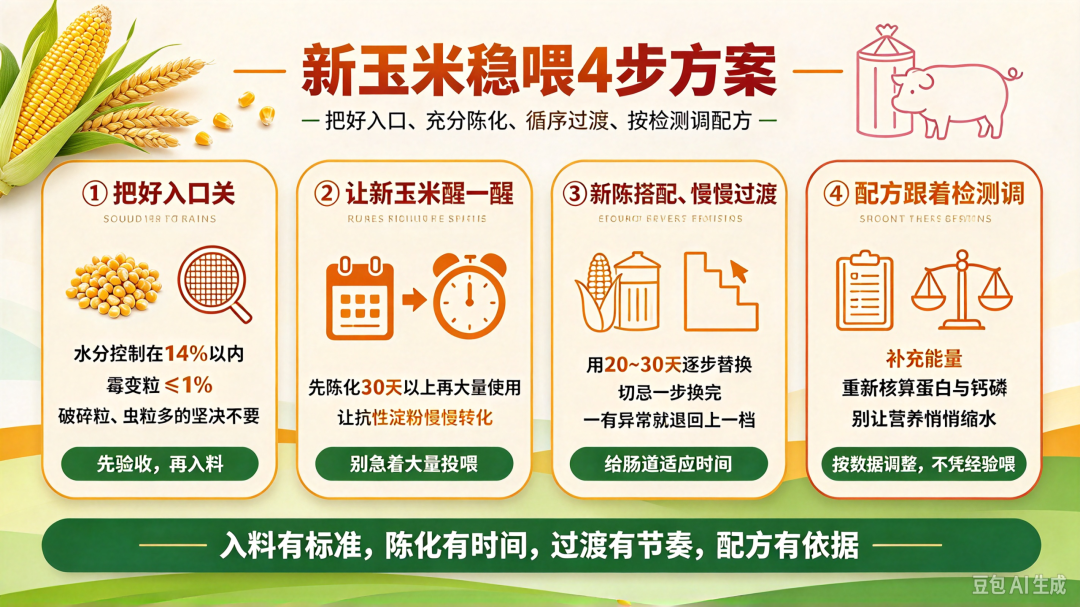
② What are the commonly used options?
Probiotics/microecological preparations: Supplement beneficial bacteria and regulate the gut microbiota to help reduce diarrhea; suitable for routine prevention.
Antibiotics: For diarrhea in livestock and poultry caused by new-season corn, they can stop diarrhea quickly, but treat the symptoms rather than the root cause. Long-term use can easily lead to antibiotic resistance, harm the gut, and affect growth, so reliance on them is not recommended.
Author’s note: Some of the content was AI-generated