
As the cold autumn and winter seasons set in, the outdoor temperature is significantly lower than the target temperature required by the flock inside the house. At this time, minimum ventilation is the primary ventilation method used in chicken houses. Managing the minimum ventilation rate directly determines the living environment for broilers in the house and plays a crucial role in their healthy growth and performance.
I. Purpose of Minimum Ventilation
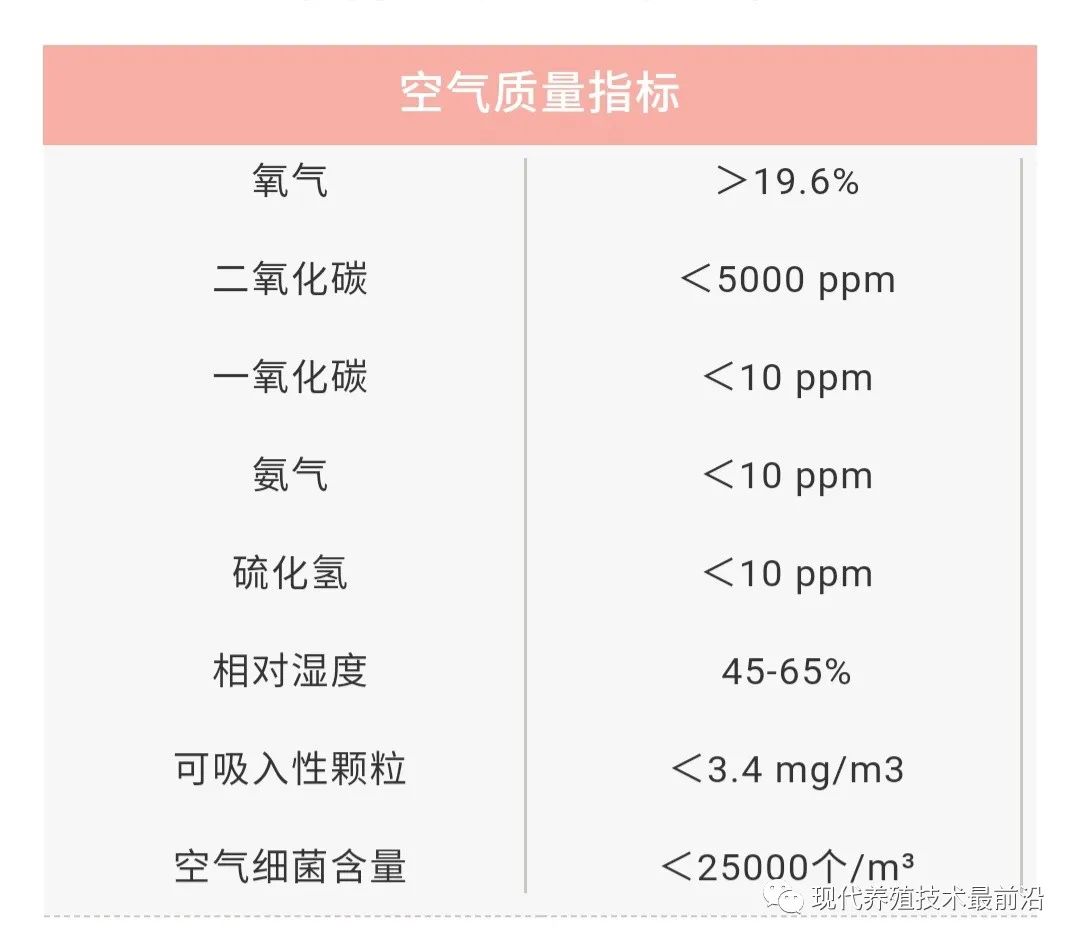
That is, while maintaining a normal poultry-house temperature, provide the minimum ventilation needed to ensure the healthy growth of the flock in cold autumn and winter weather. This removes dust particles and moisture from the poultry house, reduces humidity, removes harmful gases (CO2, H2S, NH3, etc.), lowers the ammonia concentration inside the house, supplies enough fresh, circulating air, and keeps the indoor environment relatively stable, preventing major fluctuations caused by changes in the natural climate.
二、Method for Calculating Minimum Ventilation Rate
1, reference ventilation coefficient: The minimum ventilation rate is the hourly air supply required to provide the flock with sufficient oxygen and maintain air quality. For poultry houses with negative-pressure ventilation systems, the minimum ventilation rate should provide ventilation at an air exchange rate of 0.010-0.017 m³/minute per kilogram of body weight per minute.
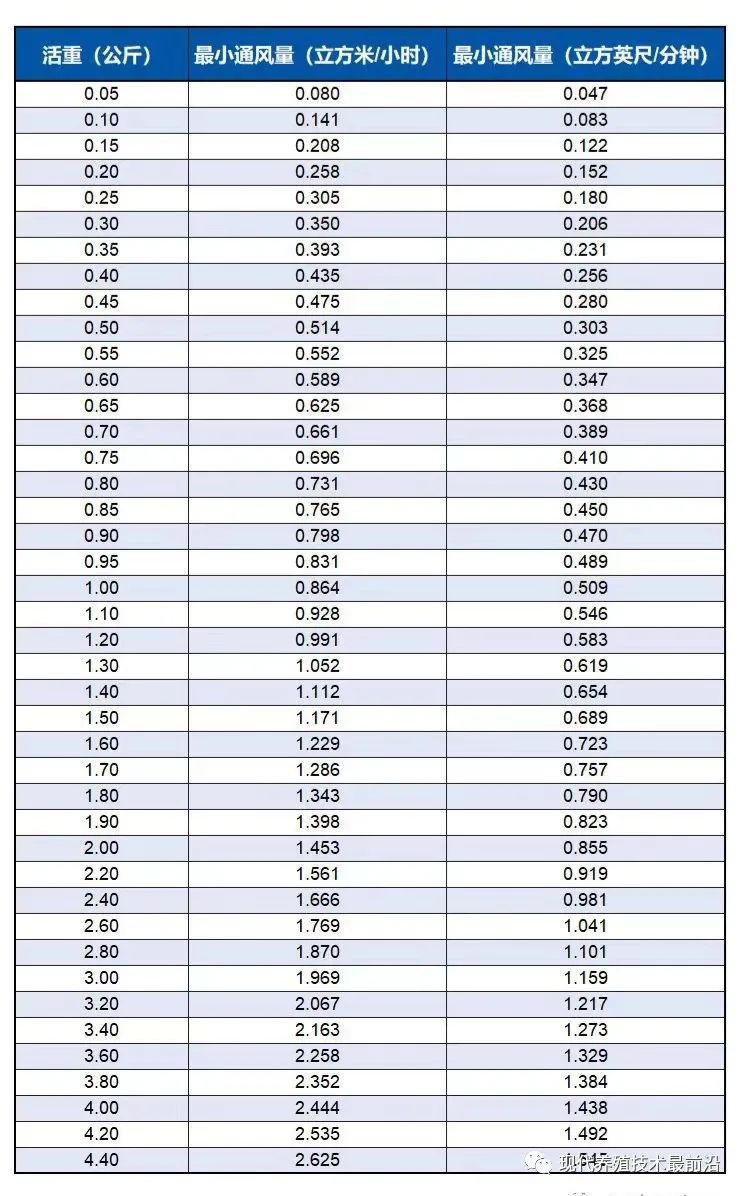
Example: The minimum ventilation rate for a flock of 10000 chickens weighing 2800 grams each = (0.011*60*2800/1000) *10000=18480(m³/hour). If 1 exhaust fans, each with an airflow rate of 36000 m³/hour, are used, the air exchange rate is 18480/36000=51.3%. If the ventilation cycle is 10 minutes, the fan should be set to run for 5.1 minutes and stop for 4.9 minutes. For a 5-minute cycle, set it to run for 2.55 minutes and stop for 2.45 minutes.
2, calculated based on the CO2 content inside the poultry house
(1) is calculated using the following formula:
L=(m*k)/(C1-C2)L: the volume of air exhausted from the poultry house per hour (m³ /h)
K: the amount of CO2 emitted per hour by all chickens in the poultry house, approximately 1.6L/h.kg
C1: The maximum permitted CO2 concentration in the poultry house is 5.0 L/ m³, i.e. 5000 ppm (during the cold season)
C2: The CO2 content in the outside air is approximately 0.4 L/ m³, i.e. 400 ppm
(2) Example: 35000 birds/building, 21 days of age, body weight approximately 1 kg. The calculation shows that 12173 m³ of air must be exhausted from the poultry house per hour, so the ventilation rate required per bird is 0.35 m³/h. If the CO2 concentration is controlled at 3000 ppm, the required exhaust volume is 21538 m³, so the ventilation rate required per bird is 0.62 m³/h*kg.
Note: The minimum ventilation coefficient for a poultry house should be set reasonably, taking into account the local area, outdoor temperature, climatic characteristics, air humidity, air pressure, the poultry house’s airtightness and insulation, building structure, heating equipment, rearing method, flock size and stocking density, flock age and body weight, health status, and indoor air quality and environment. The actual conditions in the poultry house and the flock’s perceived comfort should take precedence.