
[Introduction] Lighting is a key management factor in regulating sexual maturity, uniformity of onset of lay, peak production, and laying persistency in ISA Brown pullets. Many producers raising ISA Browns encounter delayed onset of lay, uneven sexual maturity within the flock, and difficulty reaching a full production peak. In many cases, the underlying cause is an unsuitable lighting program during the brooding and rearing periods.
Today, we’re sharing a reference lighting program for ISA Browns in a closed-house system. This program is for reference only and should be adjusted flexibly according to the flock’s body weight and the farm’s previous production performance.
I. Lighting Schedule for ISA Browns (brown-shelled egg layers) in a Closed-House System
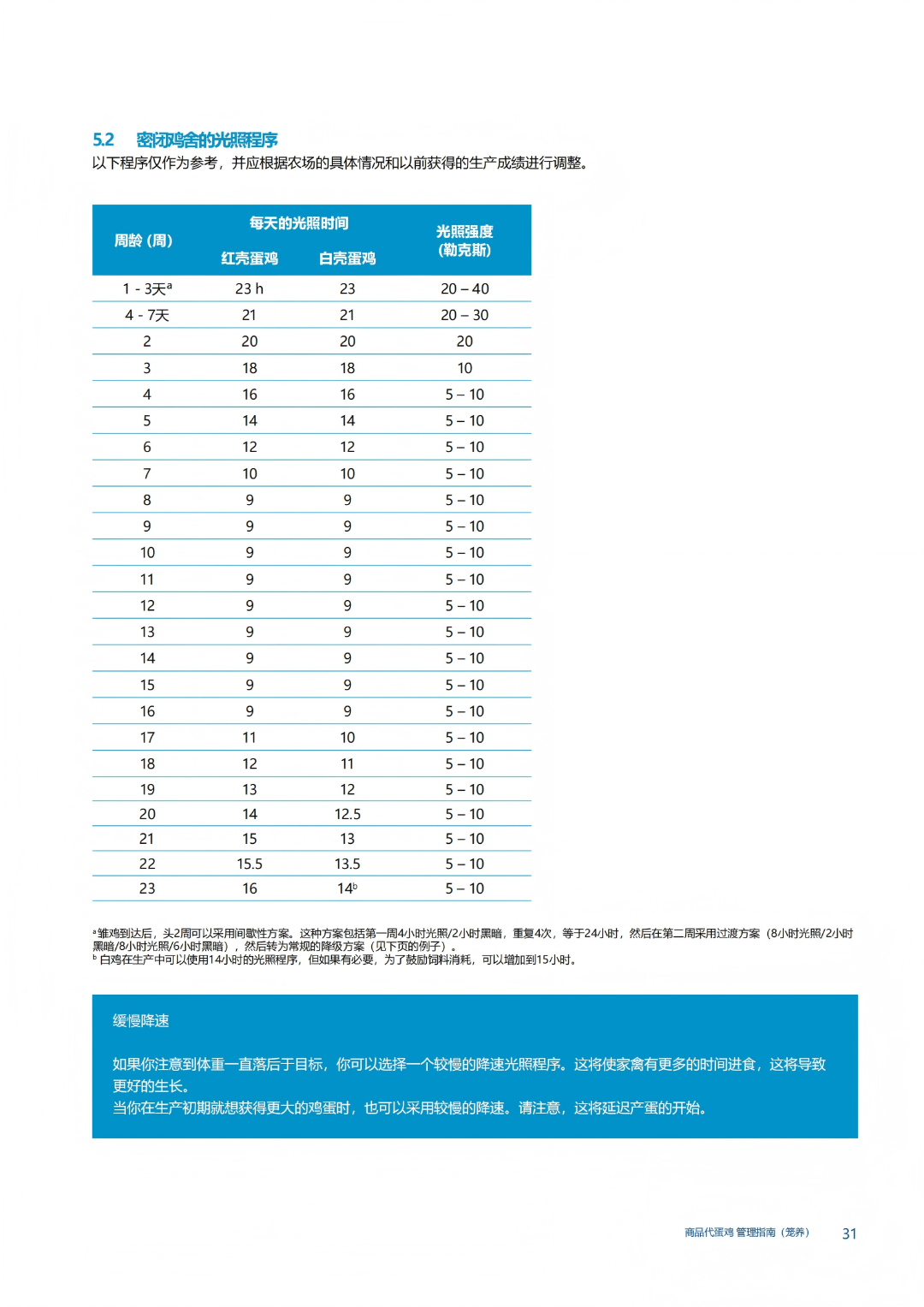
Note: After the chicks arrive, an intermittent lighting program can be used during the first 2 weeks. This program consists of 4 hours of light / 2 hours of darkness during the first week, repeated 4 times, for a total of 24 hours. Then, use a transitional program during the second week (8 hours of light / 2 hours of darkness / 8 hours of light / 6 hours of darkness), before switching to the regular decreasing-light program.
II. Slow light reduction (key point)
If you notice that ISA Brown birds are consistently below the target body weight, you can choose a slower light-reduction program. Longer lighting hours give the birds more time to eat, supporting growth and development.
A slower reduction program can also be used when you want to achieve a higher egg weight at the start of the laying period.
Note: Gradually reducing light will delay the start of production.
III. Practical Management Reminders
1, management and nutritional requirements for Isa Brown are higher than those for ordinary brown-egg layers. The lighting program cannot be copied from other breeds; lighting schedules must be coordinated with body weight. If the target body weight has not been reached, do not increase lighting prematurely, or prolapse, small egg size, and unstable egg production may result.
2, the key to an enclosed poultry house: eliminate light leakage! Light leakage will disrupt the lighting program and cause sexual maturity to become irregular in the flock.
3, light intensity should be checked regularly. Dust can reduce bulb brightness, so clean the lighting fixtures promptly.