I. Targets for Layer Pullets: Uniformity, Standard Body Weight, and Shank Length
The three key indicators in pullet management are average body weight, uniformity, and meeting the target shank length.
Body weight: Must meet or slightly exceed the breed standard (for example, Hy-Line and Lohmann each provide a management manual).
Uniformity: >85% (the proportion of birds in the flock whose individual body weight falls within ±10% of the average body weight). High uniformity is the basis for the flock to begin laying at the same time and quickly reach peak egg production.
Shank length: Refer to the rearing manual for each breed (for example, Dawu Jinfeng, etc., each have a management manual). For every additional 1 millimeters of shank length, each layer can produce 3-5 more eggs.
II. Analysis of the Root Causes of Failure to Meet Body Weight Targets:
Nutritional issues: Low nutrient concentration in the feed and an unreasonable formulation.
Insufficient feed intake: The most common cause.
Improper feeding management: Unreasonable stocking density, drinking water provision, lighting, and other factors.
Disease factors: Chronic wasting diseases, parasites, etc.
Temperature factors: Excessively high temperatures in summer (high temperatures prevent feed intake from increasing), combined with insufficient drinking water.
III. Systematic Preventive Measures
1. Precise Nutritional Supply
Follow the standards: Formulate the diet in strict accordance with the nutritional standards recommended in the “Feeding Management Guide” for the layer breed being used. Pay particular attention to energy and crude protein levels, as well as the balance of amino acids (especially methionine and lysine).
Ensure feed quality: Prevent the feed from becoming moldy. Moldy feed is not only low in nutritional value, but can also produce toxins that affect the flock’s health and production performance.
Be sure to choose good-quality corn and sieve it. If there is mold, add a mold inhibitor. Pay attention to liver protection and improve the chickens’ own detoxification capacity.
2. Ensure adequate feed intake
This is the primary breakthrough point for addressing weight issues.
Provide adequate feeding space: Ensure that all chickens can eat at the same time. Insufficient feeder space can cause smaller, weaker chickens to remain underfed over a long period.
Scientific feeding methods:
Feed small amounts frequently: Feed 2-3 times per day to stimulate the flock’s appetite and reduce feed waste.
Empty-feeder time: There should be half an hour to one hour of empty-feeder time each day to ensure the feed is fresh and make the flock feel hungry, but feed must never be withheld for a long time.
Check the feed line height: the edge of the trough should be level with the chickens’ backs to make feeding convenient.
3. Refined feeding management
Appropriate stocking density:

Adequate, clean drinking water:
Water is essential for life and carries nutrients. A lack of water directly leads to reduced feed intake.
Check the water pressure to ensure adequate flow from the nipple drinkers (during the rearing period: 50-70 milliliters per minute).
Scientific lighting management:
The lighting principle during the rearing period is to keep lighting constant or gradually reduce it; increasing it is strictly prohibited.
Excessively long lighting periods can cause the flock to reach sexual maturity too early and begin laying prematurely, before their bodies have developed sufficiently. This leads to “small horses pulling heavy carts,” resulting in small eggs and a short peak production period.
Refer to the breed manual for specific lighting duration and intensity.
4. Group management—the key to improving uniformity
This is the most effective management measure.
Regular weighing: Starting at 4 weeks of age, randomly select 5% of the chickens (at least 100 chickens) at a set time each week and weigh them on an empty stomach.
Group housing: Based on the weighing results, divide the flock into three groups: large, medium, and small.
Small chickens: Provide additional nutrition, such as extending feeding time, increasing the nutritional concentration of the feed, and, if necessary, adding multivitamins and electrolytes to the drinking water.
Large chickens: Apply moderate feed restriction to prevent excessive weight gain.
Through grouping, resources can be focused on caring for weaker individuals, significantly improving overall uniformity.
5. Strict biosecurity and disease prevention
Regular deworming: Internal parasites, especially tapeworms and roundworms, can rob birds of nutrients.
Control chronic diseases: Conditions such as coccidiosis, mycotoxicosis, and glandular and muscular stomach inflammation can severely damage intestinal health and affect digestion and absorption.
IV. Remedial measures after discovering that body weight is below target
If you find that body weight is already lagging behind, take action immediately:
Analyze the cause: Has it dropped suddenly, or has it been consistently low? Check feed, temperature, drinking water, and disease records.
Extend feeding time: While ensuring there is time each day when the feeder is empty, provide feed earlier and turn off the lights later so the chickens have more time to eat.
Increase nutrient concentration:
Increase the premix inclusion rate by 10%, mainly to raise the concentration. Choose a professional, high-quality layer premix (the Ruifu 5% and 3% series layer premixes are high quality and deliver good results).
Add 1%-2% vegetable oil to the feed to quickly increase the energy level.
Add an extra 0.1%-0.2% methionine.
Use high-quality compound vitamins.
Provide extra care for the chicks: Separate birds whose body weight is significantly below target and give them special feeding. Extend the use of the high-concentration feed from the previous stage so their body weight can catch up.
Summary and action checklist
To ensure that pullets meet their target body weight, be sure to:
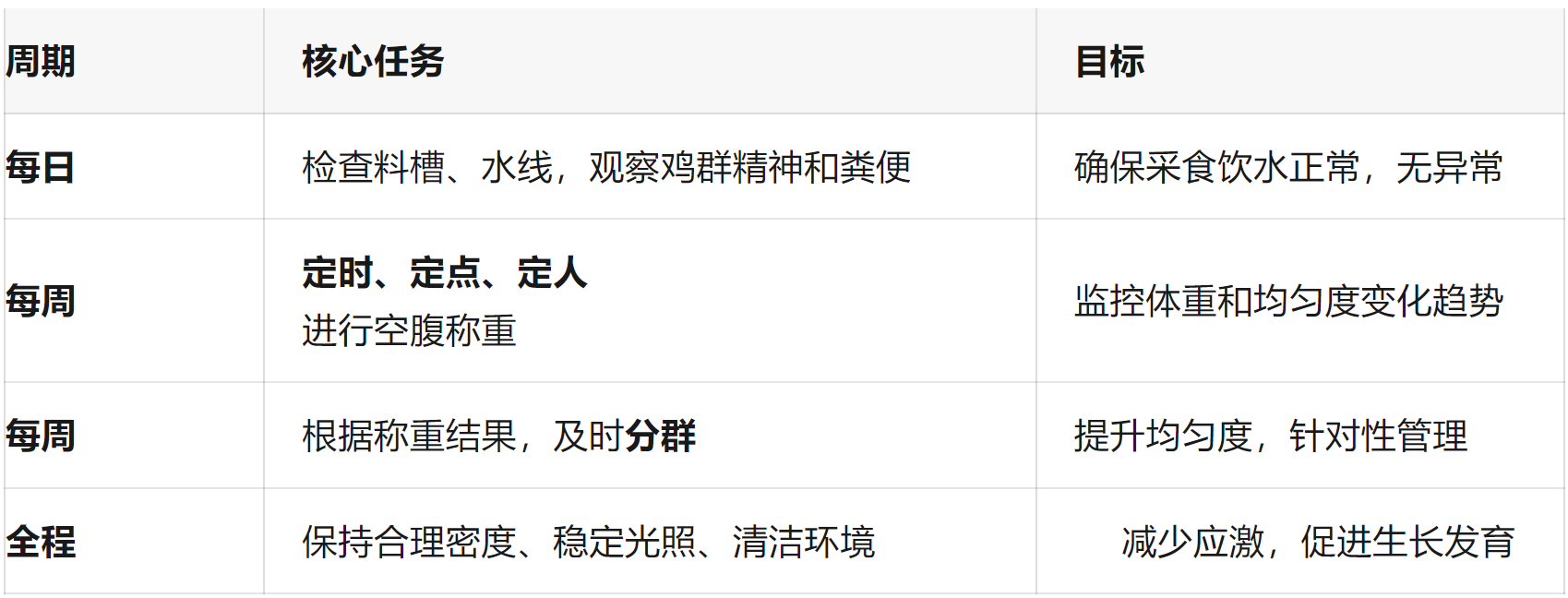
Remember: The weight of pullets is the foundation of laying hens’ production performance. Investing a little more effort in pullets early on will bring tenfold returns in egg-laying benefits later.
Welcome to the Poultry Disease Professional Network forum to learn and exchange ideas!
Welcome to submit a quotation at the Quotation Center!
Official WeChat account for layer information collection by the Poultry Disease Professional Network: 15237170695. Mobile phone number synchronization is available. You are welcome to provide us with information!
Stay fully and promptly informed about egg prices every day—all you need to do is follow one official account.
You can scan the QR code