
Poultry houses today mainly use negative-pressure ventilation: exhaust fans draw air out of the house, allowing fresh air to enter through the inlets. Because the locations of the exhaust fans and inlets, as well as the direction of airflow inside the house, vary, several ventilation methods are used in poultry houses. Each method has its own air speed to be measured. The following analysis examines air speed for different ventilation methods.
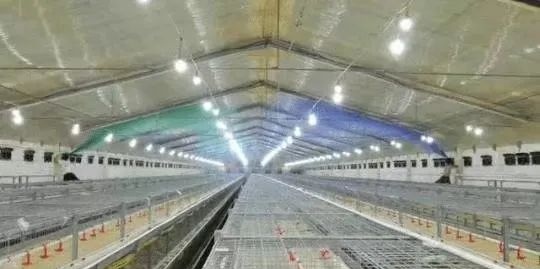
I. Inlet air speed
During minimum or transitional ventilation, the air speed entering through the small inlets (air inlets) in the side walls of a poultry house is called inlet air speed. Inlet air speed is one of the most important environmental control parameters in winter.
1, Purpose
In winter, an appropriate inlet air speed can greatly improve the environment inside a poultry house. Suitable air speed first allows cold air to mix thoroughly with the warm air near the ceiling. This not only raises the average temperature in the house but also makes maximum use of the heat inside, reducing fuel consumption for heating. This is especially important given the ongoing downturn in the livestock industry. Suitable air speed can ensure that fresh air reaches every part of the poultry house, preventing dead spots in ventilation. It can also prevent cold air from dropping directly onto the litter, which could otherwise cause it to become damp and caked.
2, Influencing factors
The greatest influencing factor is the target negative pressure set on the controller. Simply put, negative pressure is air speed. Like water, air flows from areas of high pressure to areas of low pressure; the greater the negative pressure, the higher the air speed. The size of the opening at the air inlet is one of the key factors controlling air speed. With the same exhaust volume, the smaller the air inlet, the higher the air speed; the larger the air inlet, the lower the air speed. Exhaust fan capacity and efficiency also affect air speed. With the same number of exhaust fans and the same air inlet opening, the higher the fan efficiency, the greater the exhaust volume and the higher the air speed; the lower the fan efficiency, the smaller the exhaust volume and the lower the air speed. If there is a filter outside the air inlet, it needs to be cleaned regularly to prevent it from obstructing the incoming airflow.
3, Measuring Air Speed at the Air Inlet
Measure using an anemometer. When the fans are running, hold the anemometer’s small fan horizontally at the center of the air inlet opening and measure the average air speed over 1 minutes. Take measurements at 10 points on both sides of the chicken house, at the front and rear, and then calculate their average to determine the air speed at the air inlet.
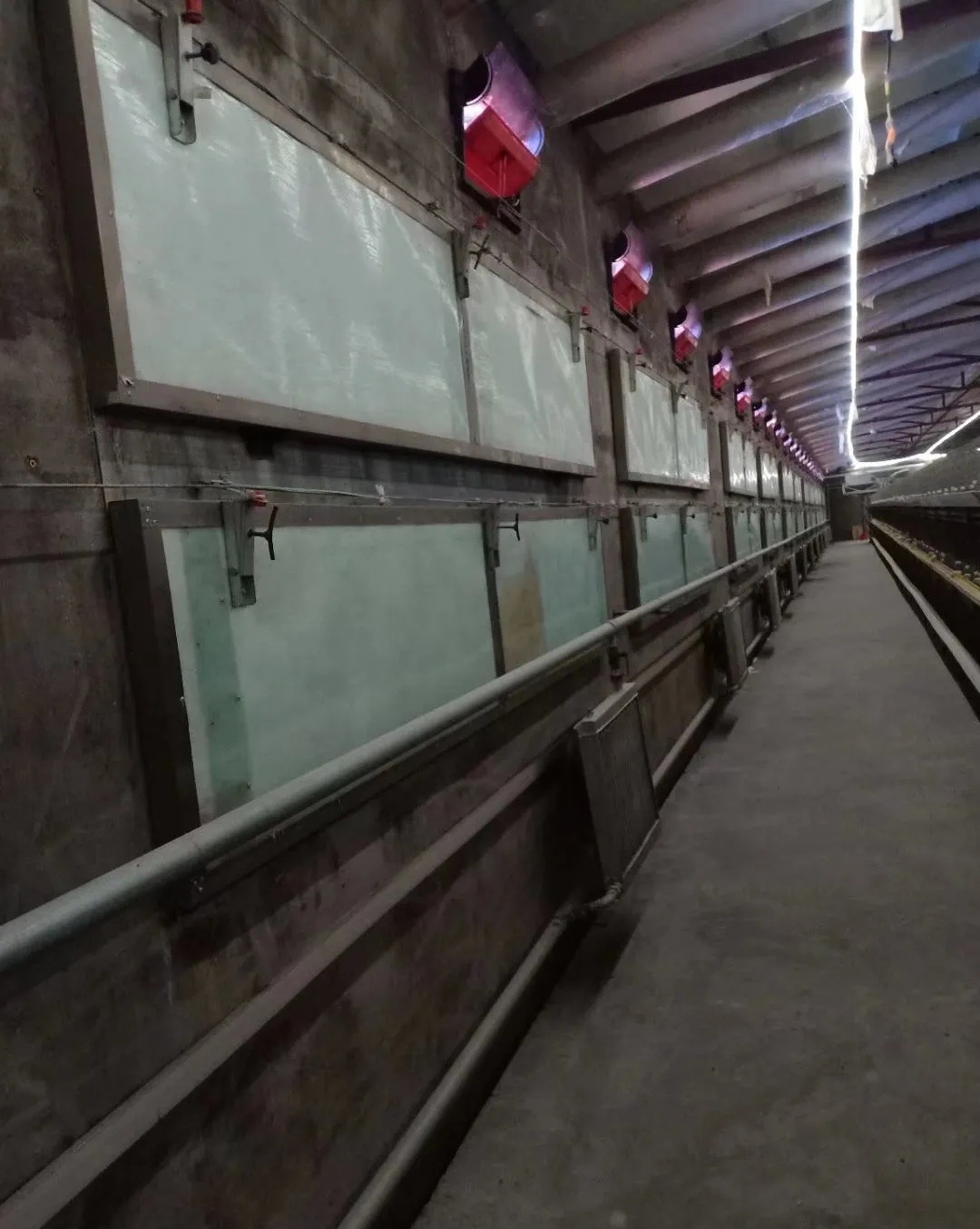
II. Curtain Air Speed
During longitudinal ventilation in summer or transitional ventilation during the spring and autumn change of seasons, the curtain at the front of the chicken house is opened. Some or all of the outside air enters the chicken house through this inlet, creating what is known as curtain air speed.
1, Purpose
Some or all of the outside air enters the chicken house through the front section and is then drawn to the rear of the house by the exhaust fans, creating longitudinal ventilation inside the house. Because this air intake method concentrates a very large volume of incoming air at one point, the air speed requirements here are not as strict as those for air inlet speed, although certain standards still apply. First, the air speed must not be too high. Excessive air speed raises negative pressure, reducing exhaust fan efficiency and decreasing ventilation volume. Second, if the air speed is too low, dead zones with poor ventilation may form in the middle of the front section and toward the rear of the air inlet.
2, Influencing Factors
Similar to air-inlet velocity, the factors affecting curtain velocity are the size of the opening, the exhaust fan's airflow, and the exhaust fan's efficiency. Generally, curtains are set to raise or lower by a percentage or time configured for the hoist in the system, rather than being controlled by pressure. This is the difference between curtains and air inlets.
3, Measuring Curtain Velocity
Measure using an anemometer. When the fan is running, place the anemometer's small fan horizontally in the center of the curtain opening and measure the average air velocity over 1 minutes. Take measurements at 10 points on both sides inside the poultry house, in front of and behind the curtain, then calculate their average as the air velocity at this location.
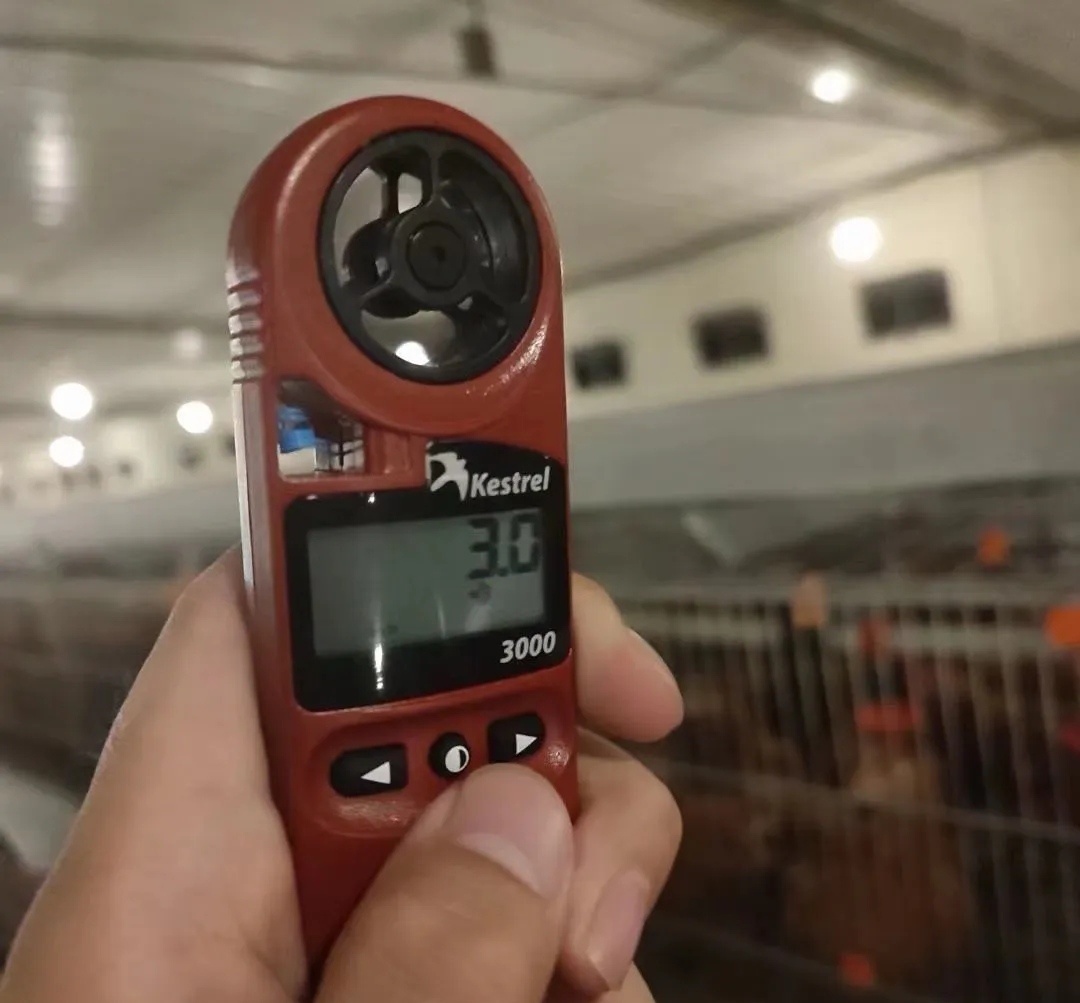
III. Longitudinal Air Velocity
The air velocity created inside the poultry house as air flows from the front to the end under the action of the exhaust fans is called longitudinal air velocity. In summer, longitudinal air velocity is one of the important parameters for environmental control in the poultry house.
1, Purpose
In summer, high temperatures are the most important cause of stress in poultry flocks. Sustained high temperatures can cause a significant decline in flock performance or even death. The primary way poultry dissipate heat through evaporation is by expelling moisture through respiration. Higher longitudinal air velocity can promptly carry away the hot air and moisture around the flock, creating favorable conditions for heat dissipation. Apparent temperature is generally used to evaluate the poultry-house environment under different temperature, humidity, and longitudinal air velocity conditions.
2, Influencing Factors
For longitudinal air velocity, the most significant influencing factors are the number of operating exhaust fans and the total exhaust air volume. Therefore, regular maintenance and dust removal for fans in summer can prevent a decline in fan efficiency and maintain a constant longitudinal air velocity in the poultry house. Longitudinal air velocity is inversely proportional to the cross-sectional area of the poultry house. With the same total exhaust air volume, the smaller the cross-sectional area, the higher the longitudinal air velocity. The more obstacles there are inside the poultry house, the more they affect longitudinal air velocity. This is especially true of the light baffles at the end of the poultry house: if they are poorly designed or the ventilation area is insufficient, they can greatly affect fan efficiency and, in turn, longitudinal air velocity.
3, Measurement Method for Longitudinal Air Velocity
Take measurements at a height of 1.1-1.3 meters above the ground or floor. In each poultry house, take measurements at 9 points evenly distributed across the front, middle, and rear, and the left, center, and right. Measure each point for one minute and take the average. The average of the 9 points is the average longitudinal air velocity for the poultry house.
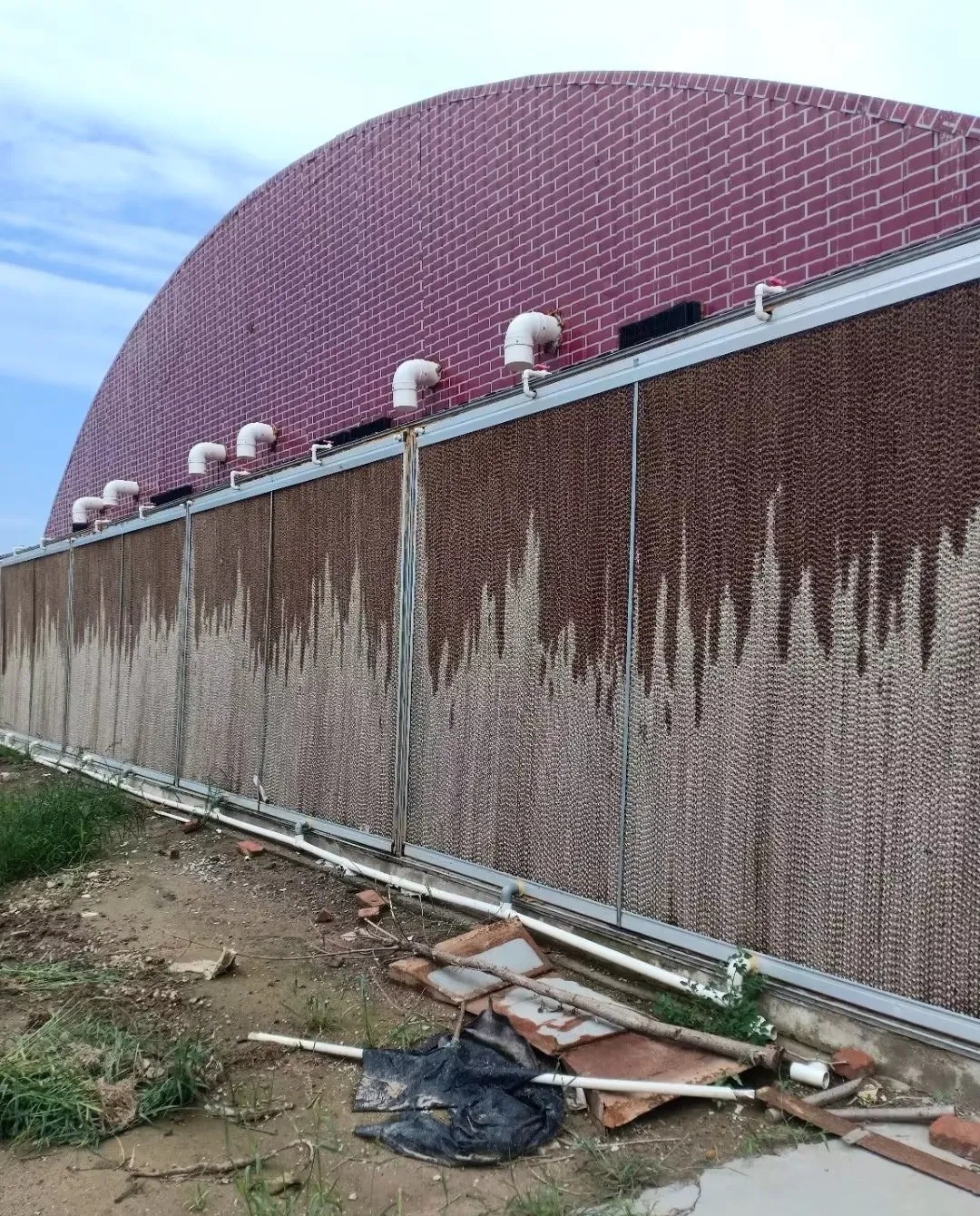
IV. Air Velocity Through the Cooling Pad
The air velocity as air passes from outside the poultry house through the cooling pad and into the area between the pad and the roll-up curtain is the air velocity through the cooling pad. This generally refers to the maximum air velocity through the cooling pad when all exhaust fans are running.
1, Purpose
The cooling pad may be wetted for cooling only after all exhaust fans are running. During cooling, an appropriate air velocity through the cooling pad produces the desired evaporation. If the air velocity through the cooling pad is too high, water will be carried off the pad surface, causing the humidity in the poultry house to rise; the floor near the cooling pad system will become wet. If the air velocity through the cooling pad is too low, insufficient frictional heating will occur inside the pad, slowing evaporation too much and resulting in less cooling than desired.
2, Influencing Factors
Since the area of the cooling pad paper is generally fixed once the chicken house is built and will not be changed thereafter, the maximum air speed through the cooling pad paper generally will not change either. Therefore, the first things to consider are the maximum exhaust air volume for the chicken house and the total area of cooling pad paper required to match it. During use, the surface of the cooling pad paper should also be cleaned regularly to prevent the pad openings from becoming blocked, which would alter the air speed and heat generated by friction.
3, Method for Measuring Air Speed Through Cooling Pad Paper
Generally, position the anemometer parallel to the cooling pad paper, about 125px from its inner side, and take measurements. Measure at multiple points distributed evenly across the cooling pad paper on both sides, then calculate the average; this is the air speed through the cooling pad paper.
Source: 大牧人. Copyright belongs to the original author. The content is for reference and discussion only!