
News
AGRICULTURAL DEFENSE
MAPA enables export of dairy cattle genetics to Botswana
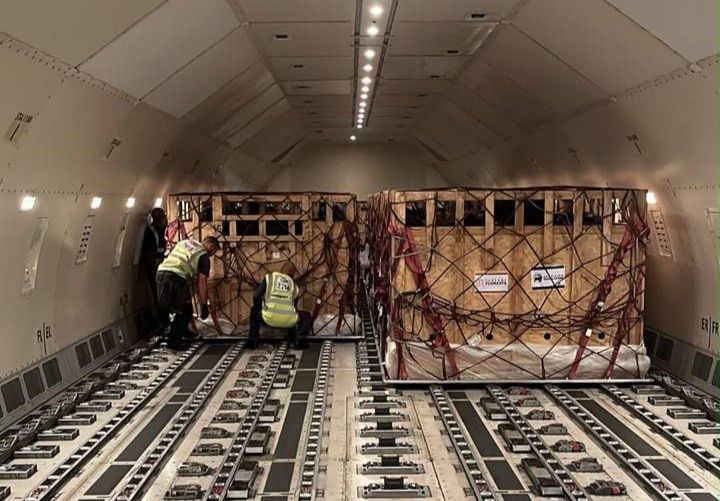
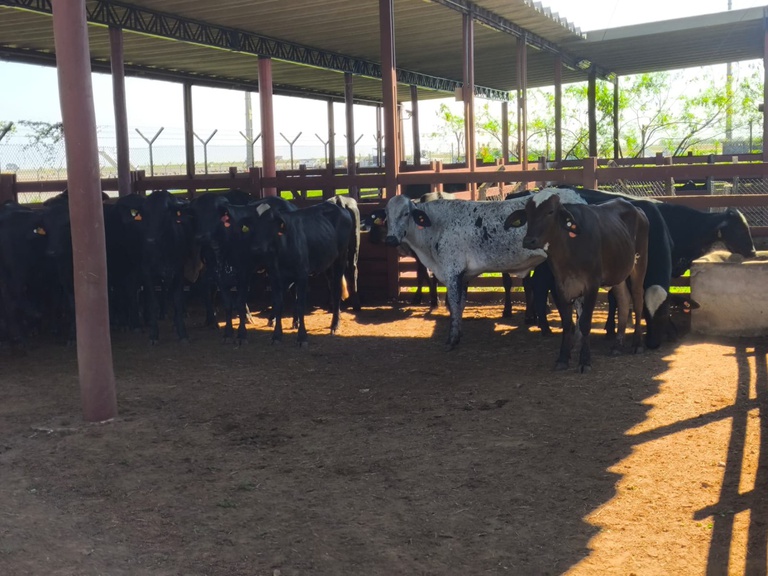
The Ministry of Agriculture and Livestock (Mapa) worked to enable the export of 600 cattle to Botswana, including 590 Girolando cattle and 10 Gir cattle. The initiative seeks to contribute to the development of dairy farming in the African country, which currently produces only 10% of the milk it consumes, through genetic improvement of the herd and the transfer of Brazilian technology.
At Viracopos International Airport, in Campinas (SP), the International Agricultural Surveillance team (Vigiagro) checked the animals’ documentation and transport conditions. The cattle were transported on three charter flights. The first took place in July, with 189 animals loaded, and the other two were carried out on 25 and 28 September. The animals departed from Lins (SP), bound for Lobatse, in southeastern Botswana. The negotiations were conducted with Botswana Development Corporation (BDC), a state-owned company in the country.
On 23 September, Botswana’s Minister of Trade and Entrepreneurship, Tiroeaone Ntsima, and BDC representatives visited Lins to see the animals intended for export. Botswana’s ambassador to Brazil, Benetia Tumelo Chingapane, accompanied the minister during the visit.
Technology Transfer
Cooperation between Brazil and Botswana goes beyond the supply of animals and genetic material. The aim is to share knowledge and technologies that contribute to establishing genetic improvement programs and increasing dairy productivity. One possibility under consideration is the establishment of an in vitro fertilization (IVF) laboratory in the country.
Brazilian experience in this area is also shared with India. In December 2025, a memorandum of understanding signed by the Brazilian Agricultural Research Corporation (Embrapa), affiliated with Mapa, established a consortium with three Indian companies and two Brazilian companies. The agreement provides for ten years of scientific and technological cooperation, focusing on the transfer and validation of genomic technologies for India’s dairy cattle sector.
As part of the partnership, Brazil supported the establishment of three laboratories in India: one for in vitro fertilization, one for veterinary clinical analyses, and another for genomics.
Girolando is the result of crossbreeding Gir and Holstein cattle. While the former stands out for its hardiness and adaptation to the tropical climate, the latter has high milk production potential. The combination of these characteristics has made the breed one of the main breeds used in Brazilian dairy farming.
Bovine genetics developed in Brazil is the result of decades of research and breeding, with the participation of institutions such as Embrapa, producers, breeders' associations, and public agencies. The Gir breed, originating in India, also played an important role in this process, which enabled the country to develop animals adapted to tropical conditions and with greater production potential.
Press information
[email hidden]