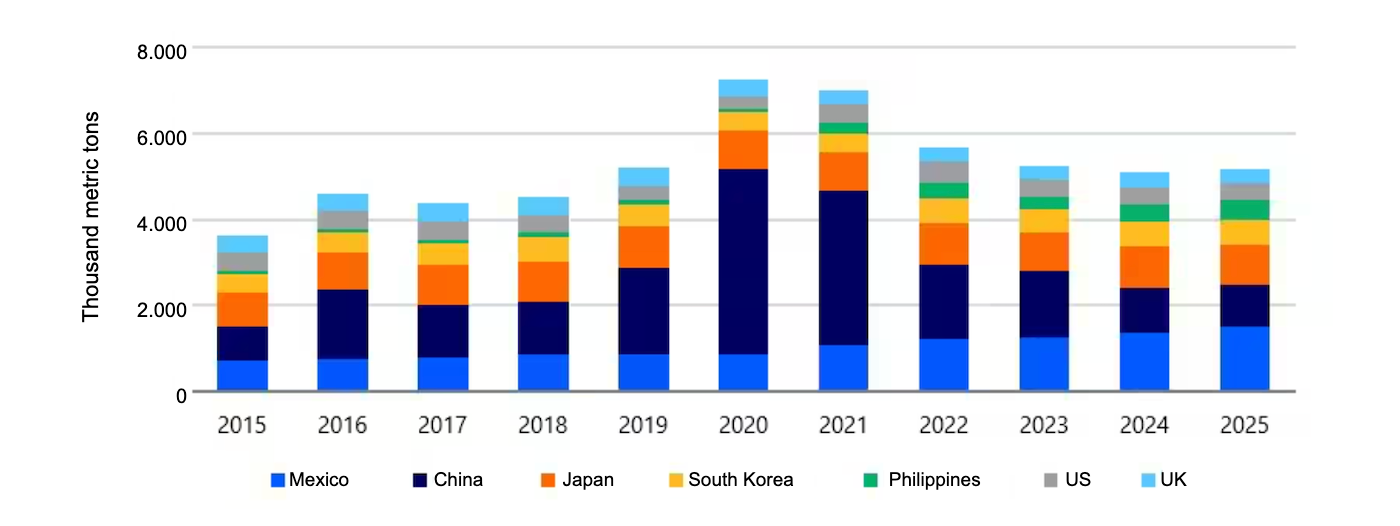
According to Rabobank's World Pork Map 2026, global pork trade has become increasingly fragmented and competitive, moving away from the China-centric model that characterized the last decade toward a more diversified and regionally distributed structure. Following China’s recovery from the African swine fever supply shock between 2018 and 2021, trade volumes have stabilized at lower levels since 2024, reflecting a more balanced but less dynamic market environment.
China remains the world’s largest importer of pork and offal, but its share has declined significantly, from 43% in 2021 to 23% in 2025, reducing its influence on global trade flows. The decline has been particularly pronounced in pork meat imports, where demand has structurally softened. As a result, other markets – most notably Mexico – have gained importance as leading importers of pork meat.
Mexico’s pork imports have risen sharply due to domestic supply constraints, making it the world’s largest importer of pork meat (excluding offal). This growth has primarily benefited key exporting countries, including the US, Canada, and Brazil.
August 27, 2026/ Rabobank.
https://www.rabobank.com/