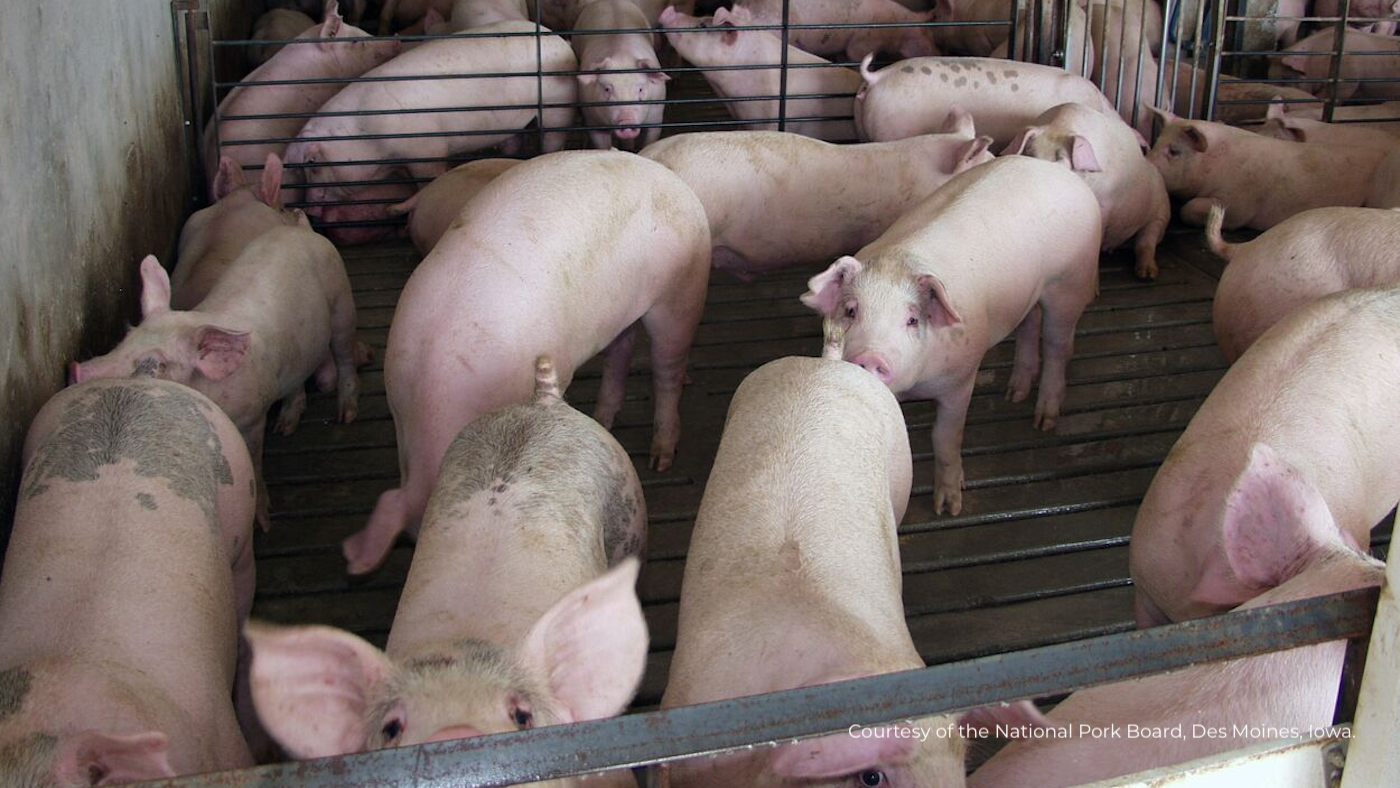
Falling pork prices in the final quarter of 2025 and throughout the first half of 2026 forced less efficient farms to exit the market, leading to a decline in the total pig population. The situation is expected to stabilize somewhat in 2027 as industrial pig farms continue to expand their herds despite the difficulties.
Pork production in Ukraine is concentrated in areas near major animal feed supplies and key consumer markets. Pig farms in the east have been inactive since 2022, following the start of the full-scale military conflict. Many farms relocated their production facilities to western Ukraine, although pig farming in the central region, particularly around Kyiv, still accounts for a significant share. Industrial pig farms account for 69% of the total pig population, while household farms account for 31%.
African swine fever (ASF) remains a major risk factor because it is difficult to control in areas near the frontline. ASF is also a key obstacle to scaling up pig farming, as the spread of the disease among wild boar populations and neighboring household farms is beyond investors’ control. ASF cases increased after Russia launched its full-scale military invasion of Ukraine in 2022, but stabilized in 2025. Industry sources confirm that the number of outbreaks in 2026 was relatively stable.
The hog herd will increase only marginally in 2027, limiting growth in pork production, which is expected to reach 610.000 tons. In 2026, pork production is also expected to continue growing slowly due to low retail prices and rising imports. Russia’s increasingly frequent attacks on Ukraine’s infrastructure could negatively affect pork production during the winter months of 2026–2027. Slaughterhouse and cold storage operations remain vulnerable to disruption due to energy shortages and transportation difficulties. The labor shortages faced by hog farmers will also affect pork processing and distribution.
Continued declines in pork prices, together with increased imports of pork products, will help drive a slight increase in pork consumption in 2026 and 2027. Pork is a popular and widely favored source of protein in Ukraine. Consumers have shifted toward eating more pork following an increase in beef prices in the final quarter of 2025.
Russian attacks on food transportation and distribution systems and cold storage facilities, which intensified in the spring and summer of 2026, could become a significant factor affecting pork consumption during 2026–2027. Several major retail chains have lost distribution centers due to these attacks, forcing some retailers to return to receiving goods directly from individual producers. Other retailers have asked producers to share the cost of losses of goods at attacked distribution centers, with contributions potentially reaching 100%. Although negotiations are ongoing, an increase in retail pork prices in the near future due to higher transportation and distribution costs appears difficult to avoid.
Import demand for pork is expected to remain high in 2027, reaching 45.000 tons, as growth in commercial hog production is insufficient to offset the decline in hog numbers among household producers. Thanks to its geographical proximity to Ukraine and longstanding trade relations with the country’s pork producers, the EU will remain the main source of pork imports, while Canada is the only other country exporting pork to Ukraine.
28 9, 2026 / U.S. Department of Agriculture / United States.
https://www.fas.usda.gov