
- Wojciech Łuba built a new barn with two milking robots, bringing in only cows from his own breeding program – today, the herd’s average yield reaches 43 l of milk per cow per day.
- The foundation of the breeding strategy is genotyping the entire herd, embryo transfer and selecting bulls for PF, as well as suitability for robots and A2A2 casein.
- About 20% of the herd consists of red-and-white HF cows, which, thanks to consistent breeding work, rank among the top in the national PF ranking and win titles at exhibitions.
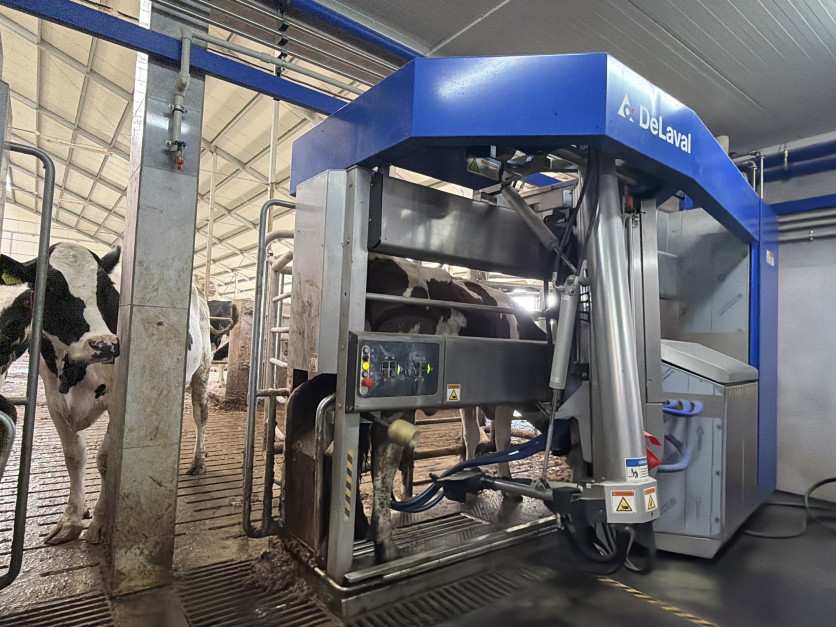
- Automation covers more than just milking – the farm also uses an automatic TMR feed pusher, manure scrapers, curtains and automatically controlled ventilation.
- Watch reports from the other farms taking part in the competition Innovative Farmer 2026.
In 2025, a new free-stall barn was commissioned at the farm of Justyna and Wojciech Łuba, equipped with two milking robots, full side curtains and two feed tables. The building, measuring 40 by 56 m, was built to an individual design, and the farmer carefully considered every detail. The investment was intended to improve the welfare of both the animals and the people who look after the herd each day. It also delivered a production benefit: the cows’ daily milk yield now exceeds 40 liters. The herd consists mainly of black-and-white Holstein-Friesian cows, but the farmer’s particular passion in his breeding work is the red-and-white variety.
This is a family farm where three generations work together. Justyna and Wojciech run it day to day, with help from Wojciech’s parents, Janina and Ryszard. The Łuba family’s three children gladly take part in daily and seasonal tasks whenever they can. The farm’s family character is not only a matter of practice, but also of tradition. The family history is documented as far back as 1750, and keeping their roots alive is especially close to Justyna’s heart.
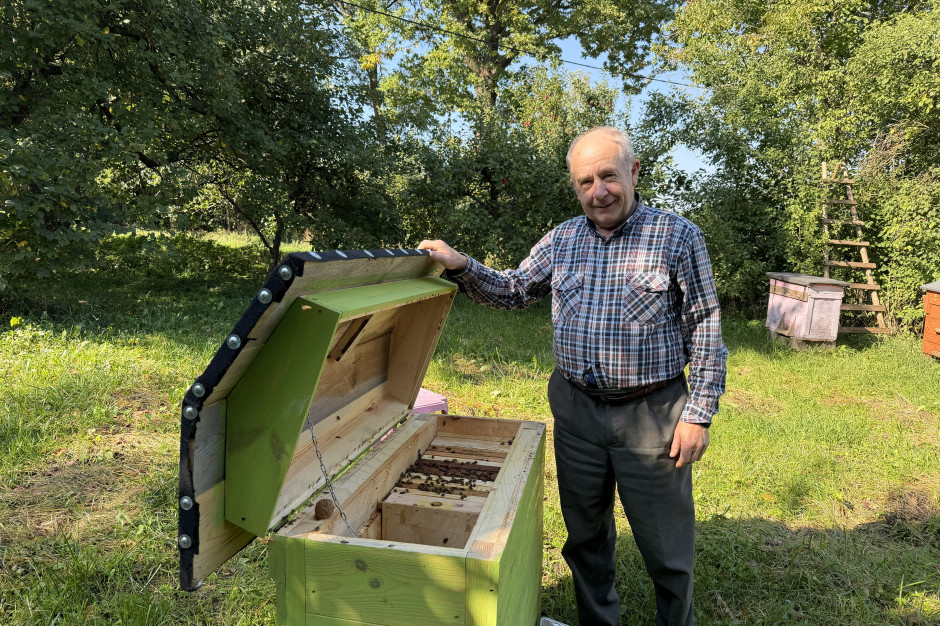
Podlasie is sometimes called a land flowing with milk and honey, and the Łuba family’s farm lives up to that saying. In addition to milk production, impressive in both scale and technical solutions, the farm has an apiary cared for by Mr. Ryszard, with 18 honeybee colonies.
A homegrown herd and lengthy preparations
The new barn was not a decision made overnight. As the farmer explains, plans to build and expand had been “at the back of his mind” for a long time. For years, he worked on the traits preferred for robotic milking: teat spacing and length, as well as milking speed.
The effort paid off, as only animals from the farm’s own breeding program moved into the new facility. This primarily limits the risk of disease transmission and also shows that perseverance in pursuing the investment objective is extremely important, including from an economic standpoint.
The animals adapted gently to the new facility — initially, around 30 cows were assigned to the two robots, and a few more were added at a time.
At first, they were not very willing to cooperate, but they adapted fairly quickly, the farmer recalls.
However, it took a little over a year to reach full production. The yield, which initially stood at 33–34 liters per cow per day, increased significantly after a year. Today, it averages around 43 l per animal. The barn is intended to house a maximum of 110 cows, because, as the farmer says, this is the optimal herd size for two milking robots. Currently, more than 90 cows are being milked.
Genotyping and modern breeding techniques
Genotyping is at the heart of the breeding strategy. The entire herd has been tested, and the farmer uses the results in three ways. First, he identifies the most valuable animals, which are selected for embryo transfer. He can also see which traits need to be improved in individual cows and their offspring. The real “icing on the cake” is casein testing, as the goal is to maintain an entire herd of A2A2. Currently, nearly 80% of the animals have this trait.
We use quite a lot of innovative techniques on the farm. One of them is embryo transfer. OPU has also been used, and the main goal is to create a herd with A2/A2 casein, says Wojciech Łuba.
When selecting bulls, the farmer looks primarily at the PF index, suitability for robots, and A2A2 casein.
The next aspect is the PF index. This is the index I mainly focus on. Although there are lines specifically selected for conformation, there are literally only two or three of them; the rest of the herd is production-oriented, that is, A2/A2 PF and production, he emphasizes.
For embryo transfer, he uses sexed semen from top bulls, and pairings are checked in the DOKO program for relatedness, or inbreeding. 100% sexed semen is used for heifers and approximately 60% for cows.
Breeding success is good; the herd is performing at a fairly high level, he explains.
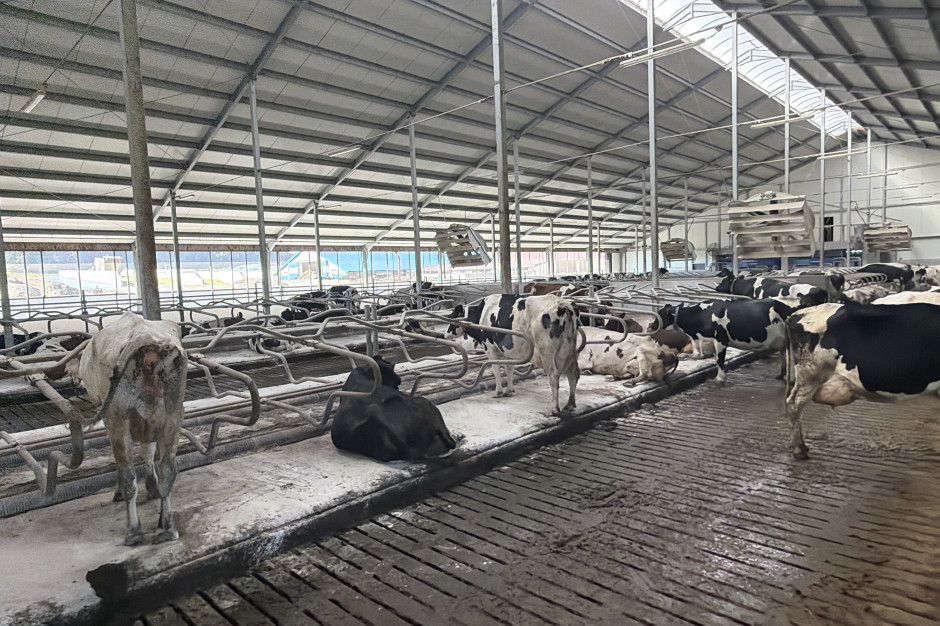 The farmer considered every detail when designing the barn, placing a strong emphasis on improving animal welfare. Photo: Tomasz Piotrowski / PTWP
Red-and-white HF on the podium
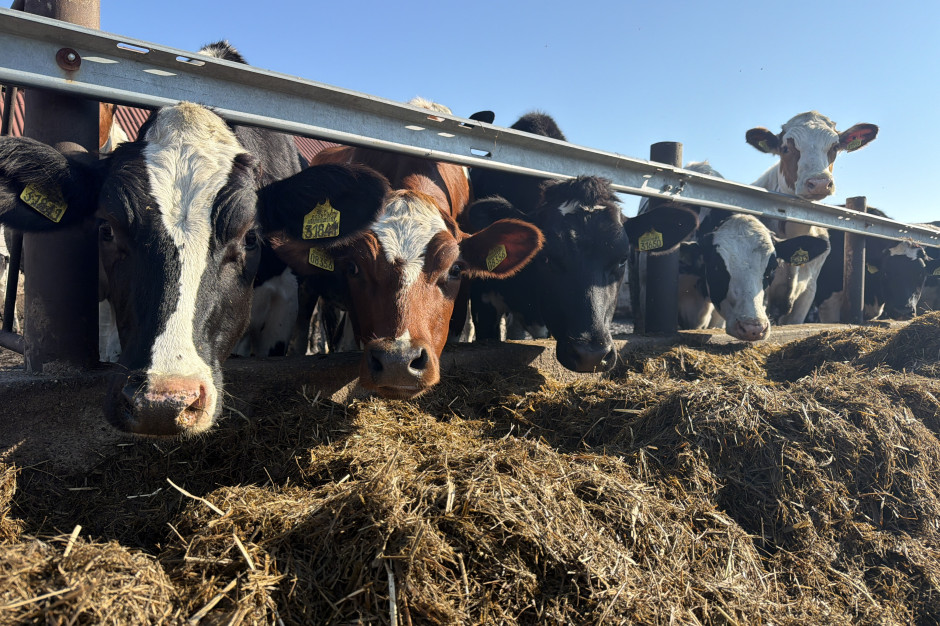
This is not a typical dairy herd for barns in Podlaskie, as approximately 20% of the herd is the RW variety. The farm ranks among the leaders in the PF Breeding Index ranking for this variety, both in Podlaskie and nationwide. Last year, it took first place nationally in the breeding index for this variety, and this year it is in second place.
The farmer notes that embryo transfer has the greatest impact on these results. The RW variety herd is based on two lines.
The production line, where we focus on production, longevity and PF, and the second line, the show line, because we also manage to win championships at regional shows. This year, at the national show, we won reserve champion, the farmer says. He notes that the RW heifers competed in the same category as the HO variety.
Breeding achievements have been recognized for years at the regional exhibition in Szepietowo. Such results are no accident, but the effect of a constant pursuit of excellence and eliminating weak points.
Breeding stock is also sold. Four bulls from the farm have already gone to an insemination station, and the number of breeding bulls sold for further breeding is much higher, since they are also sold to individual farmers.
Reproduction under control
Technology monitors heat—the cows wear collars with activity meters, and the farmer reviews the activity graphs in the morning and evening. All data goes into herd management systems. The next step planned is an attachment for the robot that tests progesterone in the milk.
In my daily work managing the herd, I use the SOL system from the Polish Federation of Cattle Breeders and Milk Producers. I enter every event there, as well as in DelPro, the robot management system. It shows me heat, walking frequency, and the MDI indicator, that is, quality, explains Wojciech Łuba.
If this activity is indeed present, we proceed with breeding, he explains.
The insemination procedure is performed by a veterinarian, who assesses the condition of the uterus and the corpus luteum by ultrasound before each procedure. For Wojciech Łuba, reproduction is fundamental.
“For there to be milk, there has to be breeding. If breeding goes wrong, then there won’t be anything later,” he says.
A barn that cares for animal welfare and the highest quality of raw materials
Milk quality is tested at every collection, unlike at most dairies, where tests are conducted only during random inspections, usually 2 times a month. This means that no batch of raw milk reaches the facility without being checked, and any shortcomings are immediately apparent.
At Wojciech Łuba’s farm, robotic milking helps with this. The robot management system displays milk quality indicators for individual cows in real time, enabling the farmer to respond quickly to any warning signal. Milking robots are just one aspect of automation in Wojciech Łuba’s barn.
“The barn is quite extensively automated, starting with the milking robots, followed by a TMR pusher and a scraper for the slatted floors. We also have automatic curtains, automatically activated mixers, and an automatic ventilation system that calculates the THI and uses it to adjust the fan speeds,” says Wojciech Łuba.
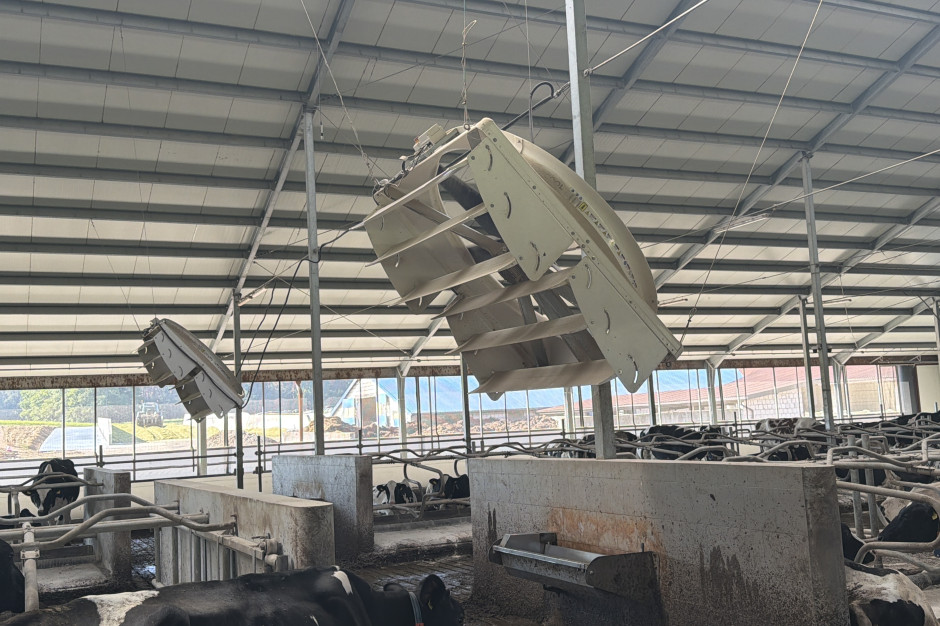
The building has four rows of cubicles, plus a fifth for dry cows. All the so-called manure alleys are 4 m wide. The cubicles are fitted with two-layer mattresses, which are dusted with chalk every day.
“The cubicles have two-layer mattresses: a layer of a sleeve filled with shredded rubber, plus thick foam. Altogether, they are about eight or nine centimeters thick,” he explains.
Ventilation makes the biggest impression. During the June heat, when it was over 40°C outside, the ventilation system kept the air constantly moving in the barn, minimizing the impact of the high temperatures on animal welfare.
Dry cows have access to an outdoor area, and the maternity pen is bedded. The old barn building is currently occupied by young stock, and part of it will be converted to a housing system without bedding in the near future.
Feed base and field services
The farmer invests not only in impressive infrastructure, but also in the feed base. Thanks to overseeding grassland and regularly renovating it, grass silage—the main component of the ration—achieves outstanding results in analyses.
95% of the meadows on the farm are in the Natura 2000 area. They are meadows located on organic soils. It is quite challenging terrain, but very rewarding. We manage to harvest grass with protein levels of around 20%,” says Wojciech Łuba.
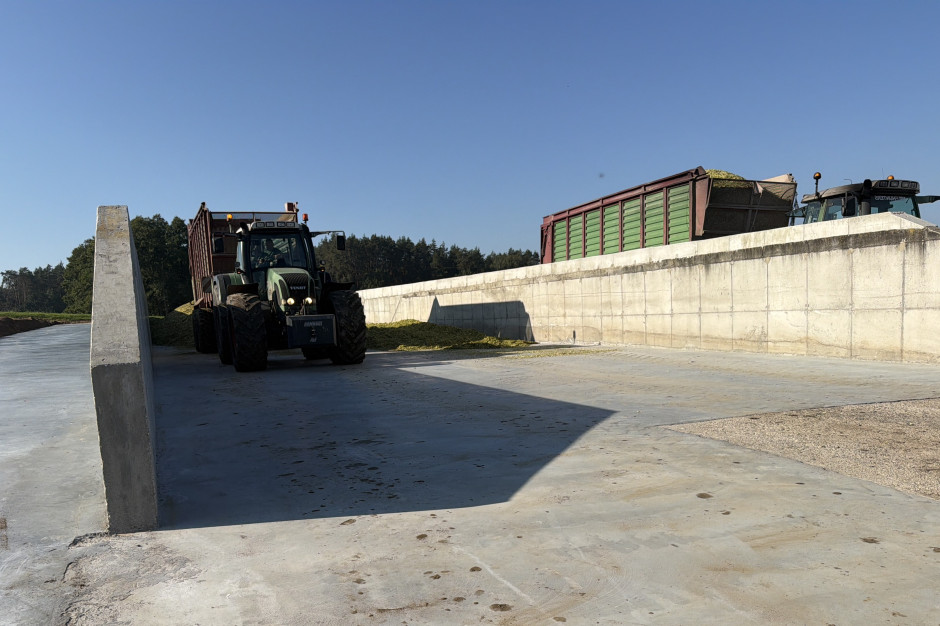
The farm covers over 110 ha, of which approx. 45 ha are planted with maize and approx. 43 ha with grass. An average of four grass cuts are harvested annually. Precision farming is still only a plan, as the priority so far has been the building and livestock. Most fieldwork is contracted out to service providers.
We make extensive use of services, covering everything from sowing cereals and maize, even spraying the maize, to harvesting grass for silage, harvesting maize for silage, harvesting maize for grain, and harvesting cereals. All of this is done by contractors,” the farmer lists.