
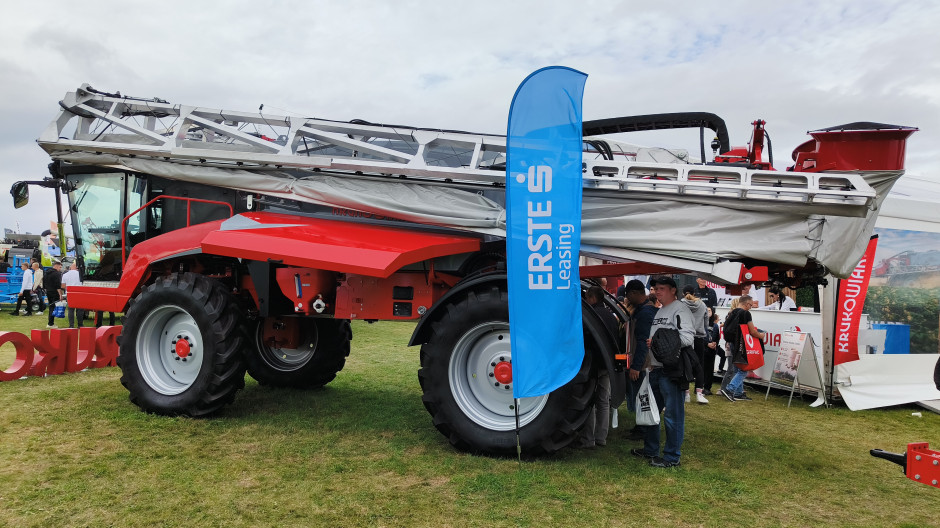
The main attraction at the stand of the manufacturer from Brześć Kujawski was the largest self-propelled machine in the brand’s history—the new Herkules sprayer 6500—accompanied by significant innovations in the automation of liquid systems in the popular trailed Goliat sprayers.
“We say that Agro Show is the largest open-air exhibition in Europe, and probably in the world in this context, so this is the best time to present new products, but above all, large machines,” explains Tomasz Żywiczka, Marketing and Sales Director at KFMR Krukowiak.
Herkules 6500 boasts impressive specifications
The larger version of the self-propelled Herkules sprayer is equipped with a tank with a capacity of 6500 liters and a 36-meter-wide spray boom, assisted by an auxiliary airflow. This is also a greater working width than that previously used on self-propelled sprayers manufactured by Kujawska Fabryka Maszyn Rolniczych.
The new Herkules was designed for farms that expect a sprayer to deliver, above all, high field capacity and fewer work stoppages. The larger tank reduces the frequency of refilling, while the 36-meter boom allows a larger area to be covered in a single pass. The use of an auxiliary air stream further supports the application of the spray liquid, improving its transport towards the plants.
Rational standardization and proven components
Although the Herkules has a larger tank and a wider working boom, the manufacturer took a rational approach to the design, relying on repeatable, proven engineering solutions.
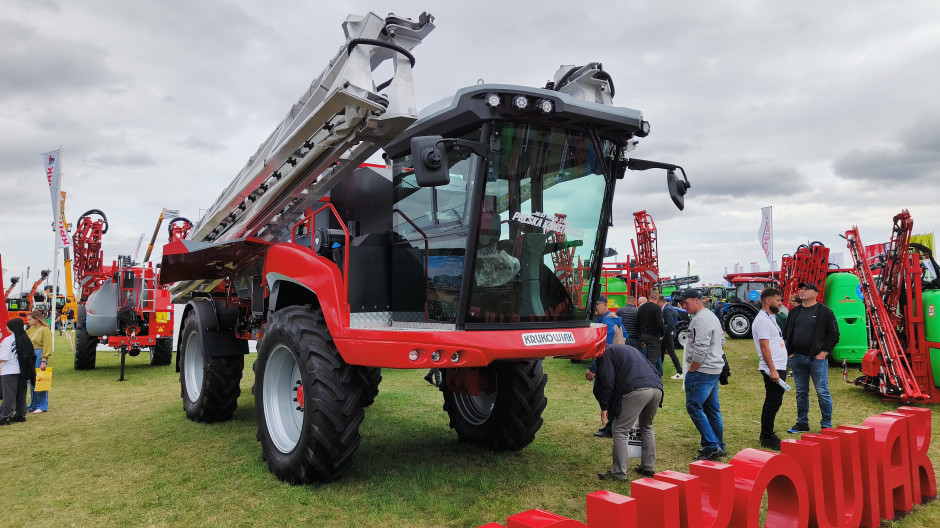
– The base engine is the same as in the model with a tank capacity of 5 thousand litres. The boom is from the same supplier, because we want to work with the same companies. The components, pumps and valves are standard parts used in our sprayers – explains Tomasz Żywiczka.
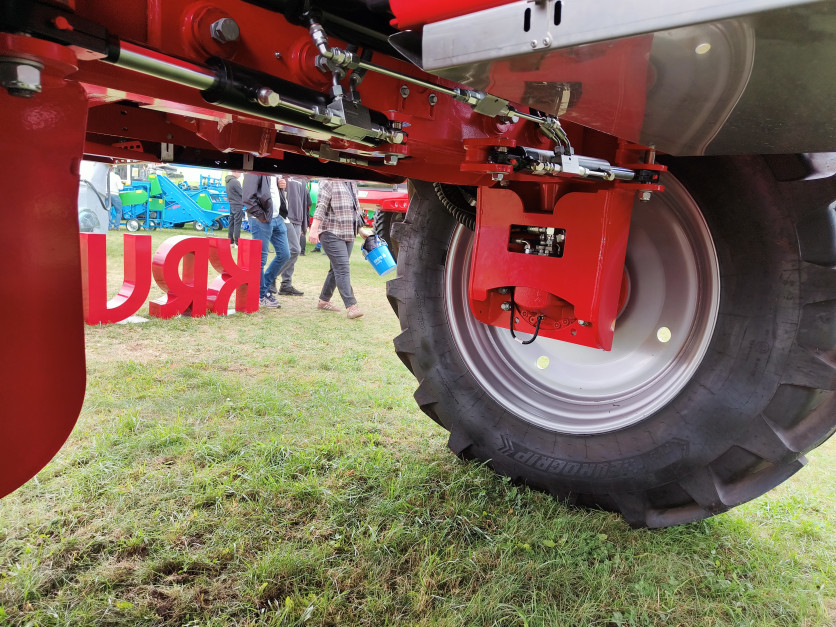
In its established, proven line of self-propelled sprayers (4000 and 5000 litres), the Polish manufacturer is opting for an efficient 6-cylinder Caterpillar engine with an output of 225 HP and a 4x4 hydraulic drive, which ensures even transfer of engine power to the wheels.
– We have always operated on the assumption that we focus on sales volume, not on the potential of the largest farms. Poland is a country with mostly family-run, medium-sized farms. Because this machine is an extension of our self-propelled sprayer range, it is intended for medium-sized farms – our interviewee points out.
The Herkules configured with a 6500-litre tank and a 36-metre boom shows the direction in which Krukowiak’s self-propelled sprayers are developing. Greater efficiency, a wide boom, an auxiliary air stream, and automation of filling and rinsing processes are primarily intended to make applications more efficient across large areas and reduce the operator’s workload.
Modern valve control system in Goliat trailed sprayers
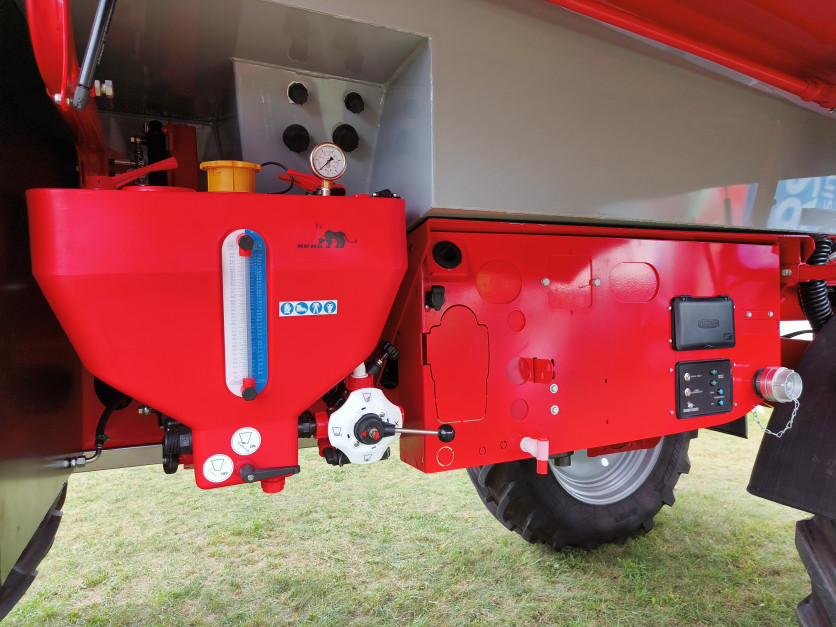
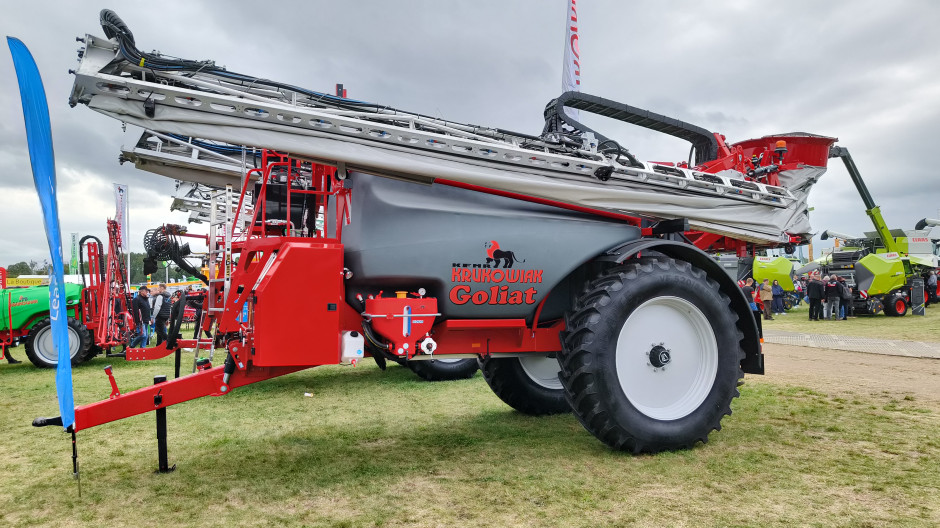
Another noteworthy innovation presented by Krukowiak at Bednary is the use of an electrically operated valve system in the popular Goliat trailed sprayers. This solution significantly improves operator comfort and the level of machine automation.
The solution integrates tank-filling control, operation of selected valves, and processes related to preparing the working liquid, mixing, and rinsing the system. As a result, many tasks that require manually switching valves and constant supervision on a traditional sprayer can be carried out much more simply and systematically.
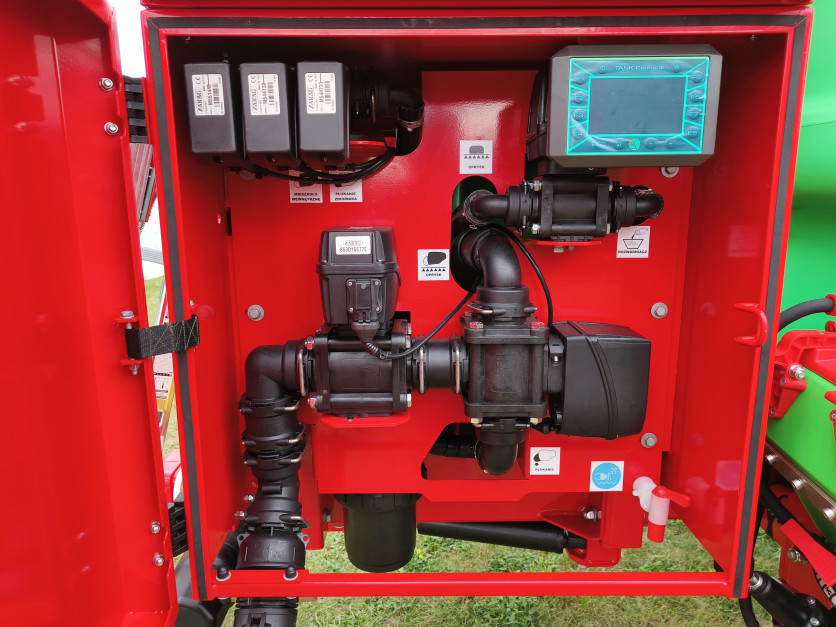
“We’re showing something that will also be a new feature in the price list from the new year: we’re replacing manual valves with electric valves controlled from the controller or the computer in the tractor cab. So, after finishing work or completing the spraying operation, the operator doesn’t have to get out, switch the valves, or start the rinsers and washers. They can simply click from the computer in the cab to switch the systems, and the sprayer will wash itself,” continues the Krukowiak company representative.
Many functions controlled from the tractor cab
One of the most important conveniences is monitoring the liquid level in the main tank. The operator has up-to-date information about the amount of liquid in the tank and can specify the desired amount while filling it. Depending on the installation configuration, the system can control the filling process and shut off the inflow when the set volume is reached. This reduces the risk of overfilling the tank, lessens the need to constantly monitor the liquid level, and shortens the time needed to prepare the machine for work.
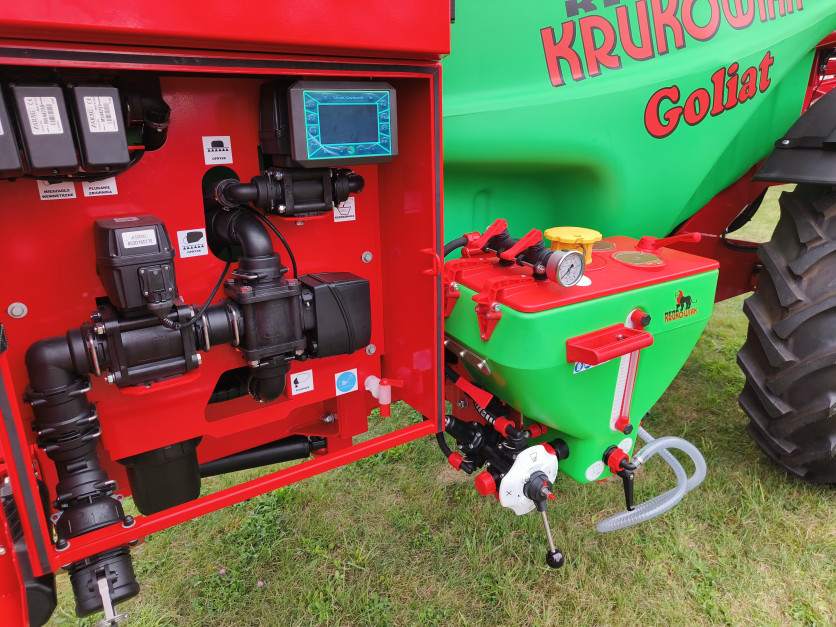
Automated control of liquid flow also reduces the risk of operator error. In advanced sprayers, the liquid system may consist of many valves and circuits. Incorrectly setting one of them can result in the liquid flowing in the wrong direction, problems with drawing in liquid, or improper flushing of the system. Electric control helps simplify these tasks and reduce the number of manual operations.
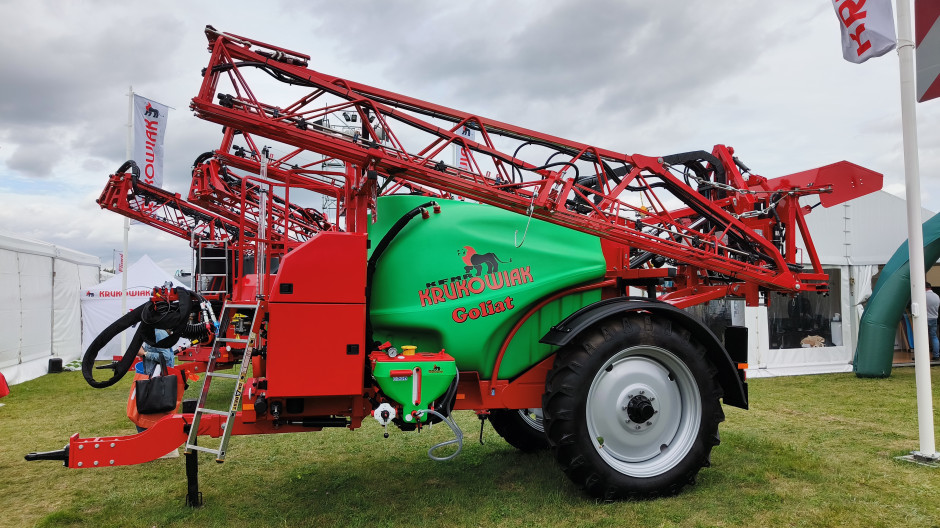
Another important advantage of the system is that it improves the sprayer flushing and cleaning process. Controlling the appropriate valves makes it possible to direct clean water to selected parts of the system, including the main tank, liquid lines, or induction hopper. In a suitably equipped machine, the entire process can follow a specified sequence, making it easier to clean the system thoroughly after treatment. This is particularly important when crop protection products are changed frequently. Thoroughly flushing the tank and lines reduces the possibility of residue from the previously used product remaining in the system, thereby reducing the risk of unwanted mixing of products during the next treatment.
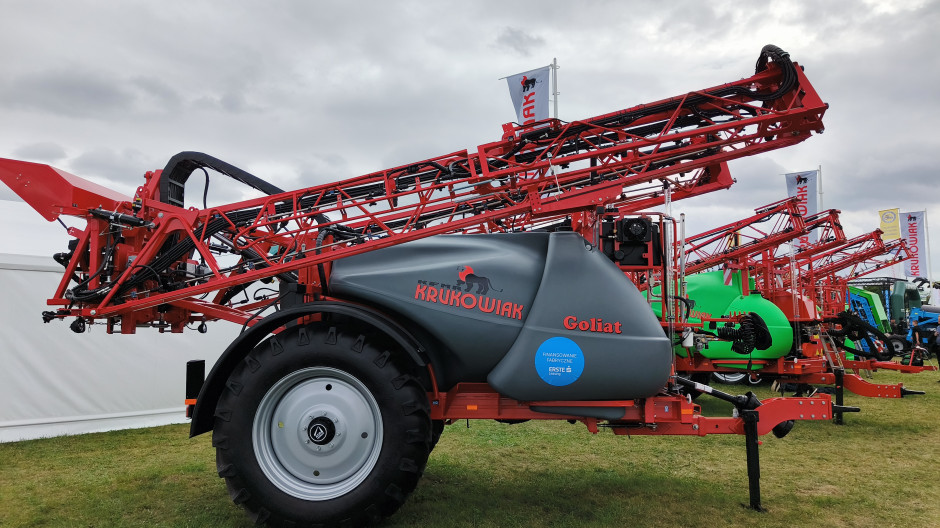
The system also affects the ergonomics of day-to-day machine operation. The operator performs fewer tasks directly at the sprayer fittings, and the most important functions can be grouped in one place. This is especially noticeable during periods of intensive field work, when the sprayer is refilled multiple times a day. Each reduction in the time needed to prepare the next tank then contributes to greater productivity of the entire machine setup.
Implementing this technology provides more accurate control of the amount of liquid in the tank, enables full automation of the filling process and electric control of the liquid system valves, and reduces the number of tasks performed manually. This lowers the risk of setting the fittings incorrectly, makes it easier to switch between operating modes, streamlines mixing and the preparation of the spray solution, and makes rinsing the tank and installation exceptionally convenient, ultimately reducing the time needed to prepare the sprayer for the next treatment and significantly improving the operator’s ergonomics and safety.
“The solenoid valve system will be an option because we do not want to immediately increase the machine’s price with these components if a customer is satisfied with a basic machine with manual valves as standard. The price list is built like Lego bricks. We build a machine to suit our needs, and solenoid valves will be one of the options for upgrading the sprayer,” concludes Tomasz Żywiczka.
Both the new Herkules 6500 and Goliat series sprayers with the solenoid valve system will be included in the official range and regular sales at the beginning of the new year.