
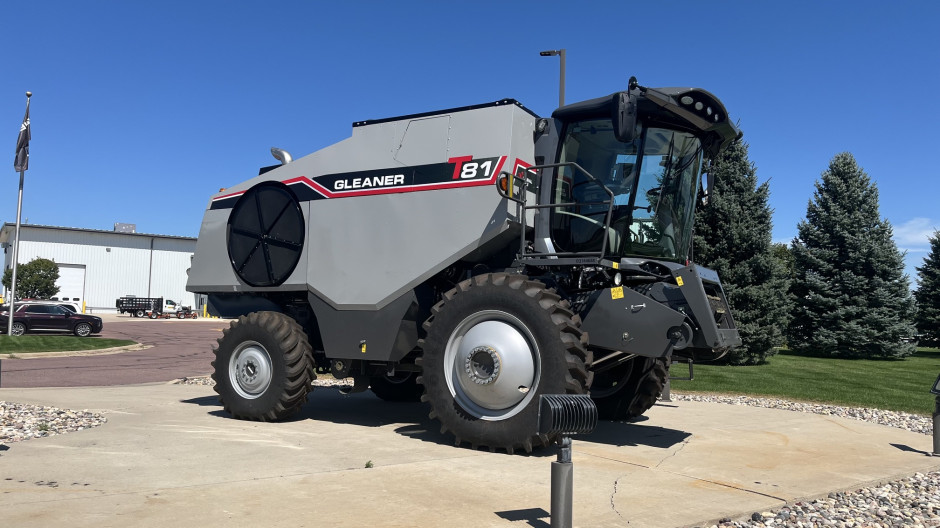
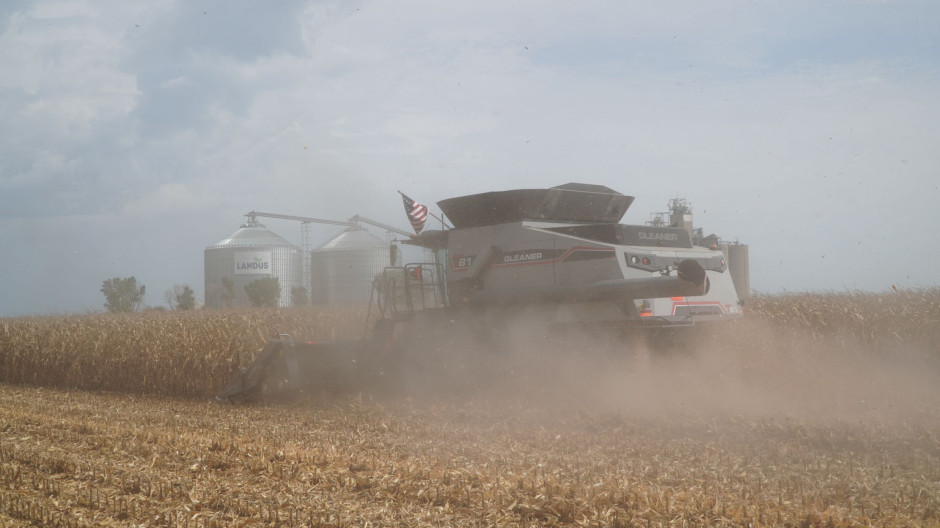
- The Gleaner T81 is the largest model in the T Series (launched in 2024), with an AGCO Power engine rated at 430 hp and a 13 734 L grain tank, designed for the conditions of large farms in the USA
- A key difference is the Natural Flow system, with a transversely mounted rotor. It is intended to simplify the design, reduce weight and make servicing easier without sacrificing performance.
- Why the Gleaner is not available in Poland and Europe: the standard configuration can be too wide for European roads, and AGCO focuses on the Fendt and Massey Ferguson brands here, along with their sales network.
We really like machines like these because Gleaner has a history of its own, a distinctive design concept and a very specific philosophy: high output does not have to mean making the machine as complex as possible. Despite being part of a corporate group, the American brand has retained its distinct identity, although certain corporate components have, of course, had to be adopted. These include AGCO Power engines, terminals and cabs known from other models.
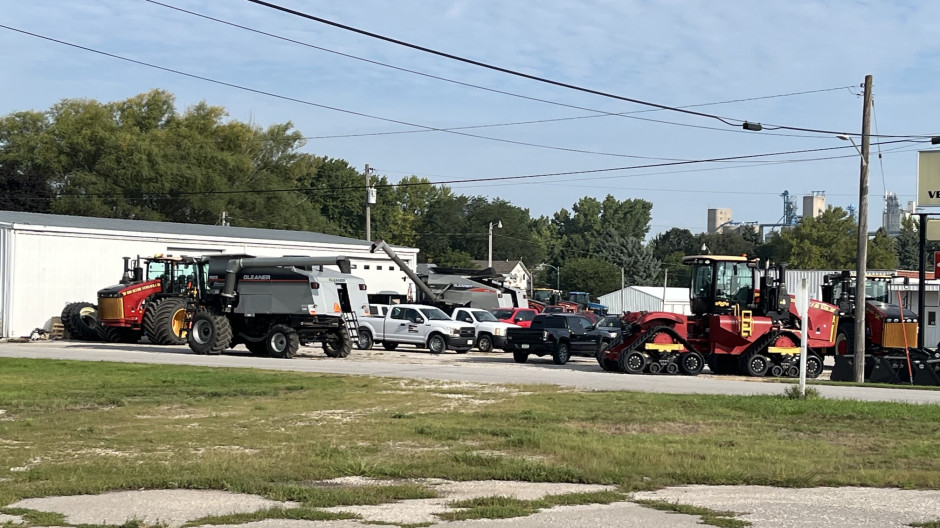
The largest model, the T81, which we saw at AGCO dealer Ziegler and at the Farm Progress Show, is equipped with an AGCO Power engine with a rated output of 430 hp (it can briefly reach 471 hp). It also has a 13 734 L grain tank and an unloading rate of up to approximately 141 L/s.
Why does AGCO offer Gleaner combines primarily in the North American market instead of introducing them to European farms? To understand this, it is worth looking at both the machine itself and the brand’s history of more than a century.
Gleaner T81 and its own idea for threshing
Gleaner T81 belongs to the latest generation of combines from this brand. The T series was unveiled by AGCO in August 2024 as a design intended to combine high performance with ease of operation and servicing. Indeed, these principles have always been part of the Gleaner brand, and that has not changed. The aim was not to create a machine with as many electronic features as possible, but to improve those elements that directly affect the course of the harvest.
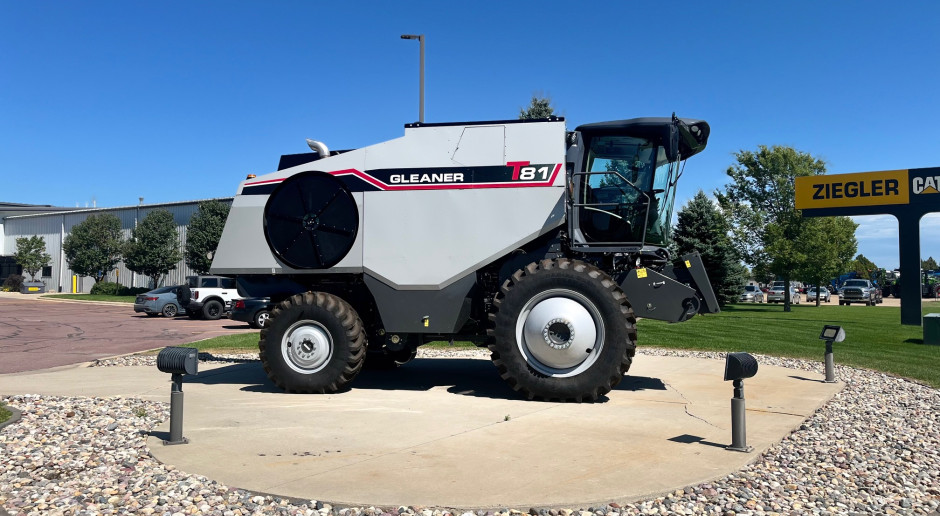
What is most interesting about the new Gleaners is not the drive or the engine. The American brand uses its own threshing and separation system called Natural Flow. The T81 model has a single transversely positioned rotor with a diameter of 762 mm and a length of about 2235 mm. Its speed range is 179–480 rpm in low gear and 336–903 rpm in high gear.
And the word “transverse” is key here. Many large combines we know from European fields use longitudinally positioned rotors. Gleaner took a different approach, developing its own concept for crop flow through the threshing and separation unit. In practice, the aim is to move material through the machine as smoothly as possible, limiting unnecessary changes in direction and additional mechanical components. The brand emphasizes that its design helps reduce the number of parts, lower machine weight, and make components easier to access.
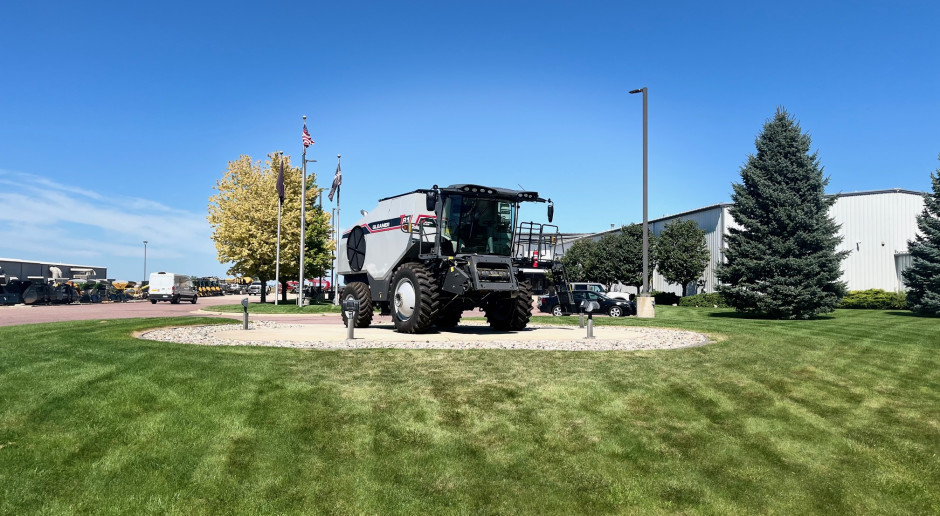
The designers have emphasized for years that they do not want to make the combine more complex without a clear benefit to the user. For the T series, AGCO points to the use of a welded subframe and drives that use belts and shafts instead of gearboxes, pumps, and motors. This is intended to reduce weight and the number of components requiring maintenance.
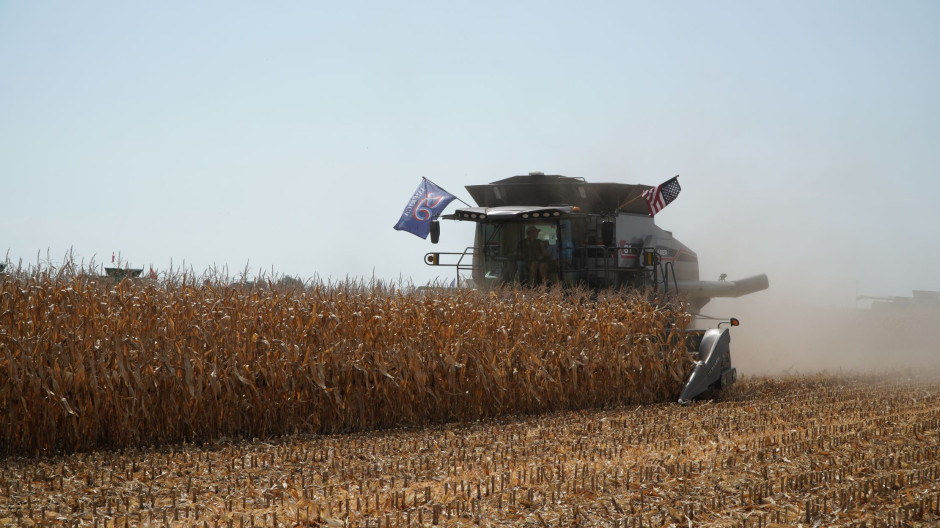
Gleaner also opts for a simple drivetrain
In the new T series, the manufacturer has used the Dura Drive drivetrain. It is a two-range transmission that allows the range to be changed while driving. The maximum speed in road mode is 40 km/h. The controls are complemented by a multifunction lever with characteristics resembling the operation of a continuously variable transmission (it is not a CVT).
The equipment also includes a differential lock, optional rear axle drive, hydraulic reversal of the rotor's direction of rotation, and covers that facilitate access to components. The latter feature may not seem particularly spectacular, but during intensive harvesting, every minute saved on servicing matters.
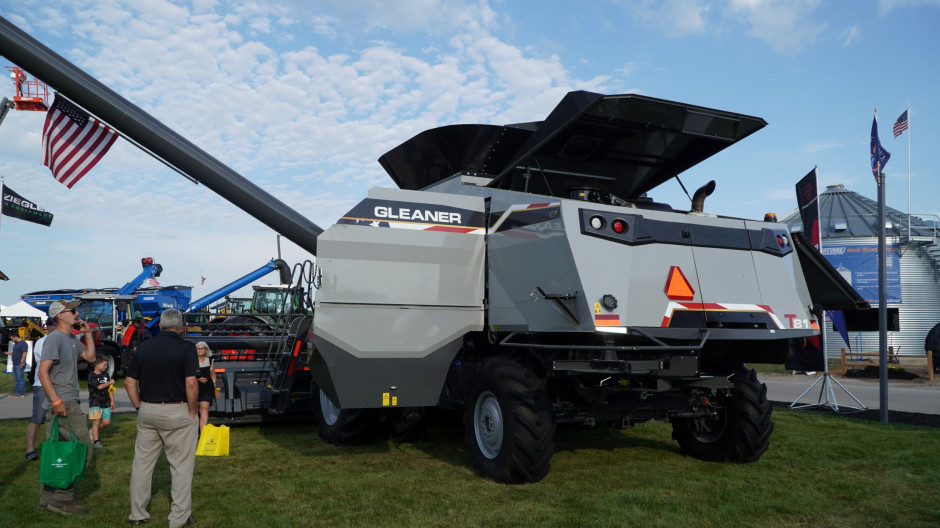
Three brothers from Kansas: the beginnings of the Gleaner brand
Many people are probably wondering where a brand like Gleaner came from. It is not well known in Europe, and there are probably readers who have no idea it exists. From an American perspective, Gleaner's history is very interesting, and at one point it was one of the most important combine harvester manufacturers in the American market, alongside International and John Deere. The company's history continues to have a significant influence on how these machines are built today.
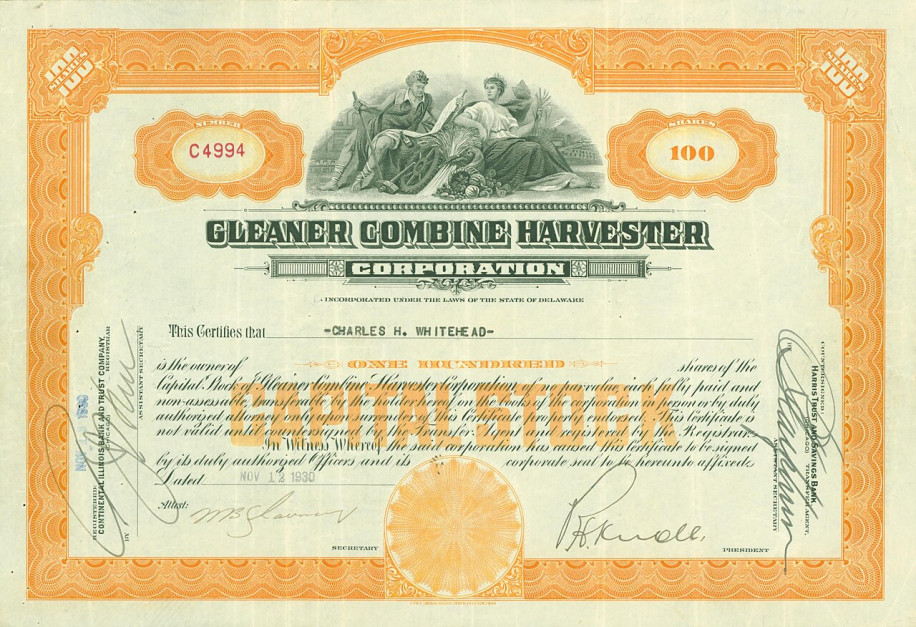
The name Gleaner comes from the English word “gleaning,” which means gathering the leftover crops remaining in a field after the main harvest. It was therefore a promise of effectively recovering grain from the field and minimizing harvest losses. The inspiration was reportedly a painting titled "Des glaneuses" by the French painter Jean-François Millet, completed in 1857. It is housed at the Musée d’Orsay in Paris. Is this romantic version of events true? We don't know, but stories of this kind circulate among enthusiasts of agricultural machinery.

The growing Gleaner was acquired by Allis-Chalmers in 1955. This meant that the very popular American tractor manufacturer also had harvesting machines in its portfolio—and very good, popular ones in the USA.
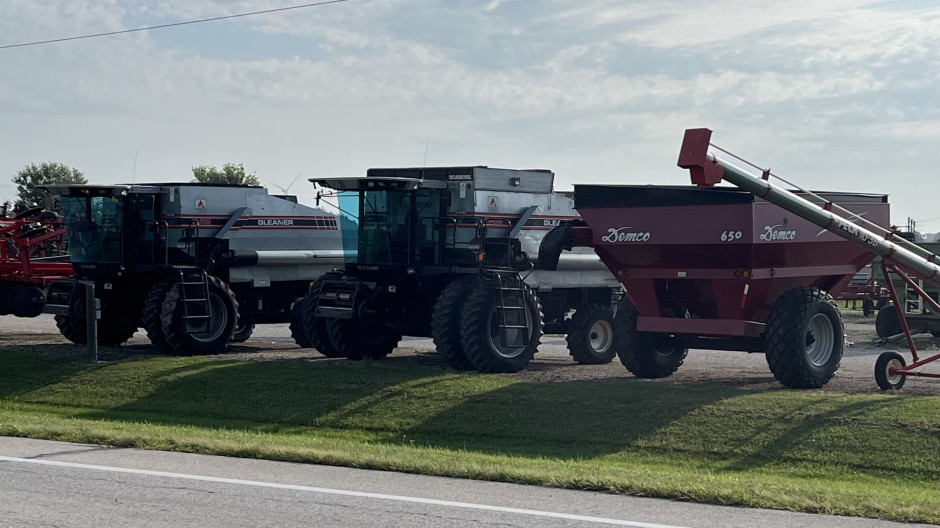
Gleaner argued that its solution reduces the need to change the direction of crop flow and makes it possible to achieve a large separation area without making the machine longer. This is evident when looking at a working Gleaner, which is considerably shorter and slightly wider. The N Series at the time also used a system to accelerate grain before it reached the sieves, making it possible to separate chaff and impurities more effectively.
What else set Gleaner apart?
One of the more interesting elements of Gleaner technology is the so-called accelerator rolls, which accelerate the crop before it is cleaned on the sieves. Grain and fine impurities separated by the rotor are fed onto two rolls, which increase their speed. The crop stream then passes through an airflow that helps remove light chaff before it reaches the sieves.
Instead of burdening the sieves with the entire crop mass, the combine does part of the work beforehand. Gleaner emphasized that this arrangement increases cleaning capacity, improves grain sample quality, and helps reduce losses.
Always positioned exactly in the center of the machine, the cabs looked as though they were made almost entirely of glass; they were heavily glazed and angular. The Vision cab from 2016 also featured a Tyton terminal, which integrated machine control functions and precision farming systems, but we already know this from other AGCO machines, just under a different trade name.
Gleaner was also one of the first brands to introduce a 12-row corn head to the market (1980). This solution responded to the growth of large American farms, where harvesting capacity depended not only on the combine but also on the header's working width.
How did Gleaner become part of AGCO?
AGCO itself was established in 1990, when a group of managers acquired Deutz-Allis’s North American operations from the German conglomerate KHD (Klöckner-Humboldt-Deutz). In 1985, the owner of the Deutz-Fahr brand acquired the agricultural division of the legendary American company Allis-Chalmers, and with it the Gleaner brand. Under Deutz-Allis, Gleaner combines continued to be produced, but gained one significant technical change: German air-cooled Deutz engines began to be fitted in some models.
It is worth recalling AGCO’s acquisitions here, as they have influenced Gleaner’s history. In 1991, the Hesston brand (a leader in hay equipment) was purchased from FiatAgri. Three years later, Massey Ferguson joined AGCO, opening the door to markets around the world. Further acquisitions included Fendt in 1997, Ag-Chem and the rights to manufacture Challenger from Caterpillar in 2001 and 2002, and Valtra and Sisu Diesel in 2004. One wonders where Ursus would be today if a deal had been reached in 90. We should note that the talks took place when AGCO did not yet own Valtra or Fendt.
In 1985–2000, Gleaner lost a significant share of the market to other manufacturers with broader dealer networks and agricultural product lines that offered advantages in marketing and customer service. Another problem for the company was that some of its combines were equipped with air-cooled Deutz engines. Nevertheless, Gleaner still has a recognizable presence in North America, usually supported by AGCO’s dealer network, a group of loyal customers, and a distinctive design that sets it apart.
Where are Gleaners manufactured?
Production of Gleaner combines was moved to the AGCO facility in Hesston (the former Hesston factory) in Kansas in 2000. Previously, the machines were made in Independence, Missouri. The production move was intended to make use of a more modern facility and bring engineering and manufacturing together in one location.
Why isn’t Gleaner available in Poland and Europe?
Gleaner could technically be offered in Europe because its engine meets the Tier IV Final emissions standard, and the design is not limited to just one type of crop. However, certain restrictions mean that Gleaner cannot be offered here. Because of its design and its primary intended markets of North America and Australia, the machine in its standard configuration (especially with dual front wheels, e.g. 520/85R42 duals) is too wide for European roads and exceeds the standard road width limit of 3 meters. The same was true of previous models of the brand. The issue also lies in market strategy and adapting the offering to local needs.
Gleaner is primarily well established in North America. Farmers there know the brand, there is a dealer and service network, and the design was developed with the specific needs of farms in that region in mind. In Europe, AGCO already has the Fendt brand, whose IDEAL combines are offered in various versions. There is also Massey Ferguson, with its own range of harvesting machines. Introducing another brand would require creating or expanding a sales network, providing parts and technical support, and determining which customer group it would target. And then there is the issue of the machine’s width.